Showing posts with label Dia del Tango. Show all posts

Thursday, December 14, 2017

Dia del Tango 2018

Day of Tango isn't anything like a usual milonga. It's full of specials, and full of spectators, and the audience is more Argentinian than ever - a community that deeply appreciates tango music and vocal, especially dramatic songs of the late classical period, and which often has taste for scenic performances but may be relatively uninterested in social-style dancing. The logistics become complicated, the expenses can be substantial, and yet we strive to provide free admission as a gift of gratitude to the great people of Argentina and to their culture which nurtures our life's passion. It's kind of like celebrating a birthday of a beloved family patriarch ... not exactly a party like I'd throw for ourselves, not without many difficulties, but immensely gratifying in the end. 
We even made it to Telemundo's channel!
And of course we begin in a milonga-like fashion, as the guests gather and the musicians and singers get ready
01. Carlos di Sarli - Instrumental  "El abrojo" 1958 2:48
02. Carlos di Sarli - Instrumental  "Champagne tango" 1958 2:47
03. Carlos di Sarli - Instrumental  "Germaine" 1955 3:14
We brainstormed holiday-themed cortinas with the Argentine friends and decided that it my be a good idea to play a few cumbia snippets from Gilda, who was the brightest star of the early years of the Argentine cumbia boom in the 1990s, until her tragic death in a road accident at the age of 34. Gilda really is to cumbia what Gardel was to tango. 
04. Gilda  "No Me Arrepiento de Éste Amor cortina long"  0:40
05. Enrique Rodriguez - Armando Moreno "Como Se Pianta La Vida" 1940 2:25
06. Enrique Rodriguez - Armando Moreno "Tabernero" 1941 2:33
07. Enrique Rodriguez - Armando Moreno  "El encopao" 1942 2:34
Many of us know Rodriguez's cool foxtrot remix of Zapatos Rotos. The original is an exciting Argentine rock cortina materiel!
08. Los Naufragos  "Zapatos Rotos rock"  0:34
09. Alfredo de Angelis - Carlos Dante, Julio Martel "Soñar y nada más" 1944 3:08
10. Alfredo de Angelis - Carlos Dante, Julio Martel  A Magaldi" 1947 2:50
11. Alfredo de Angelis - Carlos Dante, Julio Martel "Pobre Flor" 1946 2:40
A monument to the
eponymous song now graces
Puerto Montt waterfront
I haven't heard of Los Iracundos and their signature track until last week. The band may be from Uruguay and the song, named after a Chilean town, but it's one of the best hits of the formative years of Argentine rock! (The name of this seaside town in Chile's lake and fjord country is said to have come into the lyrics as an afterthought ... the original text had a generic "Por tu amor" line instead, but then they decided to replace it with two words which sounded kind of the same :) but better ! )
12. Los Iracundos  "Puerto Montt rock" 1971 0:27
13. Sexteto Carlos di Sarli - Instrumental "Pobre yo" 1929 2:12
14. Sexteto Carlos di Sarli - Instrumental "T.B.C." 1928 3:02
15. Sexteto Carlos di Sarli - Instrumental "Racing Club" 1930 2:34
Cuarteto is a very Argentine folk genre (and very young one, born in the poor barrios of Cordoba, and first recorded in the 1950s). It suffers from many of the same prejudices which plagued tango, too, during its early decades: that it is a music of the underclass migrants in a big city, that its roots are part-foreign and its lyrics, often racy and lacking decency... Rodrigo may have been the first Cuarteto artist who in the 1990s broke the class and region barriers, and won acceptance in the whole nation. Later on, I will play some of the earlier, distinctly regional Cordobense cuarteto snippets (but carefully clipping away their lyrics, just to stay safe)
16. Rodrigo  "Cuarteto"  0:29
17. Francisco Lomuto - Jorge Omar  "A la gran muñeca" 1936 3:01
18. Francisco Lomuto - Fernando Diaz  "Quiero verte una vez mas" 1940 2:29
19. Francisco Lomuto - Jorge Omar  "Nostalgias" 1936 3:05
20. Gilda  "Noches Vacias cortina"  0:22
21. Carlos Di Sarli - Roberto Rufino "Yo Soy De San Telmo" 1943 2:20
22. Carlos Di Sarli - Roberto Rufino "Pena Mulata" 1941 2:27
23. Carlos Di Sarli - Roberto Rufino "La Mulateada" 1941 2:22
24. Sandro de America  "Yo te amo cortina long"  0:44
An experimental tanda which required a bit of digital editing. The theme is Canaro's Hawaiian guitar. Argentina was introduced to steel guitar in 1927 by a great Brazilian innovator Gastão Bueno Lobo. A year later, Francisco Canaro, a tireless sound experimenter, picked the trend. And I'm playing this tanda (drumroll, please) ... in anticipation of Salt Lake Tango Fest, with its official 2018 wildflower being Utah globemallow, Flor de Malvón de Desierto. Expect me to play an occasional tango about mallows from now on, and please join us at the SLTF!

25. Francisco Canaro - Instrumental  "Mimosa" 1929 2:54
26. Francisco Canaro - Instrumental  "Malvaloca milonga cut" 1930 3:08
27. Francisco Canaro - Charlo  "Oiga Garcon fast" 1929 2:46
28. Carlitos Rolan  "Cuarteto2"  0:19
And it's time to start our special program with Argentine anthem, welcome speeches, and wonderful vocals of Argentine talents Lucho Fredes and Veronica Banner!
Orquesta Tango West needs a few more minutes to get ready, so I am playing just one modern-yet-classic recording:
29. Romantica Milonguera  "Oigo tu voz" 2017 3:13
30.   "silence30s"  0:31

Three enchanting live music tandas, and it's time to interject with a couple recorded sets before another segment of specials 
31. Juan D'Arienzo - Instrumental  "Derecho viejo" 1939 2:21
32. Juan D'Arienzo - Instrumental  "Melodia porteña" 1937 2:48
33. Juan D'Arienzo - Instrumental  "Qué noche" 1937 2:30
34. Los Iracundos  "Puerto Montt rock" 1971 0:27
35. Lucio Demare - Juan Carlos Miranda  "Manana zarpa un barco" 1942 3:22
36. Lucio Demare - Juan Carlos Miranda  "Sorbos amargos" 1942 3:22
37. Lucio Demare - Juan Carlos Miranda  "No te apures, Carablanca" 1942 3:29
38. Los Naufragos  "Zapatos Rotos rock"  0:34
Birthday vals....
39. Rodolfo Biagi - Alberto Lago  "Amor y vals" 1942 2:48

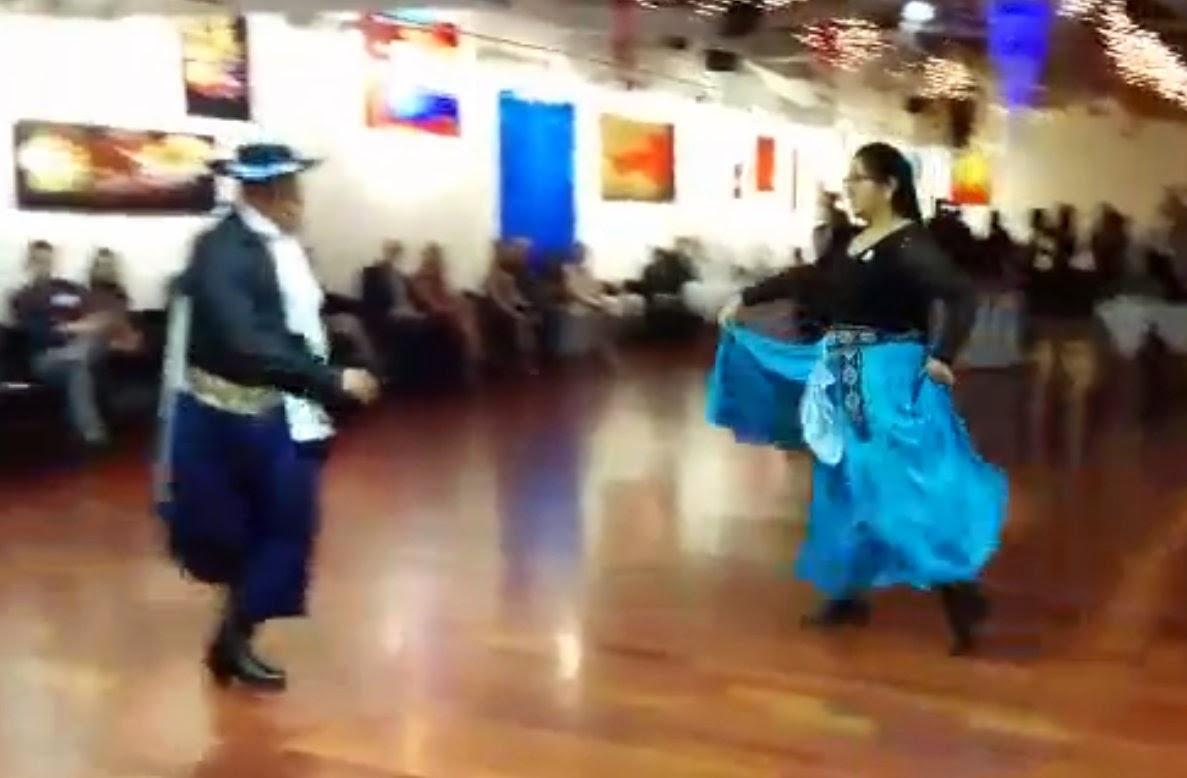
40.... is followed by 4 tango demo dances (triple cheers to our beloved Argentina, Patricia Becker, who flew in from San Diego just in time for our celebration!), and then a chacarera demo, micro-class, and a practice dance. At last, it's time to bring the floor back into milonga action with a small helping of D'Arienzo - and we keep on rolling until 1 am!
Juan D'Arienzo
14 Dec 1900 - 14 Jan 1976
From Tangology blog

41. Juan D'Arienzo - Instrumental  "El Cencerro" 1937 2:40
42. Juan D'Arienzo - Instrumental  "Ataniche" 1936 2:31
43. Juan D'Arienzo - Instrumental  "El flete" 1936 2:58
Come to think of it, "D'Arienzo the rescuer of the milonga" is also the main storyline of the great director's life. Tonight, we celebrate Carlos Gardel and Julio De Caro's birthday, but it is Juan D'Arienzo (whose birthday comes next week) whom we should give credit for saving tango as a dance culture. Gardel cemented the role of poetry and vocal in tango, and De Caro opened the floodgates of its musical complexity. Juan D'Arienzo was in many ways the antithesis of both of these two tango heroes. At first, D'Arienzo's music has been roundly derided as primitive, as retreating to tango's inglorious roots, and the lyrics of many of his songs, as lowly and un-poetic. But tango couldn't have experienced its bloom in the 1940s without the seeds D'Arienzo planted in the second half of the 1930s! By the mid-1930s, the notable tango orchestras all left the dance hall for the theaters and the cabarets, and the record sales sagged too. It was the vigorous, youthful beat of the D'Arienzo's newly assembled band, in 1936, which filled the dance venues again, and brought jobs to countless other tango orchestras who carried on the flame of the milonga. 
44. Los Iracundos  "Puerto Montt rock" 1971 0:27
45. Florindo Sassone - Instrumental "Ojos Negros (Oscar Strok)" 1968 2:28
46. Florindo Sassone - Instrumental "Adios corazon" 1968 2:16
47. Florindo Sassone - Instrumental "Bar Exposicion" 1959 3:26
48. Los Naufragos  "Zapatos Rotos rock"  0:34
49. Orquesta Tipica Victor - Mariano Balcarce  "Milonga De Los Fortines" 1937 2:52
50. Orquesta Tipica Victor - Carlos Lafuente "Cacareando" 1933 2:45
51. Emilio Pellejero - Enalmar De Maria "Mi Vieja Linda" 1941 2:26
52. Gilda  "Noches Vacias cortina"  0:22
53. Lucio Demare - Horacio Quintana  "Torrente" 1944 3:10
54. Lucio Demare - Horacio Quintana "Igual que un bandoneon" 1945 3:02
55. Lucio Demare - Horacio Quintana "Solamente ella" 1944 3:15
56. Sandro de America  "Yo Te Amo cortina" 1968 0:23
57. Héctor Varela - Argentino Ledesma "Fueron tres años" 1956 3:28
58. Héctor Varela - Argentino Ledesma "Muchacha" 1956 3:19
59. Héctor Varela - Argentino Ledesma "Si me hablaras corazon" 1956 3:18
60. Gilda  "No Me Arrepiento de Éste Amor cortina long"  0:40
61. Edgardo Donato - Horacio Lagos "Quien Sera" 1941 2:15
62. Edgardo Donato - Horacio Lagos, Lita Morales y Romeo Gavio "Estrellita Mia" 1940 2:36
63. Edgardo Donato - Félix Gutierrez "La Tapera" 1936 2:54
64. Sandro de America  "Yo te amo cortina long"  0:44
65. Alfredo de Angelis - Instrumental "Mi dolor" 1957 2:51
66. Alfredo de Angelis - Instrumental "Pavadita" 1958 2:55
67. Alfredo de Angelis - Instrumental "Felicia" 1969 2:47
68. Los Naufragos  "Zapatos Rotos rock"  0:34
We may have skipped the name of El Rey del compásthe King of the Beat Juan D'Arienzo in the speeches tonight, but we shall celebrate his birthday in our hearts and with our dancing feet!
69. Juan D'Arienzo - Instrumental  "El huracán" 1944 2:21
70. Juan D'Arienzo - Instrumental  "Este Es El Rey" 1971 3:10
71. Juan D'Arienzo - Instrumental  "La cumparsita" 1951 3:54
And we wouldn't have made it without selfless help of Alejandra and the family. Thank you for the abundance of empanadas!! Comida argentina para siempre!

Sunday, December 25, 2016

Tango, mankind's most unusual heritage

A UNESCO image
Tango is an element of the intangible cultural heritage of the humanity. On October 2, 2009 UNESCO famously called for its preservation.What most of us don't know is how special is Tango's place on the Representative List of the Intangible Cultural Heritage of Humanity. 

The goal is to safeguard living traditions in the communities: UNESCO inscribes local cultural practices and traditions on the List of the Intangible Cultural Heritage of Humanity to give them better visibility, to boost self-esteem of the local communities, to foster the global dialogue and to encourage the authorities to do more to safeguard them.The UNESCO process takes special care to avoid excessive commercialization of culture for tourism and for export. UNESCO's goal is for the cultural riches to remain vested in the community, transmitted from generation to generation in the natural way, and continuously developing with the flow of time; it strongly opposes the danger of "folklorisation"(where a quest for "strict authenticity" smothers natural evolution and transmission of culture). UNESCO clearly recognizes the clash between safeguarding cultural traditions vs. protecting copyright or ownership. Verbatim: "Indeed, as intangible cultural heritage evolves thanks to its continuous recreation by the communities and groups that bear and practice it, protecting a specific manifestation like the performance of a dance, the recorded interpretation of a song or the patented use of a medicinal plant may lead to freezing this intangible cultural heritage and hinder its natural evolution. Moreover, as the communities are the ones who create, maintain and transmit intangible cultural heritage, it is difficult to determine the collective owner of such heritage."
Argentine legislators joining the 2008 petition

The "where" and the "how".... The UNESCO process begins from defining the geographic range of the cultural practice, and its traditional mode of transmission (family, teacher-apprentice, observation and imitation?). Tango's "where" and "how" are unparalleled in the Representative List! It's geographic range is defined as the entire world - then the declaration seeks to safeguard tango's place of birth in Montevideo and Buenos Aires. There isn't any other musical / poetic / dance art form in the whole list which is defined as distributed world-wide yet needs safeguarding in its birthplace. With tango, much credit should be given to the global communities for making Buenos Aires a place of pilgrimage, a center of study, and a source of inspiration. That's why a globalized cultural phenomenon was able to revitalize its cradle. Time and time again, when tango was in danger at its place of birth, the expat communities lent hand to sustain it ... as early in the 1900s, when tango was disallowed by the Catholic Church itself, and derided as an African-influenced, underclass subculture by the purists at home, and then in the "dark days" of tango in the 1960s and 1970s, when the foreign music fans didn't let the tradition lapse, and of course beginning in the 1990s with the social dance wave going global.
With the traditional mode of transmission, tango is just as unique. UNESCO simply refused to narrow it down to something specific. So tango has become the only cultural legacy which has lots of "right ways" to pass on the tradition!
UNESCO asks, then, about a nominated cultural practice: How does it adapt to modernity? Are the traditional ways endangered? Are there urgent safekeeping needs? Any cultural asset worth being protected by UNESCO must conform to the human rights. Importantly, sacred practices and oral arts may be safeguarded, but neither religions nor languages themselves qualify for protection. In these respects, tango isn't totally unique, but it's still very special.  Verbatim: 
- tango both embodies and encourages diversity and cultural dialogue
- it adapts to new environments and changing times
The UNESCO declaration makes it an honorable duty of Argentina to nurture its tango community in BsAs, while strongly speaking against exclusive "ownership of culture", and for broad global dialogue, change, and diversity."Inscription of the element on the Representative List would contribute to visibility of intangible cultural heritage and a deeper understanding of the Tango as a regional expression resulting from the fusion of several cultures" 

The petitioners: The UNESCO declaration was sought jointly by the municipalities of Buenos Aires and Montevideo. In Buenos Aires, Luciana Blasco, a cultural event organizer who then served on the city council, spearheaded the petition, citing the existing 1998 City Law 130 which already called for the city to help its tango community. Such luminaries as Horacio Arturo Ferrer (1933-2014), an Uruguayan-Argentine tango poet of "Balada para un loco" fame and the creator of Argentine National Tango Academy, Leopoldo Federico (1927-2014), bandoneonist of such classic orchestras as Di Sarli and Troilo's, composer, and tango orchestra leader, Raul Lavie, a contemporary tango singer, José Gobello (1919-2013), the patriarch lunfardo expert, and Laura, second wife of Astor Piazzolla and chairwoman of his memorial foundation, joined. Such famed dancers as Mora Godoy and Miguel Angel Zotto supported the project (Mora, who describes herself as the most important tango dancer in Argentina, once famously dragged reluctant Pres. Obama onto the dance floor). Zotto, who already starred in Tango Agentino on the Broadway in the mid-1980, famously said that nothing endangers tango in today's global culture. We see a broad list of tango innovators and modernizers signing up for a project to preserve the heritage, but it should come as no surprise, being one of those contradictions which are always woven into the fabric of tangoInterestingly also, among the preexisting conservation efforts, they also listed both Day of Tango, December 11, and the virtually unknown Uruguayan Day of Tango, October 5 (this date commemorated the creation of FUTANGO (Federation of Uruguayan Tango) in 2005, but it kind of dissolved in the broader festivities of Uruguayan Heritage Days, and never really caught on). 


So many facets! The petition strongly emphasized cultural diversity as the very core of tango, a central part of its essence and roots, and its continuous development in cross-cultural fertilization. There were many cool details in the petition which which didn't make the cut in the UNESCO declaration. For example, in addition to tango proper, milonga, and "so called vals criollo", the petition sought to include the sub-genre of the milonga candombeada, too. In addition to musicians, poets, and dancers, the petition originally sought to include playwrights, script writers, historians, journalists, editors, website operators etc. Language of tango was petitioned for (since Lunfardo Academy was one of the movers behind the project), but UNESCO rules specifically disallow as broad things as language from the lists of cultural heritage.The petition also sought to include tango-related handicrafts (later on, filete won a separate UNESCO heritage designation). I can only assume that the broad scope of the proposed protections was eventually found to be too wide for the UNESCO process, which is more geared towards community artists and craftsmen than to the big-city editors, producers, and web designers

Superficial foreign fans and enforced authenticity? Another sentiment which didn't make the cut was a kind of a familiar lament about shallow understanding of the tango culture abroad. The petitioners suggested, in particular, that "the Europeans understand Tango as music of the belle-époque", with exaggerated sensuality of a luxury cabaret, and don't appreciate tango's humble, underclass roots. ( Irony mode on - to see tango with all these supposed sins of exaggerated sensuality, with the woman thrown around exactly as the petition complained, one doesn't have to go any further than the cool promotional clip of one of its most famous signatories, Mora Godoy! :) ) 

Of course this kind of a broad-brush cultural suspicion didn't fly, and the UNESCO declaration carefully avoided blaming the "superficial foreigners" or calling for "proper authenticity". But one has to understand that it's so common for the locals to start fearing loss of identity just as their cultural heritage finally gains appreciation and popularity abroad. More on it below... 

Pledges and failures: The petitioners pledged to spend hundreds thousand dollars to support tango life in BsAs and Montevideo, including promoting historical venues, creating tango hostels for visiting trainees, a huge documentation and record center, an institute and a fund to support milongas ... even half a million dollars to establish a tango museum in Montevideo! But hardly anything has been delivered. When, in 2013, the governments reported on its progress, they had just one modest achievement to brag about, a newly organized Tango Research Center in Argentina. As we know, many traditional milongas in BsAs (both indoor and outdoor) are under a persistent bureaucratic attack, losing venues completely, experiencing temporary closures. The cradle of tango needs protection, and the UNESCO declaration continues to require action.

Is this a right way to balance the aspirations of the global vs. indigenous communities? The Convention on the Intangible Cultural Heritage is only 13 years old, although it has been informed by UNESCO's decades of cultural protection and community development experience. Its pros and cons have been recently reviewed by Farah and Tremolada (2014). The core issue is familiar to us, tango lovers: it is the issue of indigenous control of cultural heritage vs. globalized identity drawing from a variety of cross-fertilizing cultures. The global community may fear being robbed of its means of expression, while the indigenous community may fear an identity crisis.
Prof. Farah lectures on legal frameworks
of safeguarding cultural legacy

Intellectual property (IP) models, especially copyright, are also widely used for cultural assets. Importantly, copyright protects the asset only over the defined period of time; then it falls into public domain for all to use. IP protection is also narrowly focused on money rather than on community values / sacred values. IP = fair exchange of cultural assets for commercial value, at the expense of freedom of expression. SADAIC and AGADU have long followed the IP copyright model for aspects of tango culture, and tango music and poetry did become a commodity, which has also become targeted for export very early on. Because of this commodification and the global market focus, an alternative IP protection tool of "geographic indication", has become impossible to apply to the tango culture. 

But, as UNESCO uderscores, living cultural tradition isn't a mere reproduction or copying. It includes creativity and innovation and this makes it even harder to apply IP framework. Safeguarding cultural heritage is likewise more complicated than mere protection. It also includes an obligation to let the cultural practices develop and evolve in a continuous process of social involvement.

In 1982, World IP organization and UNESCO already tried drafting a new framework for national laws for regulating folklore (potentially including bans on fusion forms or distorted forms of traditional culture). In this framework, wherever money was at stake, practicing folklore would have required a license from the government. This idea was fundamentally at odds with the freedom of expression, and the proposal didn't go anywhere. But the experience of drafting the failed, overreaching model framework was seminal for UNESCO's subsequent fine-tuned efforts to safeguard cultural heritage of the humanity. As a result, UNESCO defined indigenous cultural heritage as a living, evolving form of expression practiced by the communities, rather than rigidly codified by the governments.

Sunday, December 13, 2015

Dia del Tango playlist 2015

A grand celebration commemorating Gardel's birthday - how else to begin it but with Gardel's famous song which injected set-verse poetry into tango for the first time in 1917, and ushered in the new, beautiful era of nostalgic and sad tango songs? Here's how Gardel sung it to the accompaniment of guitars a decade later:
001. Carlos Gardél  "Mi Noche Triste" 1930 3:20
002. Francisco Canaro - Instrumental "El cabure" 1936 2:37
003. Francisco Canaro - Instrumental "El Chamuyo" 1933 3:09
004. Francisco Canaro - Instrumental "Inspiración" 1951 3:33
A new set of Russian-themed cortinas is actually heavily Caribbean-flavored, while the music borrows from old Turkish folk:
005. Boney M  "Rasputin cortina 1 " 0:22
006. Juan D'Arienzo - Instrumental  "Yapeyu" 1951 2:26
007. Juan D'Arienzo - Instrumental  "El irresistible (clean)" 1954 2:31
008. Juan D'Arienzo - Instrumental  "El Internado" 1954 2:34
009. The Beatles  "Obladi-Oblada cortina1" 0:19
Playing from foobar, planning ahead in MediaPlayer,
& feeling stressed in a dark corner behind the coat rack
DJing a holiday night with its lots of assorted specials and a heavy turnout of the inexperienced dancers always promises to be messy. But tonight it will morph into my hardest-ever DJing assignment, because nothing is following the schedule. Which called for a block of back-to-back perfomances punctuated by single tandas of recorded music - which would have to be all-tango, high-drive, high-accessibility sets. But nobody is ready to perform on time, so need to keep adding vals and milonga genres and more lyrical moods and juggling the performers' requests on the fly.
010. Aníbal Troilo - Instrumental "Un Placer (Vals)" 1942 2:19
011. Aníbal Troilo - Floreal Ruiz "Flor de Lino" 1947 2:51
012. Aníbal Troilo - Francisco Fiorentino "Tu Diagnóstico" 1941 2:09
One of my most Argentine cortinas, a beautiful intro from a super-hit of the inaugural decade of "Rock en Castellano" (and thank you Lucia for your help!!)
013. Sandro de America  "Yo Te Amo cortina" 1968 0:23
014.  Announcements break 0:31
015. Orquesta Típica Víctor - Angel Vargas "Adios Buenos Aires"  2:36
016. Orquesta Típica Víctor - Alberto Gomez "Carillon de La Merced" 1931  3:16
017. Orquesta Típica Víctor - Ortega del Cerro "Una Vez" 1943 3:22
018. Sandro de America  "Yo Te Amo cortina" 1968 0:23
019. Carlos Di Sarli - Instrumental "Shusheta" 1940 2:24
020. Carlos Di Sarli - Instrumental "Catamarca" 1940 2:24
021. Carlos Di Sarli - Instrumental "La Trilla" 1940 2:19
022. The Beatles  "Obladi-Oblada cortina1" 0:19
023. Edgardo Donato - Horacio Lagos "Sacale punta" 1938 2:16
024. Edgardo Donato - Horacio Lagos "De Punta A Punta" 1939 2:20
025. Edgardo Donato - Horacio Lagos "Ella Es Asi" 1938 2:35
026. Sandro de America  "Yo Te Amo cortina" 1968 0:23
027. Juan D'Arienzo - Alberto Echagüe "Que Dios Te Ayude" 1939 2:21
028. Juan D'Arienzo - Alberto Echagüe "Que Importa" 1939 2:08
029. Juan D'Arienzo - Alberto Echagüe "Ansíedád" 1938 2:32
030. Alla Pugacheva "Million Scarlet Roses" 1982 0:19
031.  silence 0:31 Finally Florencia and Rodolfo and the bombo drummers are ready for the chacarera!
032. "Chacarera del violin"  2:12

033.  silence  0:06 Call for everyone to join the next chacarera!
034. "Chacarera del Rancho"  2:21
035.   silence  0:06 And to the sound of the drums adding their voice to the recorded music, our wonderful folk dancers come to the floor again - followed by more bombo.
036. "Escondido"  3:44

037.  silence  0:06
038. Ángel D'Agostino - Ángel Vargas "Adiós Arrabal" 1941 3:10
039. Ángel D'Agostino - Ángel Vargas  "Mano Blanca" 1944 2:42
040. Ángel D'Agostino - Ángel Vargas "Ninguna" 1942 2:59
041. The Beatles  "Obladi-Oblada cortina1"  0:19
042.  silence  0:31 Call for a birthday vals for the lucky man who happened to be born on the same December day as Gardel and Julio de Caro - and by the way, speaking of birthdays: the tango cake is ready :)

043. Miguel Caló - Raul Berón "El Vals Soñador" 1942 3:28
Alberto Podestá performing at 82
(totango website)
044.  silence 0:06 Now it's time for everyone to join for the remainder of the vals tanda - and it also marks the first of many times the voice of Alberto Podestá will sound tonight! I already wrote about his 7+ decades of singing tango. The great vocalist passed away at the age of 91 two days earlier, on December 9, 2015. May his voice energize the nights of tango forever!
045. Miguel Caló - Alberto Podestá  "Bajo un cielo de estrellas (vals)" 1941 2:37
046. Miguel Caló - Alberto Podestá  "Pedacito de cielo (vals)" 1942 2:21
047. Sandro de America  "Yo Te Amo cortina" 1968 0:23
048. silence  0:31 Great Daniel Diaz, who played bandoneon in theaters and cafes of Argentina since childhood, makes a multimedia presentation about tango and its history!
049. Boney M  "Rasputin cortina 1 " 0:22
050. Ricardo Tanturi - Instrumental "Una Noche de Garufa" 1941 2:31
051. Ricardo Tanturi - Alberto Castillo  "Pocas Palabras" 1941 2:21
052. Ricardo Tanturi - Instrumental  "Comparsa Criolla" 1941 2:53
053. Sandro de America  "Yo Te Amo cortina" 1968 0:23
2nd Podesta tanda
054. Pedro Láurenz - Alberto Podestá  "Que nunca me falte" 1943 2:49
055. Pedro Láurenz - Alberto Podestá  "Nunca tuvo novio" 1943 3:14
056. Pedro Láurenz - Alberto Podestá "Alma de bohemio" 1943 2:43
057. Beatles The Beatles "All you Need is Love cortina"  0:19
058.  silence 0:06 Tango demos time! Nicholas and Emily perform to Donato, and Yves and Barbara, to D'Arienzo's Cumparsita (the first of this night's three (!) Cumparsitas! )
059. Edgardo Donato - Horacio Lagos y Lita Morales "Sinsabor" 1939 2:53
060. Juan D Arienzo - Instrumental "La cumparsita" 1955 4:03
061. Edgardo Donato - Horacio Lagos "El Adiós" 1938 3:09
062. Edgardo Donato - Romeo Gavioli "Sinfonía De Arrabal" 1940 3:07
063. Edgardo Donato - Lita Morales - Romeo Gavio  "Mi Serenata" 1940 3:02
064. The Beatles  "Obladi-Oblada cortina1" 0:19
065. Orquesta Típica Víctor - Ángel Vargas "Sin Rumbo Fijo (vals)" 1938 2:18
066. Orquesta Tipica Victor - Lita Morales "Noches de invierno" 1937 2:47
067. Orquesta Tipica Victor - Mario Pomar  "Temo" 1940 2:55
068. Sandro de America  "Yo Te Amo cortina" 1968 0:23
069.  silence30 0:31 And it's time for the final - and the greatest  - of the night's specials, live music by Daniel Diaz (bandoneon) and Brian Salisbury (violin) and vocal by Lucho!
070. Boney M  "Rasputin cortina 2" 0:16
071. Anibal Troilo - Francisco Fiorentino "El Bulin de La Calle Ayacucho" 1941 2:29
072. Anibal Troilo - Francisco Fiorentino "En Esta Tarde Gris (Fiorentino)" 1941 3:14
073. Aníbal Troilo - Francisco Fiorentino  "Te aconsejo que me olvides" 1941 3:00
074. Boney M  "Rasputin cortina 3" 0:17
This Podestá milonga tanda combined two orchestras and I loved all of these tracks, but after playing the set I got a feeling that Laurenz's pieces lose in comparison?
075. Carlos Di Sarli - Alberto Podestá "Entre Pitada Y Pitada" 1942 2:33
076. Pedro Laurenz - Alberto Podestá "Maldonado" 1943 2:07
077. Pedro Laurenz - Alberto Podestá "Yo Soy De San Telmo" 1943 2:32
078. Sandro de America  "Yo Te Amo cortina" 1968 0:23
079. Carlos Di Sarli - Oscar Serpa "Verdemar" 1955 3:02
080. Carlos Di Sarli - Mario Pomar "Duelo Criollo" 1952 2:30
081. Carlos Di Sarli - Argentino Ledesma "Fumando Espero" 1956 4:04
082. Boney M  "Rasputin cortina 4" 0:22
083. Juan D'Arienzo - Instrumental "La torcacita" 1971 2:31
084. Juan D'Arienzo - Instrumental "Zorro gris" 1973 2:03
085. Juan D'Arienzo - Instrumental "Este Es El Rey" 1971 3:12
086. The Beatles  "Obladi-Oblada cortina1"  0:19
087. Rodolfo Biagi - Instrumental "Lágrimas y sonrisas" 1941 2:41
088. Rodolfo Biagi - Alberto Amor "Manana por la manana (vals)" 1946 2:28
089. Rodolfo Biagi - Alberto Amor "Paloma" 1945 2:28
090. The Beatles "All you Need is Love cortina" 0:19
091. Carlos Di Sarli - Alberto Podestá "La Capilla Blanca" 1944 2:55
092. Carlos Di Sarli - Alberto Podestá "Junto a tu corazón (Hoy como ayer)" 1942 3:00
093. Carlos Di Sarli - Alberto Podestá "Tú, el cielo y tú" 1942 2:59
094. Boney M  "Rasputin cortina 4" 0:22
A special request to play a tribute song to BsAs, a Gardel's composition originally. But I'm not familiar with Galan's vocal tangos and have to figure out how to continue this tanda even as the first song plays..
095. Francisco Canaro - Carlos Galán  "Mi Buenos Aires querido" 1934 3:20
096. Francisco Canaro - Ernesto Famá  "No me pregunten porque" 1939 2:51
097. Francisco Canaro - Ernesto Famá  "Te quiero todavia" 1939 2:54
098. Russian folk  "Murka"  0:20
099. Donato Racciatti - Olga Delgrossi  "Hasta siempre amor" 1958 2:57
100. Donato Racciatti - Olga Delgrossi "Sus Ojos Se Cerraron" 1956 2:47
101. Donato Racciatti - Olga Delgrossi  "Queriéndote" 1955 2:49
102. Boney M  "Rasputin cortina 3" 0:17
103. Osváldo Pugliese "Recuerdo" 1944 2:39
104. Osváldo Pugliese - Roberto Chanel "Farol" 1943 3:22
105. Osváldo Pugliese - Roberto Chanel "Rondando Tu Esquina" 1945 2:49
106. Zhanna Aguzarova "Old Hotel" 1987 0:22
The closing tanda is the 5th set of Alberto Podestá...
107. Pedro Laurenz - Alberto Podestá  "Todo" 1943 2:37
108. Pedro Laurenz - Alberto Podestá "Como el hornero" 1944 2:47
109. Pedro Laurenz - Alberto Podestá  "Recien" 1943 2:43
110. Carlos Di Sarli "La Cumparsita" 1955 3:18
Stanley Black
After a Cumparsita to weep, here comes another one to revel and to smile tonight. A rumba remix of La Cumparsita by Harry Roy Orchestra (best known for their 1931 hit, "My girl's pussy"). Harry Roy, nee Lipman, a British clarinetist and a bandleader, had an unusual journey into the Argentine music. He happened to record Latin-style dance tunes for a 1935 Hollywood comedy, "In Caliente", which soon took Latin America by storm. So in 1937 Harry Roy scored an invite for a South American gig, and his new lead pianist and arranger, 24 years old Stanley Black, fell in love with the Argentine rhythms. Soon, Stanley created jazz arrangements of tangos, first recorded in London by Parlophone label, and reissued by Argentina's Odeon. Stanley Black (whose birth name was Solomon Schwartz) would go on to remix great many tangos, but most of his later work lacks the exuberant naivete of the Roy's Cumparsita. 
111. Harry Roy "La cumparsita [rumba] Odeon 194888" 1938 2:58


and what a better way to bookend the night's list if not by playing Otros's "Percanta" which mixes in the same Gardel's song which opened the night?
112. Otros Aires  "Percanta" 2005 5:01
113. Leonard Cohen  "Dance Me To The End Of Love (Live)" 2002 6:06
(113 total)

Saturday, December 13, 2014

The Dark Ages: from the days of the burned records to the Day of Tango

This is the story of tango's darkest days, of the deluge of the New Wave, and of a 99 years old tango patrician, Ben Molar.

The tale begins at the times of the fall of Perón's rule in 1955. The military juntas replacing him didn't yet set the goals of governing the country in perpetuity, but they made it painfully clear that not just Peron himself, but all populism and leftism was out, replaced by the rule of the money and the elite. The tango, alas, has been co-opted by the Argentine populism as the soul of its national culture; tango has been hoisted as the banner of Peronism, and the old personal relation between the families of Enrique Santos Discépolo and Juan Perón has already costed tango's leading poet and organizer his dignity and, in the end, his life (Discépolo actively promoted Perón's 1951 reelection campaign in his radio program, and brought in other tango celebrities to root for Perón, which caused for Discépolo so much vitriol, hate mail and threats, spitting and heckling, empty theaters and denied handshakes, that the poet soon died at the age of 50 of what was essentially lack of will to live).

Listen to the video below. This is Francisco Canaro's orchestra, with Hugo del Carril singing the Peronist march ("Los muchachos Peronistas...").

Tango was falling out of favor with the ones in power, and with the media companies. It culminated in the loss of master copies of tango records. This is the main reason why so many tangos we aspire to dance to are of so-so record quality, digitized from used vinyl disks. It didn't affect all Golden Age records in the same way; in fact backup tapes of Troilo and D'Arienzo have been largely preserved, hence a better quality of recordings of their orchestras. The lore of the tango DJs says that one person, an Ecuadorean or perhaps a Colombian, ordered the master copies of tango records burned, maybe out of sheer ignorance or out of spite. Can we reconstruct what exactly happened?

 
"Frutillas", Ben Molar's
Castellano translation of
"Strawberry Fields Forever"
In 1959, RCA Victor Argentina, under its Ecuadorean General Manager Ricardo Mejia, a "sales expert", started La Nueva Ola, "The New Wave", billed as "movimiento musical" but essentially a commercial enterprise hiring younger musicians and vocalists to produce a domestic version of rock-n-roll (and to beat rival Odeón with its immensely popular Luis Aguilé). (It is the same year which planted the first seeds of the future tango rebirths when in October, Piazzolla, on  a Copes tour to Puerto Rico and New York, wrote "Adios Nonio") (Of all "daughter companies" of old grand Victor, today we probably remember the best its Japanese arm, JVC or Japan Victor Company ... and if Ricardo Mejia is ever remembered, it is as the barbaric RCA Victor manager who infamously burned the archived master records of tango)

English songs were kept away from the Argentine airways, so La Nueva Ola often used gringo themes translated into Castellano by Moses Smolarchik Brenner a.k.a. Ben Molar, ironically a lifelong tango aficionado, author, and organizer who at the time helped hasten the end of tango's greatest years, replacing tango with the transplanted foreign pop. 


The following year, in November 1960, Mejia hired his fiancee Jolly Land  ( Yolanda Juana Magdalena Delisio Puccio), a 27 year old jazz singer and TV star, to join RCA's nascent La Nueva Ola ensemble, Club de Clan. Blond and silly, Jolly Land has become famous as "The Clan Coquette" and "Argentine Brigitte Bardotte".  And, despite the movement's official goal of "cleansing pop music from the US influence", she soon won a permission to sing - occasionally - in English. All of it cemented the Clan's popularity. As reported in Billboard on Feb. 2nd, 1963, Mejia's commercial success was exemplary because the local talent in economically depressed Argentina has been so cheap, and because the record shops were forced to accept a reduced 20% profit margin - so Clan's LPs retailed for $1.99 apiece. Buoyed by these successes, Mejia broke with RCA to establish a rival, even cheaper brand - and then vanished from the industry altogether.


The magnetic tape technology has been introduced to broadcasting barely a decade earlier, by Bing Crosby who gave Ampex a $50000 grant, in 1947, to reverse-engineer a Nazi tape recording machine, the Magnetophon. Although prototype tape recorders were demoed by the Germans as early as 1931, the German engineers achieved massive improvements in the 1940s, and surpassed the quality of 78 rpm records. Late in the war, the Magnetophone was widely - and secretively - used to enhance the quality of the German broadcasts. It's not like the existence of some breakthrough sound recording technique wasn't known to the Allies ... of course they knew that even after all the studios and archives of Berlin broadcasters were destroyed in air raids, the quality of the broadcast remained stellar ... they just had no idea what technical means made it possible. After the Nazi capitulation, U.S. Army Signal Corps Major Jack Mullin brought a couple Magnetophons and some tape reels to the US in 1946, demoed it around Hollywood entretainers, and got Crosby hooked. Ampex (named after the initials of its Russian founder, A.M. Poniatoff, an engineering and aviation prodigy from a small, and now by abandoned, Russian village in Tatarstan) was up to the challenge, and the rest is history
A.M. Poniatoff with his prototype in 1948
But before the Club de Clan project brought RCA its first mega-profits, Mejia needed rehearsal and recording spaces for his young talents - and his sights turned to the rooms occupied by the RCA audio archive. Far from being a culture-hating Herostratus, Mejia was a pragmatic manager who wouldn't just throw away valuable property. He arranged for a transfer of the records to then-cutting technology of magnetic tapes, to free up the space. But the tape recording turned out to be haphazard and uncontrolled, and only a fraction of the master records (including, peculiarly, Troilo's) ended up transferred to tapes with an appropriate quality before the original master copies were destroyed!

In fact, Ricardo Mejia was the first media manager to put live tango orchestras on TV, starting in 1962 with "Yo te canto Buenos Aires" on Channel 11 (featuring "El Polaco" Roberto Goyeneche singing "Garúa" with the Aníbal Troilo's orchestra!). And in 1963, he commissioned "Tango de Exportacion", a Troilo LP for the foreign markets. So he must have had some faith in tango - the old tango perhaps only good to please the older audiences or the foreigners, but the new youthful tango of El Club de Clan possibly bridging the generation gap in a way which appealed both to Clan's youngest fans and to their parents (yes, in addition to pop and "localized" rock, the Clan talents also starred in the classic genres of tropical (Chico Navarro), tango (Raúl "Tanguito" Cobián), and especially the hinterland folk music  ("Palito" Ortega), the latter symbolizing the defeat of Porteno culture with its music of sadness and resignation in the post-Peronist Argentina). Clan's dancing on stage was orderly, the lyrics extolled youthfulness, contented happiness, and the status quo - the joyous youthful music quite fit for a paternalistic, conservative political regime. 
El Pichuco for export!
Ricardo Mejia and Anibal Troilo signing the deal. "Billboard", Aug 24, 1963
Mejia is said to have lead a personal vendetta against Osvaldo Pugliese, who enjoyed particularly strong cross-generational appeal and who eagerly drew young talents into his egalitarian music-coop team, too. Abel Cordoba recalls how the "Club de Clan people" pushed Club Estudiantes de la Plata to stop Pugliese's concerts, and how they heckled Pugliese at Club Provincial of Rosario.

The clip below shows tango "El Club de Clan way". Young Raúl "Tanguito" Cobián sings "Picaflor", "The womanizer", for TV:
The painting for Troilo
Ben Molar, as we said, did much more than to publish translations of foreign hits through Ediciones Internacionales Fermata, a musical score-publishing label he owned. Ben Molar loved tango music and poetry and he especially loved Julio De Caro, for who he wrote lyrics of Calla corazón calla, and he watched the deterioration of tango culture in the 1960s with dismay. Ben Molar's solution to this problem was to cleanse tango if its mass-culture, dance-hall past, and to develop new tango as a refined art form, a synthesis of painting, music, and poetry, directed at high-culture audiences both at home and abroad. That's how, in 1966, Ben Molar's ambitious tango project, "14 con el tango", came to life. Fourteen orchestras and fourteen singers, fourteen composers and fourteen poets created 14 very non-danceable tangos - paired, indeed, with 14 paintings, and featured around the world on an embassy tour. 


The painting for D'Arienzo
In the same 1966, at Julio De Caro's birthday celebration, Ben Molar came up with an even more ambitious idea of the National Day of Tango. It will take Ben Molar over a decade (which included several years of Peronist rule, even more violently terminated by the military this time around) to turn De Caro's birthday, December 11th, into a natonal celebration. And against all odds, the first ever Day of Tango, on December 11 1977, filled Luna Park with 14,500 spectators!

And so we celebrate it, for nearly 4 decades now, in Argentina and around the world - a day timed to the shared birth date of Julio de Caro and Carlos Gardel, exactly the two tango music great's to whose records we wouldn't dance, as a life's legacy of a poet and a translator who would have loved to banish dance from the world of tango, and who personally lent a helping hand to the profiteers eager to replace tango with rock and with the Anglo pop hits. But come to think of it, isn't it one of those logical incompatibilities tango is all about? Freedom and control, flight and grounding, rhythm and melody, love and mean-spiritedness, fire and ice - that's what makes tango a tango.

Dia del Tango milonga playlist

Rodolfo & Florencia's chacarera!
(David Herrera's image)
The Argentine National Day of Tango, December 11th, never ceases to be a cause of celebrations around the globe - and never ceases to impress on me the humbling point, how minor is the role of our beloved social tango dancing in the cultural phenomenon called Argentine Tango. A typical celebratory milonga is full of skits and lessons, lectures and awards, movies and recitations ... but it still rolls around the dance floor in between the chaotic interruptions, and still culminates in the sounds of the Cumparsita.
More on the grand story of the Day of Tango later. For this post, I'll focus on just a little story of my DJing stint in the tail end of Salt Lake's grand celebration milonga on Dec. 12th.
Guadalupe was spinning the tandas for most of the milonga's dancing time. The organizers suggested that the local tango DJs should take turns during the celebration, however chaotically it may work in practice. My turn has been hastened by Guadalupe's laptop malfunction, and I had to start from playing Rodolfo's chacarera's for the richly costumed demo & for Florencia's short but spirited chacarera lesson. Then it was time for tango, with many interruptions, additions, and special requests. 
01. Francisco Canaro - Roberto Maida  "Nada mas" 1938 3:00
02. Francisco Canaro - Roberto Maida  "Madreselva" 1938 2:49
03. Francisco Canaro - Roberto Maida  "Invierno" 1937 3:26
04. The Blues Brothers  "Theme From Rawhide 3" 1980 0:20
05. Rodolfo Biagi - Andrés Falgás "La Chacarera " 1940 2:24
06. Rodolfo Biagi - Andrés Falgás "Cielo!" 19392:31
07. Rodolfo Biagi - Jorge Ortiz "Humiliacion" 1941 2:42
08. The Blues Brothers  "Theme From Rawhide 3" 1980 0:20
the best of XXI c. milongas
09. Otros Aires II "Los Vino"  2:41
10. Otros Aires  "Rotos en el Raval" 2005 3:53
11. Otros Aires  "Un Baile De Beneficio" 2010 3:42
12. The Blues Brothers  "Theme From Rawhide 3" 1980 0:20
13. Edgardo Donato - Lita Morales - Romeo Gavio  "Mi Serenata" 1940 3:02
14. Edgardo Donato - Horacio Lagos  "El adios" 1938 3:19
Cuarteto Tipico Los Aces
(break)
the only bold experiment in the music selection ... Fast and sparkling with energy, these valses have been recorded by a very short-lived quartet of piano, bando, and two violins, who boldly called themselves "The Aces". I really liked 2nd and 3rd valses here, but the first one wasn't as driving IMHO.
15. Cuarteto Tipico Los Ases (Director Juan Carlos Cambón )  "Noches de serenata (vals)" 1940 2:32
16. Cuarteto Tipico Los Ases (Director Juan Carlos Cambón )  "Tus ojos me embelesan (vals)" 1940 2:45
17. Cuarteto Tipico Los Ases (Director Juan Carlos Cambón )  "Invernal (vals)" 1941 2:42
18. The Blues Brothers  "Theme From Rawhide 3" 1980 0:20
19. Carlos di Sarli - Alberto Podestá  "Junto a tu corazon" 1942 3:00
20. Carlos di Sarli - Alberto Podestá  "Tu el cielo y tu" 1944 2:59
( break for speeches; milongas needed for Jose Luis... )
22. Francisco Canaro - Ernesto Fam  "Milonga del 900" 1933 2:55
23. Francisco Canaro Ernesto Fama y Angel Ramos "Milonga sentimental" 1933 3:12
(break)
24. Lucio Demare - Juan Carlos Mir  "Malena" 1942 2:57
25. Lucio Demare - Juan Carlos Mir  "Manana zarpa un barco" 1942 3:22
26. Lucio Demare - Juan Carlos Mir  "No te apures, Carablanca" 1942 3:29
27. Goran Bregovic  "Old Home Movie" 1993 0:25
28. Alfredo de Angelis - Instrumental "Felicia" 1969 2:48
29. Alfredo de Angelis - Instrumental "Mi dolor" 1957 2:51
30. Alfredo de Angelis - Instrumental  "Pavadita" 1958 2:55
31. Goran Bregovic  "Old Home Movie" 1993 0:25
32. Osvaldo Pugliese - Instrumental  "Recuerdo" 2:54
33. Osvaldo Pugliese - Roberto Chanel "Corrientes Y Esmeralda" 1944 2:49
34. Osvaldo Pugliese - Roberto Chanel "Rondando Tu Esquina" 1945 2:49
35. Alfredo de Angelis - Instrumental "La cumparsita (Matos Rodriguez)" 1961 3:33
(35 total)