005. Quinteto Don Pancho - Instrumental "El garron" 1938 2:27
006. Quinteto Don Pancho - Instrumental "Alma en pena" 1938 2:46
007. Quinteto Don Pancho - Instrumental "Loca" 1938 2:57
Many new cortinas tonight, mostly from Argentine and Polish rock of the decades past.
008. Soda Stereo "Profugos" 0:33
(the first tandas at the Avalon are more like ambient music for the sumptuous dinner served by Halina, the milonga's amazing host, and I play them relatively quietly. But beginning from the third tanda already, the dancers begin to fill the floor, and the volume goes up, too)
009. Sexteto Carlos di Sarli - Instrumental "Belen" 1929 2:44
010. Sexteto Carlos di Sarli - Ernesto Fama "Flora" 1930 2:38
011. Orquesta Tipica Victor (dir. A. Carabelli) - "Coqueta" 1929 2:47
... OK, and a couple new Russian rock cortinas too :)
012. Lyube "Bat'ka Makhno cortina 1" 0:18
013. The Alex Krebs Tango Sextet "Negrito" 2011 1:53
014. The Alex Krebs Tango Sextet "Largas las Penas" 2011 3:02
015. The Alex Krebs Tango Sextet "Ella Es Asi (feat. Enrique "El Peru" Chavez)" 2011 2:32
016. Aya RL "Skora" 0:33
017. Carlos di Sarli - Roberto Rufino "Decíme Que Pasó" 1942 2:39
018. Carlos di Sarli - Roberto Rufino "Adiós te vas" 1943 2:30
019. Carlos di Sarli - Instrumental "Ensueños" 1943 2:42
020. Marek Grechuta "Korowod" 0:32
I'm surprised how recent are these records of the once-overplayed nuevo tango hits of the bygone era, the era when we were making our first tango steps...
021. Lhasa De Sela "La Cara de la Pared" 2005 4:23
A Polish-Yiddish klezmery fox cortina signals a special Old Poland-centered tanda...
040. Adam Aston "Nikodem" 0:20
I always try to include a tanda of Eastern European antebellum music at the Avalon, and this time the set includes one lesser known but really amazing voice, the voice of Janusz Poplawski (1898-1971), who starred as the Warsaw Opera soloist in the late 1920s and early 1930s, before accepting an invitation to sing in the Polish Opera in Chicago. There are many tangos among Poplawski's nearly 700 recordings, and I picked "Grzech" ("Sin", a ballad of the fatal draw of the tango music, sensual embrace, and wine) just because it sounded very Euro-Argentine. Later on, I was surprised to discover the reason! This tango is composed by Eduardo Bianco, of "Poema" fame...
041. Janusz Poplawski "Grzech (milonga cut)" 1938 3:01
042. Piotr Leschenko "Golubye Glaza (Blue Eyes)" 1931 2:59
045. Aníbal Troilo - Francisco Fiorentino "Yo soy el tango" 1941 2:27
046. Aníbal Troilo - Francisco Fiorentino "Maragata" 1941 2:46
047. Aníbal Troilo - Francisco Fiorentino "El bulin de la calle ayacucho" 1941 2:30
048. "Katyusha" 0:33
We break for a birthday vals ...
049. Rodolfo Biagi "Loca de amor" 2:16
050. "silence 5s" 0:06
... and then for Locotango's traditional "waterfall" community dance and a chacarera
051. Osvaldo Fresedo - Roberto Ray "Yo No Sé Llorar" 1933 2:36
052. Osvaldo Fresedo - Roberto Ray "Vida mia" 1933 3:23
053. Osvaldo Fresedo - Roberto Ray "Angustia" 1938 2:39
054. Pink Floyd "Goodbye Blue Sky cortina long 2" 0:29
055. "silence30s" 0:31
056. "Chacarera del Rancho" 2:21
057. "silence5s" 0:06
As always, D'Arienzo classic resets the mood and refills the floor!
058. Juan D'Arienzo - Alberto Echagüe "Que Importa" 1939 2:08
059. Juan D'Arienzo - Alberto Echagüe "Ansíedád" 1938 2:32
060. Juan D'Arienzo - Alberto Echagüe "Mandria" 1939 2:22
061. Lyube "Atas cortina" 0:35
This may be my first playlist extensively featuring Trio Garufa, a Bay Area band of 3 musicians from 3 continents which brags about being the first (and perhaps the only) US orchestra to have played at milongas in Buenos Aires. I played a "regular" milonga and a slow-longa and also hoped to play a vals of theirs, but run out of time...
105. Juan D'Arienzo - Instrumental "La cumparsita" 1951 3:54
106. "silence5s" 0:06
(and the bonus post-Cumparsita track)
107. Jem "Come On Closer" 2004 3:47
The stats: 15 classic and 10 nuevo / alternative / contemporary / European tandas ("40% alternative ration"). And all the flyers for the Salt Lake Tango Fest (coming at the end of March) are gone! Now off to the hills :)
So happy to be back in Denver and Boulder and to DJ at the Avalon once again! We had to cut our California adventure short, and to start driving East in the dead of the night, after Homer and Cristina's Berkeley practica, just to catch a short rest home and then to keep driving East to meet them again at the Merc 4 days later. But whatever it takes to support our dear Colorado friends in their most recent, most crazy project. Welcome to Tango on the Rocks, John Miller and Jesica Cutler's radically novel concept of a tango festival - an anarchically decentralized event where 3 nights of the milongas are organized by the notable local hosts at their classic venues, and only the Saturday matinee and night milongas are fully festival's. We had a blast at the Merc and Savoy and La Rumba and the Avalon and of course the Cheesman Pavilion! Homer and Cristina taught class after class, John and Homer and Marc and Jessica La Vitrolera DJ'd, Orquesta Tipica Natural Tango played live - with an amazing powerful bando section and a stunning shivers-down-your-spine trumpet solo, Grisha and Erskine and Olga jammed together too, Jurni and Naseema volunteered, Halina created an unbelievable dinner meal for the milonga, and it all would have been just like coming to root for the hometown team except this time around I signed up to play along, too. Thank you for your work and your talents and your sleepless nights, friends! Thank you for the tandas and the conversations and for your companionship! Here's to many more Colorado nights together!
Memories of the Merc, Savoy, and Cheesman milongas
(including photos from Naseema and Kim)
So my "work shift" falls on Labor Day's night. The dinner at the Avalon Ballroom is soo good, and so well advertised, that the crowds of people start filling the space right after the first chords of the first tango. But it still takes 3 full tandas before the first couples actually make it to the dance floor :) Everyone is so busy with their delicious baked salmon and their dinner table conversations :) But then, almost in an instant, el gente's on the floor dancing. (Later at night I learn that despite Halina's traditionally opulent super-abundance, the food actually ran out this time ... maybe that was the secret to the sudden shift of the public from the tables onto the floor ;) ... anyway, the music of the opening tandas provided a nice backdrop for the party).
001. Quinteto Don Pancho - Instrumental "Champagne tango" 1938 2:30
002. Quinteto Don Pancho - Instrumental "El garron" 1938 2:27
003. Quinteto Don Pancho - Instrumental "Loca" 1938 2:57
004. Zhanna Aguzarova "Old Hotel cortina long" 0:38
005. Edgardo Donato - Horacio Lagos "A media luz" 1941 2:31
006. Edgardo Donato - Horacio Lagos "Te busco" 1941 2:26
007. Edgardo Donato - Horacio Lagos "A oscuras" 1941 2:48
008. "Katyusha" 0:33
009. Rodolfo Biagi - Alberto Amor "Paloma" 1945 2:28
010. Rodolfo Biagi - Alberto Lago "Amor Y Vals" 1942 2:48
011. Rodolfo Biagi - Andrés Falgás "Dejame Amarte Aunque Sea un Dia (vals)" 1939 2:55
012. Carmen Piculeata "Egy kis cigainy dal" 2013 0:29
013. Miguel Caló - Raúl Berón "Jamás Retornarás" 1942 2:28
014. Miguel Caló - Raúl Berón "Cuatro compases" 1942 2:43
015. Miguel Caló - Raúl Berón "Que te importa que te llore" 1942 2:44
016. Victor Tsoy "Blood type (cortina)" 0:36 The first alternative tanda is united by its spring-like "up" feeling - the closing track stands out a bit because it achieves this effect with any guitar strings, just by exuberant singing a capella, but it is the sweetest piece of the set and I'm confident that it belongs there. Yet I am really stressed at this moment - as I was pretty much all day, actually - because it's such a difficult task for me, to try to build a semi-alternative playlist which will accommodate all tastes and rock everybody with its energy waves, those who love alt and those who sit it out. I wrote at length about "the alternative allure and quandary" last time when I DJ'd here. Tonight, too, several classics-only dancers remain uncomfortable with the musical format, and it weighs heavily on my mood. But the floor fills up with people, and I field my first "what-was-that-cool-thing" questions for the night, and my stress level begins to dissipate.
017. Fool's Garden "Lemon tree" 1995 3:09
018. Jason Mraz "I'm Yours" 2008 4:20
019. Damour Vocal Band "Sway" 3:49
020. The Blues Brothers "Theme From Rawhide 1" 1980 0:21 The vibe is passed on to a springy, smiley mixed-orchestra milonga set, getting just a touch more grounded at the end (where we leave Uruguay and return to BsAs ... but perhaps Miguel Villasboas's "El sentir del corazon", "La mulita", or "Mozo guapo" or even "Pena mulata" could have completed the tanda instead?)
021. Emilio Pellejero - Enalmar De Maria "Mi Vieja Linda " 1941 2:26
022. Miguel Villasboas - Instrumental "La Milonga Que Hacia Falta" 1961 2:18
023. Julio De Caro - Luis Díaz "Saca Chispas" 1938 2:30
024. Carmen Piculeata "Egy kis cigainy dal" 2013 0:29
025. Carlos di Sarli - Alberto Podestá "Tú, el cielo y tú" 1944 2:58
026. Carlos di Sarli - Alberto Podestá "Llueve otra vez" 1944 3:05
027. Carlos di Sarli - Alberto Podestá "Lloran las campanas" 1944 2:57
028. "Katyusha" 0:33
029. Enrique Rodríguez - Armando Moreno "Tango argentino" 1942 2:37
030. Enrique Rodríguez - Armando Moreno "En la buena y en la mala" 1940 2:26
031. Enrique Rodríguez - Armando Moreno "Como has cambiado pebeta" 1942 2:37
032. Victor Tsoy "Blood type (cortina)" 0:36 The lone alternative vals tanda for the night ... I love the classic Argentine valses so much, and there could be so few vals tandas anyway, that I'd be hard pressed to give them up to play any more alt's. But this is a nice ethnic-vibe tanda mostly gravitating to the Old Bygone Poland. The first track is in Yiddish, a beautiful song inspired, as I understand, by an Ukrainian tune. Alas, to put it in the beginning of a tanda, I had to cut a wonderful segment of joyful klezmer from the ending section, just to make sure that a waltz transitions seamlessly into the next waltz...
033. Klezmatics - Chava Alberstein "Di Krenitse (milonga cut)" 2001 3:39 "She was pretty like an angel and fat like an intestine sausage". A humorous Polish folk romance from the antebellum Lwow which has been nicely remixed but, alas, largely without the flavor of the (now extinct) local dialect. For the milonga, I cut the ballad at the verse where it becomes clear that the star-crossed lovers are going to die, creating a new crescendo finale and skipping several more verses about their death, burial, etc.
034. Zespół Starling "Ballada o pannie Franciszce (milonga cut)" 3:14 Felipe Antonio's is a small Argentine band playing classic scores with a distinct folk vibe, which kind of fits to this very folksy waltz tanda
035. Felipe Antonio "A mi madre" 2:27
036. Zhanna Aguzarova "Old Hotel cortina long" 0:38 We start in the antebellum Poland again, and continue the European oldies tanda in Austria / Latvia / Russia and France. I wrote many more details about the stories of these songs last time when I played in Boulder (and still more here) - there is so much talent and so much pain and heartbreak behind their lines - please follow the links if you're interested!
037. Jerzy Petersburski - Mieczysław Fogg "To ostatnia niedziela" 1936 3:19
038. Frank Fox - Piotr Leschenko "Chernye Glaza (Dark Eyes)" 1933 3:15
039. Rafael Canaro - Roger Toussaint "La Melodia Notre Adieu" 1936 3:15
040. Zhanna Aguzarova "Old Hotel cortina long" 0:38 The Tanturi-Castillo tanda gradually accelerates in preparation for the nuevo milongas:
041. Ricardo Tanturi - Alberto Castillo "La última copa" 1943 2:39
042. Ricardo Tanturi - Alberto Castillo "Recuerdo malevo" 1941 2:33
043. Ricardo Tanturi - Alberto Castillo "La Vida Es Corta" 1941 2:23
044. The Blues Brothers "Theme From Rawhide (long vocal cortina)" 1980 0:33
045. Otros Aires "Un Baile De Beneficio" 2010 3:42
046. Juan Carlos Cáceres "Tango Negro" 2003 3:45
047. Kevin Johansen "Sur o No Sur" 2002 4:53
048. Carrapicho "Tic Tic Tac cortina 1" 2007 0:17
049. silent pause (a call for birthday valses which turn out to be quite chaotic ... so many birthday boys and girls show up, and so many other guests don't know them well, that figuring who's staying on the pista and who's leaving is all but impossible. Well, tango can accommodate a lot of chaos in it ... but ... note to self: if we ever play a birthday vals at a well-attended milonga with many out-of-towners, them we need to mark the birthday tangueros more clearly. Give them wreaths or bright ribbons for heads or arms? Introduce them better, too. A microphone may be necessary, too)
050. Enrique Rodriguez - El "Chato" Flores "Los Piconeros" 1939 2:47
051. Carrapicho "Tic Tic Tac cortina 1" 2007 0:17 and the following tanda is for the Avalon's traditional community / "waterfall" dance:
052. Francisco Canaro - Roberto Maida "Recuerdos De Paris" 1937 3:12
053. Francisco Canaro - Roberto Maida "Condena (S.O.S.)" 1937 2:39
054. Francisco Canaro - Roberto Maida "Solo una novia" 1935 3:23
055. Francisco Canaro - Roberto Maida "Invierno" 1937 3:25
056. Carrapicho "Tic Tic Tac cortina 1" 2007 0:17
057. silent pause - a call for chacareras
058. "Chacarera del violin" 2:12
059. Carlos Carabajal "De la Banda a Santiago" 2:21
060. Russian Folk "Kalinka-Malinka 2 (cortina)" 0:25 And, phew, the many specials, however wonderful, are over, and it's time to "whip the milonga back into action" with D'Arienzos - which works like a charm.
061. Juan D'Arienzo - Alberto Echagüe "Que Importa" 1939 2:08
062. Juan D'Arienzo - Alberto Echagüe "Indiferencia" 1938 2:31
063. Juan D'Arienzo - Alberto Echagüe "Mandria" 1939 2:22
064. "Katyusha" 0:33
065. Edgardo Donato - Hugo del Carril "El vals de los recuerdos" 1935 2:18
066. Edgardo Donato - Félix Gutiérrez "La Tapera - vals" 1936 2:54
067. Edgardo Donato - Horacio Lagos "Quien Sera - vals" 1941 2:15
068. Victor Tsoy "Blood type (cortina)" 0:36 a cooldown / dreamy vibe alternative tanda
069. Jem "Come On Closer" 2004 3:47
070. Mecano "Hijo De La Luna" 4:29
071. Haris Alexiou "To Tango Tis Nefelis" 1998 4:07
072. Zhanna Aguzarova "Old Hotel cortina long" 0:38 and back into the energetic roll with the tanda of softly rhythmic Di Sarli instrumentals setting the stage for the trifecta of Otros Aires's milongas:
073. Carlos Di Sarli - Instrumental "La Trilla" 1940 2:21
074. Carlos Di Sarli - Instrumental "Shusheta" 1940 2:24
075. Carlos Di Sarli - Instrumental "Nobleza De Arrabal" 1940 2:07
076. The Blues Brothers "Theme From Rawhide 1" 1980 0:21
077. Otros Aires "Milonga Sentimental" 2005 3:57
078. Otros Aires "Rotos en el Raval" 2005 3:53
079. Otros Aires "Los Vino" 2010 2:43
080. Carmen Piculeata "Egy kis cigainy dal" 2013 0:29 the grounded, highest intensity tanda of the night:
081. The Alex Krebs Tango Sextet "La Yumba" 2011 2:57
082. Fervor de Buenos Aires "E.G.B." 2007 2:26
083. Ojos De Tango "El Adios" 3:13
084. Zhanna Aguzarova "Old Hotel cortina long" 0:38
085. Lucio Demare - Juan Carlos Miranda "Malena" 1942 2:57
086. Lucio Demare - Juan Carlos Miranda "Sorbos amargos" 1942 3:22
087. Lucio Demare - Juan Carlos Miranda "No te apures, Carablanca" 1942 3:29
088. Victor Tsoy "Blood type (cortina)" 0:36 A surprise, unplanned special here - Grisha Nisnevich, Erskine Maytorena, and Olga Tikhovidova jamming together! When they finally dared to do it less than half an hour earlier, I suggested that they start after a more melodic / romantic randa - and here they blast in with two final milongas of the night.
089. Kayah & Bregovic "Ta-Bakiera [This Tabakeria]" 1999 4:17
090. Kayah & Bregovic "To Nie Ptak [Not a Bird]" 1999 4:40
091. Zhanna Aguzarova "Old Hotel cortina long" 0:38 The time is almost up and we swirl towards the dramatic crescendo with some of the best Uruguayan tangos, followed by a merged late De Angelis - Pugliese tanda.
092. Donato Racciatti - Olga Delgrossi "Hasta siempre amor" 1958 2:57
093. Donato Racciatti - Olga Delgrossi "Sus Ojos Se Cerraron" 1956 2:47
094. Donato Racciatti - Olga Delgrossi "Queriéndote" 1955 2:49
095. Zhanna Aguzarova "Old Hotel cortina long" 0:38
096. Alfredo de Angelis - Instrumental "Felicia" 1969 2:47
097. Osváldo Pugliese - Roberto Chanel "Rondando Tu Esquina" 1945 2:48
098. Osváldo Pugliese - Jorge Maciel "Remembranza" 1956 3:41
099. Alfredo de Angelis - Instrumental "La cumparsita" 1961 3:33
100. silent pause 0:31 (followed by last-hugs & cleanup / furniture moving set) and I doubt if I could ever possibly end the night without "Los ejes" if I ever DJ the closing milonga of a Colorado tango weekend again, because it's always the endless I-80 across the prairies of Wyoming which awaits me after it's over. Always the same repeating lines: "Es demasiado aburrido seguir y seguir la huella! Es demasiado aburrido seguiiir y seguiiir la huella..."
101. Paco Mendoza & DJ Vadim "Los Ejes De Mi Carreta" 2013 3:23
102. Alacran "Reflejo De Luna" 2010 3:44
103. Souad Massi "Ghir Enta" 2008 5:06
The stats? Well, if you let me be "greedy" & count all contemporary / outside of Argentina tandas as non-classic, even the post-Cumparsita set, then we end up with an (arguably inflated) 11 / 13 alt / classic ratio. Wow. Could it even be true? Perhaps a more reasonable thing to do would have been to tally the Uruguayans among the classic, and to stop at La cumparsita. Then the alternative / classic ratio tallies as 8 / 15, with fully half of the remaining alt's being totally faithful to the classic tango and milonga genres. Now that's more or less what I had in mind.
P.S. Jessica already has (most of) her Pavilion Tango Colorado playlist up on Spotify, and Homer will probably add his alternative milonga playlist to his great DJ Resource page soon, too.
The "house milonga" of the tango school of the DF Studio makes a roaring comeback after a two-month summer break - wow, what a turnout! The "Nuestra" crowd is as always a mix of the aspiring students and the wider local community - and my concept of a music mix for the night was "no pre-Golden age records, some accessible music, lots of passion and drive, some alternative". (Especially since I hope to land an invite to DJ another part-alternative milonga out of town soon ... gotta work on the sets :) ... I managed to squeeze 4 alt tandas in 3 hours this time). The alternative and the powerful-drive tandas drew dancers on the floor really well, but still left me with a few questions to ponder...
01. Quinteto Don Pancho - Instrumental "Champagne tango" 1938 2:30
02. Quinteto Don Pancho - Instrumental "El garron" 1938 2:27
03. Quinteto Don Pancho - Instrumental "Alma en pena" 1938 2:46
04. "Na Pua O Hawaii - George Ku Trio" 0:22
05. Carlos di Sarli - Instrumental "Cara sucia" 1952 2:20
06. Carlos di Sarli - Instrumental "Don Juan" 1955 2:48
07. Carlos di Sarli - Instrumental "El pollito" 1951 3:22
08. Carrapicho "Tic Tic Tac cortina 1" 2007 0:17
09. Juan D'Arienzo - Instrumental "Valsecito de Antes" 1937 2:19
10. Juan D'Arienzo - Alberto Echague "En tu corazon (vals)" 1938 2:46
11. Juan D'Arienzo - Instrumental "Corazon de artista (vals)" 1936 2:22
12. "Lady Be Good - Sol Hoopii Trio" 0:23
13. Ángel D'Agostino - Ángel Vargas "Adiós, Arrabal" 1941 3:10
14. Ángel D'Agostino - Ángel Vargas "Mano Blanca" 1944 2:43
15. Ángel D'Agostino - Ángel Vargas "Ahora No Me Conocés" 1941 2:35
16. Gypsy Folk "Autumn Dew" 0:30
17. Rodolfo Biagi - Instrumental "La Maleva" 1939 2:35
18. Rodolfo Biagi - Andrés Falgás "Cielo!" 1939 2:31
19. Rodolfo Biagi - Andrés Falgás "La Chacarera" 1940 2:24
20. Alla Pugacheva "Million Scarlet Roses" 1982 0:19
21. Carlos Di Sarli - Roberto Rufino "La Mulateada" 1941 2:22
22. Carlos Di Sarli - Alberto Podestá "Entre Pitada Y Pitada" 1942 2:33
23. Carlos Di Sarli - Roberto Rufino "Pena Mulata" 1941 2:27
24. Adriano Celentano "Quel Punto" 0:27 The post-milonga cooldown set is an airy and mysterious alt tanda, a quality which we hardly ever get with the classic tango music.
25. Pentatonix "Say Something (Christina Aguilera Cover)" 4:39
26. Yann Tiersen "Comptine D'un Autre Ete" 2001 2:21
27. Hindi Zahra "Beautiful Tango" 2011 3:57
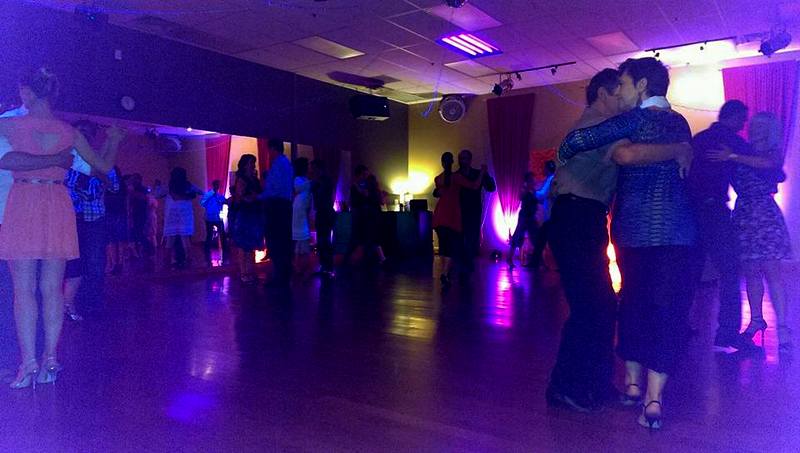
Tangueros fill the floor after just a few opening tandas.
Atakan's photo.
28. "Lady Be Good - Sol Hoopii Trio" 0:23
29. Miguel Caló - Raúl Berón "Jamas Retornaras" 2:31
30. Miguel Caló - Raúl Berón "Lejos de Buenos Aires" 1942 2:54
31. Miguel Caló - Raúl Berón "Que te importa que te llore" 1942 2:44
32. Carrapicho "Tic Tic Tac cortina 2" 2007 0:18 Spirited valses from the period when Federico Scorticati, an Uruguayan-born virtuoso bandoneonist, led Victor label's house orchestra. Scorticati got his first bando at 8, and soon put it to work at the silent movie theaters of Montevideo. And he kept playing the same instrument, with well-worn keys, well into his 70s on tours across Latin America and Japan! All three famous singers in these records started their illustrious tango orchestra recording careers with Scorticati's "OTV". But this date in history is especially linked with the name of Lita Morales. On August 6, 1941, Lita made her last record with Donato's orchestra, and apparently took a maternity leave, from which she never emerged. Exactly a year later, Edgardo Donato fired her and both of his male vocalists over some unspeakable scandal - and then his whole orchestra instantly imploded, with musicians, composers, poets leaving, to never record any more tangos again. You can read a poetic reconstruction attempt of this dark drama on El Espejero's blog.
33. Orquesta Tipica Victor - Lita Morales "Noches de invierno" 1937 2:47
34. Orquesta Típica Víctor - Ángel Vargas "Sin Rumbo Fijo (vals)" 1938 2:18
35. Orquesta Tipica Victor - Mario Pomar "Temo" 1940 2:55
36. Leonid Utesov "Road to Berlin (slow)" 0:27 The final piece of this alternative tanda is contagiously rhythmic yet it may actually be the hardest to interpret as tango? If you know me, you may understand how I picked it, in part, for a common theme of "trains going North", but I am not so sure now.... What do you think?
37. Feist and Ben Gibbard "Train Song" 3:03
38. Waldeck "Addicted" 2007 3:51
39. Valery Meladze "Vera" 2009 4:06
40. "Palolo - Charlie Wilson" 0:27
41. Ricardo Tanturi - Alberto Castillo "Noches Del Colon" 1941 2:36
42. Ricardo Tanturi - Alberto Castillo "Recuerdo Malevo" 1941 2:33
43. ARicardo Tanturi - Alberto Castillo "Comparsa Criolla" 1941 2:53
44. Alla Pugacheva "Million Scarlet Roses" 1982 0:19
45. Otros Aires dos "Los Vino" 2:41
46. The Alex Krebs Tango Sextet "Largas las Penas" 2011 3:02
47. Esteban Morgado "Morena" 2005 2:27
48. Oleg Gazmanov "Summer Rains" 0:26
August is the birth month of Lucio Demare ( 8/9/1906 - 3/6/1974 ), a romantic pianist whose talent matured during his decade in Paris in the 1920s and 30s, and who often played solo or accompanied singers. His Golden Era orchestra recorded only 50 or so pieces, and the recordings with the voice of Horacio Quitana are often overshadowed by the stellar pieces with Raúl Berón ("Una emocion!") and Juan Carlos Miranda ("No te apures Carablanca"!), but they are all beautiful.
49. Lucio Demare - Horacio Quintana "Solamente ella" 1944 3:15
50. Lucio Demare - Horacio Quintana "Torrente" 1944 3:10
51. Lucio Demare - Horacio Quintana "Igual que un bandoneon" 1945 3:02
52. "Palolo - Charlie Wilson" 0:27
53. Carlos di Sarli - Instrumental "Germaine" 1941 2:58
54. Carlos di Sarli - Instrumental "Catamarca" 1940 2:23
55. Carlos di Sarli - Instrumental "La trilla" 1940 2:21
56. Carrapicho "Tic Tic Tac cortina 2" 2007 0:18
57. Rodolfo Biagi "Lágrimas y Sonrisas (Vals)" 1941 2:40
58. Rodolfo Biagi - Jorge Ortíz "Por Un Beso De Amor (vals)" 1940 2:44
59. Rodolfo Biagi - Alberto Lago "Amor y vals" 1942 2:48
60. Enya & Enigma "Delerium \ Flowers become screens" 0:27
61. Fool's Garden "Lemon tree" 1995 3:09
62. Israel Kamakawiwo'ole "Over The Rainbow" 2001 3:32
63. Souad Massi "Ghir Enta" 2008 5:06
64. "Lady Be Good - Sol Hoopii Trio" 0:23
65. Edgardo Donato - Horacio Lagos, Romeo Gavioli, Lita Morales "Sinfonía De Arrabal" 1940 3:07
66. Edgardo Donato - Horacio Lagos "El Adios" 1938 3:09
67. Edgardo Donato - Lita Morales, Romeo Gavio "Mi Serenata" 1940 3:02
68. Alla Pugacheva "Million Scarlet Roses" 1982 0:19 These candombes have an irresistible drive and the floor fills quickly ... but the inexperienced tangueros seem to have a challenging time with their beat. Need to think about "milonga tandas on training wheels" ... could one play a fun set of milongas which are also beginner-friendly? Slower-paced Canaros?
69. Miguel Caló - Raúl Berón "Azabache" 1942 3:05
70. Alberto Castillo y su orquesta "El Gatito en el Tejado" 1957 2:37
71. Romeo Gavioli y su orquesta típica "Tamboriles" 1956 2:56
72. Oleg Gazmanov "Summer Rains" 0:26
73. Donato Racciatti - Olga Delgrossi "Sus Ojos Se Cerraron" 1956 2:47
74. Donato Racciatti - Olga Delgrossi "Hasta siempre amor" 1958 2:57
75. Donato Racciatti - Olga Delgrossi "Queriéndote" 1955 2:49
76. "Palolo - Charlie Wilson" 0:27
"Muchacha" has a captivating vocal but may be weaker, overall, than required for the culmination tanda... The real high point here is Remembranza, another tango with a Parisian pedigree, composed in 1934 by bandoneonist Mario Melfi (best known for being a coauthor of Poema). August is Melfi's birth month (in 1905), and he sailed for Paris also in August, just shy of his 18th birthday - to never come back. On the sheet music, even the lyrics are in French!
77. Osvaldo Pugliese - Jorge Maciel "Esta noche de luna" 1955 3:48
78. Osvaldo Pugliese - Jorge Maciel "Muchacha" 1956 3:18
79. Osvaldo Pugliese - Jorge Maciel "Remembranza" 1956 3:41
80. Juan D'Arienzo - Instrumental "La cumparsita" 1951 3:49
81. Goran Bregovic "Maki Maki" 2009 3:33 We're already 15 minutes past the closing time, but the dancers beg for more and are granted two more songs while the cleanup is underway :)
82. Alfredo de Angelis - Instrumental "Pavadita" 1958 2:55
83. Alfredo De Angelis - Instrumental "Felicia" 1969 2:48
Varo has been DJig festival milongas for over 5 years, and he came to the LAX marathon to share his experience with the aspiring DJs and all the dancers interested in the ways the DJs make the milonga crowds roll. His 2-hour seminar covered the orchestras, tanda making, flow connection, cortinas as a "personal touch of a DJ" :), nontrad music, DJ resources, must-do's and don't's ... complete with quizzes and classwork.
Varo's DJing touched me in the personal ways, both through the unusual exciting tandas he spun and through his old blog posts about tango music and poetry, and I was really excited to join the workshop. My notes are understandably personal, more detailed where I sensed a different viewpoint or a unexplored idea or an echo of a broader conflict. But I hope that I captured the broader interest topics too.
Orchestras: The "big 5" is a great concept but rather than considering it an absolute, treat it as a regional, cultural, temporal, and personal fave-list. Yes, we always hear that "Di Sarli, D'Arienzo, Troilo, Pugliese, and Francisco Canaro records are expected at every milonga" but Varo's personal "indisensable 5" is a slightly different list ... instead of Troilo and Pugliese - Donato (here comes the culture war!) & Biagi. The concept of "personal big five :) ". And D'Agostino is #6 .... or maybe even 5 with the Vargas classics. "A whole BsAs milonga comes to the floor with these D'Agostinos". (DP: I plan to do more reporting from the frontlines of the Great Tango Music Culture War where I belong in the Troilo-sceptic camp too ... but as a preview of the opponents' point of view, here is a quote from DJ Antti from the influential TOTW blog: "There's nothing wrong with the occasional special selection and the Donatos and Lomutos etc. But many DJ's go so far into centering their set around the likes of Canaro, Donato, Rodriguez and some Guardia Vieja that the set feels out of balance and the occasional Troilo will not save the set for me." Yes, you read it right. They are talking about "Canaro, Donato, Rodriguez and their ilk")
"You hear lots of Troilo-Marino in BsAs ... the music may sound unexciting for us visitors, and I may have skipped such a tanda in a different place, but the goodness of the BsAs embraces compensates for everything :) "
Some "not to overuse specials": Garcia, Rafael Canaro, Pirinchos, Lacava, Salgan
Unusual times, unusual vocalists: an example of Ricardo Ruiz - late D'Agostino the 1950s. "The other Cascabelito" (DP: peculiarly, my library has a sole track of theirs, and it is ... Cascabelito. Gotta do some homework :) )
Structuring tandas
"3 or 4" issue. It is an question which brings strong opinions, but not as hot as to become another culture war. Varo sides with 4 T's / 3 V's or M's ("better chance to get into tune with each other in a pair", "what if someone doesn't start from the 1st song") but he also explains reasons to go with three ("need more social mixing", "too short a milonga", "very long milonga where the flow of the mood calls for three tango tandas in a row", "alternative tracks which are longer than 3 minutes", and yes, "organizers' choice"). Super-masters of DJing, such as Xavier Rodriguez with his 25 years of experience and his crazy talent, can and do break conventions, and get their tandas of all sizes fly in one breath - Varo remembered his tanda of 7 milongas which was pretty amazing ... except it made people too tired to keep on dancing afterwards :)
We briefly discussed 5-tango tandas which make even very experienced dancers risk-averse ... I guess the more confidence one has in self and others, the more one likes longer tandas? When you take risks choosing partners, it helps to limit the potential downside by making the tandas shorter?
Sabakh does 4 valses BTW (of course we couldn't resist counting it tonight ... hi Alexandra!).
Strength of different songs (1st and last stronger .... unless it is a cooldown tanda starting with lower energy). Energy is directional - ratcheting up or down. Varo usually ups the ante from V to M, then lowers and starts rising.
The middle isn't the place for the strongest song ... except in some special situations as a conscious choice. "Never put Biagi's Lagrimas y Sonrisas in the middle. Or Corazon of di Sarli" (DP: of course I couldn't resist checking my setlists LOL ... I found the super-vals several times in the first tanda position, and once, at the closing position. Di Sarli - Rufino's Corazon was used only as a tanda opener. So I guess I rely on slightly different intuitive strength quotients for the opening and the closing tracks ... my first track picks are for an urgent, irresistible quality, a must-dance from the opening bars, while the last one must be strong but in a more steady, sustaining way, culminating in a powerful finish)
Re-listening to the endings of songs and the beginnings of the ones which follow can help you pick the best transitions.
DP: Power of a song is a subjective criterion and we clearly saw this subjectivity in the class exercises when we were asked to sort 4 Di Sarli - Rufinos into a tanda. One can even confuse tempo or mood for power ... but one better be more cautious with variations of moods and BPM's within a set.
Mixed tandas? The #1 posibility is to mix a singer with an instrumental from the same era / same energy (Argentina may be less attached to vocals than us - Varo's norm is 70% vocal and it's "high")
or two singers (Caution! Castillo + Campos or Rufino + Podesta or Echague + Maure may earn you a red card - "too big, too different to mix" ... but Florio + Pomar Di Sarli sounds passable) ... or throw an instrumental divider between two big singers.
An example of mixing in vocals to an instrumental: "Comparsa criolla" with slower Castillos??? No, but "La vida es corta" or "Pocas palabras" - possible.
Mixing different orchestras: only "tastefully" and "uncommonly" (DP: by all accounts, mixing orchestras is more common in vals and especially milonga tandas, even in BsAs. In my experience, mixing orchestras is only a reasonable option when the tanda builds around unique special records which defy standard-recipe techniques ... but I also know that extreme talent knows no bounds)
Energy flow notes:
Late in the milongas: all Tango tandas OK to avoid finishing on milonga or vals tandas.
Early in the milongas: "spare the hits for later" - sometimes it works - play chill / flowing music but not energizing D'Arienzo or something. But Varo sticks with TTVTTM even early - although Seemantha suggested TTT's. (DP note; I often notice disappointingly de-energizing stretches of music early in long festival milongas, and can't help thinking if there wasn't more exciting music to choose even after sparing the strongest hits and the complexity and the drama for the later part of the night; in fact Varo's closing milonga of the marathon felt that way. But perhaps my perception puts me in the minority of the tangueros? In tango, I certainly value intensity over effortless chill, and more than one cooldown tanda at a time just isn't how I like it... )
Structure of the list. Of course TTVTTM. For a short night maybe even fewer T's. Long time, more T's give you more room to play with temperatures - but 3 song sets then?
"Reasonable tanda-to-tanda contrasts": Too many sharp contrasts between too many consecutive tandas? Not safe, as are uniform too-similar tandas.
First tanda suggestions: 30-32 instrumental Canaros, El Flete, Joaquina, Hotel Victoria; D'Arienzo 35-36 instrumentals (Champagne). Di Sarli 50s occasionally. Canaro/Fama? But don't start too low. (DP: may first-tanda regulars are also instrumental 1930's Fresedos, and Quinteto Don Pancho of Canaro's)
Peak prime time - D'Arienzo's Echague. (after performances and break rhythmic Donato before D'Arienzo as a pre-warm up). Also Biagi/Falgas, Troilo-Fiorentino, Donato of course. Ca. 1941 rhythmic Di Sarlis.
Late tandas: Late Di Sarli's - Florio's, Pomar's. Pugliese. Varela. Canaro-Maida aka Poema. Tanturi instrumentals if it is a day milonga - ending with a speedy bang. Very late D'Arienzos around Mi Dolor maybe? No stunning surprises for the final tanda, please!!
Cortinology: start w/o silence!! Prepare for energy change of the next tanda. Showcase the theme of the milonga. Generally 32-25" but between 20 and 50 secs. Later in night - longer ones. Dark floor - longer ones. Varo's using wavosaur (free online) to cut-n-fade. Xilisoft for mp3 conversion. Only fadeout, no "in". A silent 2 sec or so after a particularly sweet embracey tanda (as long as 4 sec).
More uses for the "Silent track". Sometimes songs are overcut in the first place. Silence is also a safety feature for between-performances - if the computer is still running, it won't abruptly start the next track.
Equalizer: old records - usually bell-shaped. Post-1990 all pre-eq'd.
"The other music" - Nuevo is meant to be tango, it is related (sometimes it is very close to trad, like Sexteto Miloguero, some quite far like Bajofondo or Otros). Alternative wasn't meant to be tango, but it came out related. "If you can ocho cortado to it, it is it". But mixing is hard. Imitate the classic structure of TTVTTM and waves of energy as much as possible. An example: "Como dos extranos" by Mercedes Sosa is a quasi vals.
My rookie's milonga many,
many years ago. And I still
consider a year without dancing
in the slanted rays of Sun at
Cheesman, a year not fully lived
But it's also true that the tango festival organizers' world had changed dramatically in the past two decades. There are myriad festival-goers' options now, and the tangueros know almost in real time who's heading where, what's hot, what's not. For, ultimately, it is the guest list which makes the festival. And to stay hot and to attract the cool guests, one must constantly innovate, be generous and personable, always ratchet things up, always keep abreast with the trends - or better yet, set the trends, and never let the fickle Fortune look at you dismissively. In hindsight, Denver Tango Festival already showed signs of slow decay and of the organizers' inattention even when we first visited it 7 years ago. The oldtimers would already tell you that it used to bigger, that it used to be a trend-setting novelty, but by the late 2000's it's become a dependable, solid but kind of stolid thing. Frictions within the community didn't help things either, and by fall 2014, the grand old fest was at the edge of the abyss.
The power of the locals, DEN 2015:
John Miller and Nick Jones introduce a miraculously restored Victrola;
Jesica Cutler crafts the festival banner, as Pugliese watched approvingly;
Martin Rybczynski outshone all of the DJs in my personal perception
We are so happy to see that the community bandied back together to return the West's flagship tango event to life! Great, great thanks to John Miller and Jesica Cutler for selflessly helping to turn around the fortunes of this historic Festival, to its visionary founders Tom Stermitz and Amy Beaudet, to the DJ's, musicians, instructors, and volunteers. And my special warmest gratitude to Halina Morgucz Palmer for the invitation to DJ in my beloved Avalon, for her wonderful hospitality, and for pushing me to include lots of alternative tandas, and to Grisha Nisnevich for his great friendship and his very timely sage DJ advice.
The alternative conundrum
Defamiliarization :) :
Victor Shklovsky, who coined the word,
with his wife Serafima. The 1950s.
Broadly defined, the alternative tango music is (doh!) not a classical milonga music but a variety of passionate dance music with an ample room for our tango vocabulary, tango musicality, and tango social conventions and skills. Alternative music serves two very different primary purposes - to put the experienced tango dancers "outside of the box" to stimulate their creativity and to enrich their music interpretation skills, AND to reconnect the tango dancers with the more familiar musical cultures and styles to which they may have been attached even before embarking on their tango journeys. In other words, to expose the dancers to The Strange and to give them footing in The Familiar. Actually, there may be less contradiction between these two goals than it seems at first. "Defamiliarization" through the juxtaposition of the familiar and the strange is at least a century-old creative arts method (the word itself has been first coined by the Russian avant-guarde in the 1910s) and it works just as intended, destroying stereotypes and automatic behaviors and fostering creativity.
"It's not a mere matter of taste": Cultural warfare
Pure bodies, pure blood, pure food, pure music ....
it's ageless
The classics-only school of thought assigns to the Golden Age tango music a strong ritual-purity quality, harnessing the millennia of the human beliefs in the pure, righteous Self and the dangerous, contaminated Other. This gives a truly primal quality to the cultural wars over the choices of the music. Sometimes it even pushes bona fide classic orchestras such as Donato or Rodriguez to the "other" side. I am no stranger to partisanship in the culture wars myself. But DJing requires a different state of mind. It takes giving up one's ambition and one's lofty ideals for the higher-yet ideal of serving the dancing public. This blog is named "humilitan" for the same reason - to remind me that I may be free to pick sides as a private person, but that as DJ, I should bow to the community needs. Only it's still very hard to serve the community where different key opinion leaders call for addition or deletion of alternative tandas - not even because of the sets' artistic and functional merits, but because these people want to make radical statements!
But these two cool goals don't come without a major liability. For great many tangueros, one of the best things about the milonga culture is exactly this Great Wall of the cultural divide separating the tango universe from the popular and contemporary cultural influences and from the music forms from outside Argentina, and they love being safe and predictable in the beautiful bubble of the Golden Age. They don't volunteer into the surprising discoveries of, eh, defamiliarization. They may or may not join a fully alternative milongas, as a matter of an informed conscious choice ... but the "mostly classic / part alternative" format has worse pitfalls. The guests generally don't know if an alt tanda is coming, and if they are prepared to dance but choose to sit it out, then it may drain some of the energy. Moreover, I try hard to select the moods, the rhythms, and the textures of the consecutive tandas to generate a good flowing wave of energy, a predictably accelerating and decelerating but unstoppable momentum. But it is a lot harder to create a parallel wave experience for those dancers who skip all alternatives, so they may be shortchanged in this respect, too.
The relative unpredictability and the sheer variety of the alternative tango music lead to one more inseparable yin-yang pair of a pro and a con. Generally it makes little sense to weigh the opening bars of an alt tanda to decide who exactly is the perfect partner for this music. You know the drill, "X is a superb Di Sarli - Podesta tango follower, or Y is just right for a fiery vals of Biagi's". It is a cliche, and IMHO it is largely a fallacy, yet another automaton stereotype which detracts from our creativity. Sure thing this "Y" could be great for this specific flavor of music, but if it's all you ever dance with him, without variation, then you are probably missing out. Anyway, with an alternative tanda, you better "expect the unexpected" & throw most of these prejudicial who's-good-for-what ideas out of the window. The result is a better social openness, and it is a big pro in my book. But the flip side is that it's much harder to mix the alt tandas, to make sure that "the unexpected" doesn't become "the haphazard" or even "the untenable". (On the contrary, in the classic tanda mixology, a DJ needs to watch out for "the predictable" not to segway into "the unexciting" and "the contrived").
To cut the long story short, the flow-of-energy magic resulted in the final setlist being 25% non-classical - which is lower that 35% requested by the host, but still a LOT higher than anything I played to date (Interestingly, Adam's supposedly "50:50" milonga two days before also came at about 30% non-classic?).
The playlist with comments
01. Quinteto Don Pancho "El garron" 1938 2:27
02. Quinteto Don Pancho "Alma en pena" 1938 2:46
03. Quinteto Don Pancho "Champagne tango" 1938 2:30 I re-cut cortinas to various lengths between 33 and 45 seconds based on my visual memories of the floor of the Avalon Ballroom. Having played them, I can now conclude that just about 30 seconds would have been perfectly OK for this venue (and it can be as short as 20" for the earliest tandas with the lighter attendance)
The dance floor of the Avalon
fills up fast!
04. Alla Pugacheva "Million Scarlet Roses (cortina long)" 0:39
05. Carlos Di Sarli - Roberto Rufino "Cascabelito" 1941 2:34
06. Carlos Di Sarli - Roberto Rufino "Tristeza Marina" 1943 3:09
07. Carlos Di Sarli - Roberto Rufino "Charlemos" 1941 2:30
08. Leonid Utesov "S Odesskogo Kichmana" 1935 0:44 I had a sheepish thought. You see, people come early to Halina's milongas. But they head straight to the dining hall, bypassing the dance floor - because they know that the best food won't last. Tonight, there is a stupendous black bean soup, fantastic quinoa, ham ... and the bread is just about to come out of the oven ... and ... (well you know where I got some inspiration for our local events ;) ). In any case, I was making a guess that nobody will dance the first three tandas because they'll go eat, and that I will get a chance to sneak in some contentious alt set and nobody will even notice :) But ... the dancers already fill the floor during the Di Sarli tanda. Therefore, they need a good classic tango warmup. Therefore, my 3rd tanda will be alternative almost in the name only. Yes, this stuff doesn't get played at the regular classic milongas. But .... I think it should be. Hats off to Alex Krebs!
09. The Alex Krebs Tango Sextet "Largas las Penas" 2011 3:02
10. The Alex Krebs Tango Sextet "Negrito (milonga)" 2011 1:53
11. The Alex Krebs Tango Sextet "Ella Es Asi" 2011 2:32
12. Zhanna Aguzarova "Old Hotel cortina long" 0:38
13. Ángel D'Agostino - Ángel Vargas "Ahora No Me Conocés" 1941 2:35
14. Ángel D'Agostino - Ángel Vargas "Solo compasion" 1941 2:58
15. Ángel D'Agostino - Ángel Vargas "Ninguna" 1942 2:59
16. Lidiya Ruslanova "Valenki 5 (cortina)" 0:36
"It looks like they love it!": A DJ's myopia?
I know what to do if, G*d forbid, el gente refuses to dance to my tanda. But now I see the full floor, I see the people dancing well to the music, Nobody is making grimaces. No obscene gestures. Do I have to assume that the people like the music? What other body cues do I have to watch for? Experienced DJs out there, can you share your advice?
"Poor mice wouldn't stop eating $%$#& cactus ..."
Dave Schmitz told me not to be mislead by the sight of the masses dancing. They paid so much money to be here, he said. What you see isn't their contentment, he said. Its their avarice, their primal greed. They may be totally feh about your music, but they paid big bucks and they'll suffer but keep on dancing just to make a good use of their money. (Actually the milonga admission was $10, and with great food and a great company it ought to be one of the best milonga deals anywhere - not that it really matters).
Of course I can't help remembering a classic Russian meme: "The mice took jabs from the spines, cried, but kept on eating cactus". It means, if one *really* hates something, then how come one would't stop doing it?
17. Soha "Mil Pasos" 2008 4:07
18. Feist and Ben Gibbard "Train Song" 3:03
19. Alacran "Reflejo De Luna" 2010 3:44
20. "Katyusha" 0:33 Should I have called these valses alternative? Of course, it is a fav BsAs orchestra, and it is the late 1930s and early 1940s ... but Enrique Rodriguez remixes old Europe's folk hits here, from a Russian gypsy romance to an Andalusian buleria. And, strictly speaking, his orchestra isn't even a tango tipica - it was officially "an orchestra of all different rhythms"! ( It is also time to celebrate the upcoming Armando "Muñeco" Moreno's birthday, May 29th. He joined the orchestra of Enrique Rodriguez at the age of 18 and kept returning there to record more hits. Alas I didn't have time for another tanda with Moreno! I love so many of his tangos, valses, and foxes!)
21. Enrique Rodriguez - Armando Moreno "En el volga yo te espero" 1943 2:40
22. Enrique Rodriguez - Roberto Flores "Las Espigadoras (vals)" 1938 2:47
23. Enrique Rodriguez - Roberto Flores "Los Piconeros (vals)" 1939 2:47
24. Leonid Bykov "Smuglyanka" 0:33 And of course Fresedo's birthday is also in May
25. Osvaldo Fresedo - Roberto Ray "Isla de Capri" 1935 3:16
26. Osvaldo Fresedo - Roberto Ray "Canto de amor" 1934 3:25
27. Osvaldo Fresedo - Roberto Ray "Sollosos" 1937 3:27
28. Lidiya Ruslanova "Valenki 2 (cortina)" 0:33 I haven't played these more rhythmic Tanturi's for too long!
29. Ricardo Tanturi - Alberto Castillo "Decile Que Vuelva" 1942 2:33
30. Ricardo Tanturi - Alberto Castillo "Asi Se Baila El Tango" 1942 2:36
31. Ricardo Tanturi - Alberto Castillo "La vida es corta" 1941 2:25
32. The Red Elvises "Cosmonaut Petrov 1 (-3dB)" 1999 0:28
33. Fool's Garden "Lemon tree" 1995 3:09
34. Israel Kamakawiwo'ole "Over The Rainbow" 2001 3:32
35. Souad Massi "Ghir Enta" 2008 5:06
36. The Blues Brothers "Theme From Rawhide (long vocal cortina)" 1980 0:33
37. Carlos Di Sarli - Roberto Rufino "La Mulateada" 1941 2:22
38. Carlos Di Sarli - Roberto Rufino "Zorzal" 1941 2:40
39. Carlos Di Sarli - Roberto Rufino "Pena Mulata" 1941 2:27 (A DJ's nightmarish oops here - my deepest apologies for it. A cut for flamenco, with a switch to a different computer, has been requested, but just as I switched, the dancer whispered that she wasn't ready! Hurriedly returning to my laptop and to an appropriate next tanda, I fatfingered a few seconds of the previous tanda's milonga before correcting it to a cortina. Blush.)
40. Leonid Utesov "S Odesskogo Kichmana" 1935 0:44
41. Orquesta Tipica Victor (dir. A. Carabelli) "Nino bien" 1928 2:43
42. Orquesta Tipica Victor (dir. A. Carabelli) "Che, papusa, oi" 1927 2:37
43. Orquesta Tipica Victor (dir. F. Scorticati) - Angel Vargas "Adios Buenos Aires" 1938 2:36
44. Alla Pugacheva "Million Scarlet Roses (cortina long)" 0:39 cut for a birthday vals followed by a flamenco demo
45. Alfredo De Angelis - Carlos Dante - Julio Martel "Sonar y Nada Mas" 3:06
46. Leonid Utesov "S Odesskogo Kichmana" 1935 0:44 and a community / waterfall dance tanda of Canaro classics:
47. Francisco Canaro - Roberto Maida "Recuerdos de Paris" 1937 3:12
Some of Florian Hermann's compositions
available from a 1900 German sheet music catalog
I wrote a little about the Russian roots of Canaro's "Ojos negros" ("Dark eyes") before, but I've found many more details since. The music and the lyrics are inspired by a timeless Russian Gypsy romance of the same name - a song with the history spanning borders of Ukraine, Poland, Lithuania, the way it's common with best Eastern European songs which as a rule claim several mother countries and tongues. Russian "Dark Eyes", a Gypsy romance, was put together in 1884 by Soyfer (Sergey) Gerdel, a Jewish musician from the same Ukrainian town where my grandfather was born. But Gerdel used a verse published by an Ukrainian Yevhen Hrebinka in a Russian newspaper in 1843 (it was a prophetic poem ... indeed Hrebinka died only 4 years after meeting the gaze of the Dark Eyes, aged only 36). And the music was based on a slow waltz of Florian / Feodor Hermann, a composer of waltzes, polkas, mazurkas, marches, and little plays, mostly dedicated to a myriad of his Russian and Polish noblewomen students and published in Russia, Poland, and Germany. Many Russian sources claim that Hermann lived in Germany, while a popular Ukrainian legend claims that Hermann was a French military composer with the Napoleon's Army. Neither tale could be true, somebody must have been fooled by the French titles and German music catalogs. Hermann lived later in the XIX c., in fact some of his composition are dated late 1870s (and respond to the patriotic outbursts of the Russo-Turkish war of 1876). His works are Russian-, Ukrainian, and Polish-themed (and occasionally Lithuanian), and they use Russian and Polish lyrics. The place names in his titles imply a connection to the Wilna strip and specifically to Roubno (now Kirtimai) on the outskirts of Vilnius in Lithuania (but in those days, a part of Russian-governed Poland). My hunch is that Hermann was a mid-XIX c. Jewish piano teacher in then-Polish/Jewish/Russian Wilno relying on French and German languages for better marketing. I mean I'm sure I read more details on it on the Internet, but just couldn't find it now. (Update: the enigmatic life path of Florian Hermann has been pieced together; he turned out to be a Vilnius native, a Catholic nobleman of German and Polish descent. Details here)
48. Francisco Canaro - Roberto Maida "Ojos negros que fascinan" 1935 2:51
49. Francisco Canaro - Roberto Maida "Mi noche triste" 1936 2:45
50. Victor Tsoy "Gruppa Krovi (cortina)" 0:36 Two very different pieces of Bregovic in the following tanda - in Polish with a beautiful voice of Kayah, and in English, from the soundtrack of Kusturica's failed American movie, "Arizona Dream". All three pieces are on the long side, making a nearly 15-minute tanda, and I stand by ready to cut it to just two songs if the energy comes short - but no, the whole floor is dancing.
51. Pentatonix "Say Something" 4:39
52. Goran Bregovic - Kayah "To Nie Ptak [Not a Bird]" 1999 4:40
53. Goran Bregovic - Iggy Pop "In the Deathcar" 1999 5:13
55. Juan Maglio Pacho, Jorge Cafrune "Chacarera loca de Ledesma" 0:27
56. "Chacarera del Rancho" 2:21
57. "Chacarera del violin" 2:12
58. Leonid Bykov "Smuglyanka" 0:33
59. Juan D'Arienzo - Alberto Echagüe "Ansiedad" 1938 2:38
60. Juan D'Arienzo - Alberto Echagüe "Mandria" 1939 2:26
61. Juan D'Arienzo - Alberto Echagüe "Que importa" 1939 2:17
62. "Kuznechik Cortina" 0:39 A Polish and Russian 1930s-1940s tanda. Lots of tragic stories behind it - not just the heartbreak of the lyrics which the Polish poets so perfected starting in the 1920s. It is a relatively low energy tanda but it always strikes a chord with the people with Eastern European musical affinities. We travel to Poland - then Russia - then Romania and Latvia with these songs.
Artur Gold & Jerzy Petersburski orchestra, Warsaw, ca. 1930
Jerzy Petersburski, a composer and pianist, belonged to a Polish Jewish clan with a telling surname, the Melodists. His 1928 "Tango Milonga", a dream of the faraway Argentina, has become an international hit in the West, but his best remembered tango in Poland and Russia is "To ostatnia niedziela" ("This is the Last Sunday"), a song of separation and the end of love. The 1939 military defeat of Poland sent Petersburski on an escape route East to Białystok, where he was enlisted into the Soviet Belorussian State Jazz Ensemble. There, he composed Poland's favorite waltz, "Blekitna Chusteczka" ("Blue Handkerchief") which has become even more deeply ingrained in Russian conscience with the folk lyrics as the song of the heartbreak of the War.
But Petersburski didn't stay with the Belorussian band long. His short stint with the Polish Air Force in the opening weeks of WWII earned him a right to enroll in the Polish Corps of General Anders in 1941, and thus an escape ticket from the Soviet Union. After travels across the Middle East and Latin America, Jerzy Petersburski finally made it to Buenos Aires in 1948. There, he built a career of a prominent radio and theater musician but didn't compete with the Argentines on the turf of tango again. Petersbursky's life had a happy ending of sorts - he finally returned to Warsaw in the late 1960s, remarried, and died peacefully at the age of 84. Mieczysław Fogg's life story is amazing and inspiring - his voice helped to propel the 1928 "Tango Milonga" to world fame, and he was still touring with concerts in the post-totalitarian times right until his death in 1990! He fought with the Polish Resistance, he sang at the barricades of the Warsaw Uprising, he has become Righteous among the Nations for saving a Jewish family from the death camps, and he has been repeatedly voted the best radio singer both before WWII and during the People's Republic times.
63. Jerzy Petersburski - Mieczysław Fogg "To ostatnia niedziela" 1936 3:19
Eddie Rosner soon after his return from Gulag labor camps. Having lost his teeth to scurvy,
he had to re-learn to play trumpet with dentures. 1955.
We are just one day away from the birthday of Eddie Rosner, another titan of Polish and Russian music who has already been featured on this blog exactly a year ago. Born May 26 1910 to the Jewish parents from Poland in Berlin, Adolf Rosner has become the top German jazz trumpet player, before the rise of the Nazism forced him to reinvent himself as Eddie, a Polish jazz star. And then the war made him the leader of the Belorussian State Jazz Ensemble, really a collection of Polish Jewish musical talents who all managed to escape the advancing Wehrmacht to Białystok / Belostok just as the Soviets took the city in their short-lived land grab of "Western Belorussia". Five wartime years later, the Germans were finally being pushed back from Belorussia, and Rosner's band saw the limelight at last. They were assigned a star Russian jazz singer, Georgy Vinogradov, because all the musicians spoke too heavily accented Russian to make the authorities happy. Georgy Vinogradov already recorded Russian tango super-hits such as "Schast'ye moyo" with Efim Rosenfeld's band. Eddie and Georgy made only of handful of records together but they really enjoyed their chance encounter and its fruit. In 1946 Eddie Rosner has been jailed for an attempt to return to Poland, and spent 7 years in the dreaded Subarctic labor camps of Magadan. After Stalin's death Rosner rebuilt his jazz trumpet star career - only to be blacklisted because of his Jewish roots. He never saw Poland again. Only in the mid-1970s the authorities allowed the sick and dying musician to return to his hometown. He died in Berlin in 1976.
64. Eddie Rosner - Georgy Vinogradov "Zachem (Why)" 1944 3:11
A memorial plaque at the King of Tango's Riga home has been unveiled in 2013
"Dark Eyes" is the first and perhaps most famous tango of Oscar Strok, the future King of Russian Tango, composed in 1928 and alluding to the same classic Russian Gypsy romance as Canaro's "Ojos Negros" which I just wrote about 3 tandas earlier. Oscar Strok (1893-1975) was born to a Latgalian family of small-town Jewish Klezmer musicians, and composed popular Klezmer pieces himself, played piano in movie theaters, accompanied for visiting vocalists... A hot romance led him to Paris in the mid-1920s, and exposed him to the music of tango. The sorrow of the end of his Parisian love flowed into the score and the lyrics of "Dark Eyes". Having returned to Latvia and to financial ruin, Strok composed his next tango ... in debtor's jail, it was called just like that, "The Debtor". But later in the 1930s, Oscar Strok won a tremendous success as a composer of 300 tangos and a band director, and earned the nickname "The King of Tango". The lightning advance of the Nazi troops led to the fall of Riga in just two weeks of war, and most of Strok's orchestra musicians couldn't escape in time, and perished in the Holocaust. By sheer luck, Oscar escaped, and composed and performed many patriotic pieces during WWII. But after the war, the "corrupt" tango was banned by Stalin's regime, and its composer, blacklisted and banished from the musician's guild. Oscar Strok has been forced to earn living as a regular piano teacher. Only at his funeral, the band dared to play his banned tangos in public. (More on Oscar Strok can be found in my more recent post) I already mentioned that Strok's "Dark Eyes" has also been interpreted by an Argentine tango orchestra decades later (Florindo Sassone, 1968)
Before Leschenko became famous as a singer, he
was a professional folk and exotic dancer
Piotr Leschenko (1898-1954) hailed from a completely different corner of the post-Revolution Russian cultural diaspora, from Romania, where his tango singer career began in the Northern city of Cernăuţi (now in Ukraine, and better known in America as a once-grand Jewish cultural center of Tchernovitz). Leschenko was actually born out of wedlock in a village in Ukraine, but grew up in Moldova, singing in choirs as a child, and convalesced in a military hospital there from a battlefield wound and concussion when the region became a part of expanded Romania in 1918. After WWI, Leschenko kept on singing, but his main occupation has become stage dance, first locally, then in the nation's capital, and then in Paris and across the globe. His dance partner was his ethnic Latvian wife whom he met in Paris. Piotr Leschenko had to restart his vocal career in 1930 when she became pregnant and stopped performing, and quickly reached fame as a singer of regional folk. It was his wife who introduced Leschenko to her fellow countryman, Oscar Strok, during a visit to Latvia. Strok's tangos have become the highlights of the repertoire of Piotr Leschenko almost overnight. And "Dark Eyes" - which fused together the singer's acclaim in both Gypsy Folk and Tango - was the most popular of them. The best Leschenko recording of "Dark Eyes" was actually done in Austria, with Frank Fox - born Franz Fux in today's Czech Republic, then Moravia - who conducted an orchestra and composed music for dancing and for movies in Vienna. Piotr Leschenko's bootleg records were immensely popular - albeit technically illegal - in Russia, but he only set foot there under most tragic circumstances, as a Romanian conscript in the Nazi-allied occupation forces in WWII. Despite this stain of being a collaborationist, Leschenko was offered forgiveness and a clean slate in the Soviet Union after the end of the war. But at his farewell party, the singer confessed his love to Romania too eloquently. A snitch denounced him, and the Russians withdrew the invitation at the last moment. Instead, Leschenko has been sent to the Romanian labor camps, to the malarial swamps of lower Danube, and languished there even after Stalin's death. He died in a prison hospital, and his case remains classified even now.
65. Frank Fox Tanzorchester- Piotr Leschenko "Chernye Glaza (Dark Eyes)" 1933
66. "Katyusha" 0:33
67. Francisco Lomuto - Jorge Omar "Damisela encantadora (vals)" 1936 2:58
68. Francisco Lomuto - Instrumental "Noche de ronda (vals)" 1937 2:34
69. Francisco Lomuto - Fernando Díaz, Mercedes Simone "Lo que vieron mis ojos" 1933 2:22
70. Leonid Utesov "S Odesskogo Kichmana" 1935 0:44
71. Sexteto Carlos Di Sarli - Ernesto Famá "Flora" 1930 2:44
72. Sexteto Carlos Di Sarli - Ernesto Famá "La estancia" 1930 3:25
73. Sexteto Carlos Di Sarli - Ernesto Famá "Chau pinela" 1930 2:41
74. Zhanna Aguzarova "Old Hotel cortina long" 0:38
75. Miguel Caló - Raúl Berón "Jamas retornaras" 1942 2:31
76. Miguel Caló - Raúl Berón "Tristezas de la Calle Corrientes" 1942 2:46
77. Miguel Calo - Raul Beron "Que te importa que te llore" 1942 2:44
78. The Blues Brothers "Theme From Rawhide (long vocal cortina)" 1980 0:33
79. Francisco Canaro - Roberto Maida "Milonga criolla" 1936 3:00
80. Francisco Canaro - Roberto Maida "Tangon (slow milonga)" 1935 3:17
81. Francisco Canaro - Roberto Maida "Milonga triste" 1937 3:33
82. Victor Tsoy "Gruppa Krovi (cortina)" 0:36 Two Argentine bands and one from Portland OR find a match in this almost-classic, high energy tanda. "Fervor", the mid-2000s phenomenon, got named after Borges's book. Their main album, "Quien sos", has several interesting dramatic danceables. "Ojos", led by a strikingly looking pianist, Analíá Goldberg, are known to play live at the milongas. Their "El adiós" is one of kind piece IMHO, a standout far surpassing most of the rest of their records.
83. Orquesta Tipica Fervor de Buenos Aires "E.G.B." 2007 2:26
84. The Alex Krebs Tango Sextet "La Yumba" 2011 2:57
85. Analíá Goldberg y Sexteto Ojos De Tango "El Adiós" 3:13 2011
86. Leonid Bykov "Smuglyanka" 0:33
87. Lucio Demare - Juan Carlos Miranda "Sorbos amargos" 1942 3:22
88. Lucio Demare - Juan Carlos Miranda "Mañana zarpa un barco" 1942 3:22
89. Lucio Demare - Juan Carlos Miranda "No te apures, Carablanca" 1942 3:29
90. Zhanna Aguzarova "Old Hotel cortina long" 0:38
91. Osváldo Pugliese - Roberto Chanel "Rondando Tu Esquina" 1943 2:48
92. Osváldo Pugliese - Roberto Chanel "Corrientes Y Esmeralda" 1944 2:49
93. Osváldo Pugliese - Jorge Maciel "Remembranza" 1956 3:41
94. Juan D'Arienzo - Instrumental "La cumparsita" 1951 3:49 ... and a whole set of the apres-dancing, last drops of wine, last-hugs and furniture-moving music. The first song, a remix of a 1947 milonga sureña classic, feels really personal for me, with a lot of stubborn defiance, a bit of sadness, and no need for silence. And the long, long roads. Es demasiado aburrido seguir y seguir la huella...
95. Paco Mendoza & DJ Vadim "Los Ejes De Mi Carreta" 2013 3:23
96. Eendo "Eshgh e Aasemaani" 2011 3:31
97. Goran Bregovic "Maki Maki" 2009 3:33
Adiós, Colorado! Los ejes de mi carreta nunca los voy a engrasar.....