Showing posts with label playlists. Show all posts

Thursday, September 21, 2023

Montana Tango Festival - Under the Big Sky, September 2023

Montana Tango Festival 2023 has become my best tango adventure in years, with its emphasis on communion with Nature, its trails and its hot springs liberally scheduled around the milongas and classes. And the tango yurt pre-party set the right mood from the day 1. Oh the smell of pines! Oh the billion stars of Montana's Big Night Sky! We spent five nights in Missoula and in the end, it was too little. Looking forward to coming to dance and explore Montana again!


So many tangueros asked me about specific tandas or said nice things about the music I played for the Opening Milonga, and I kept answering that I will post the whole list soon. Apologies for making you wait almost two weeks. The list, with comments, follows. I used to share entire setlists every time I DJ'd, but haven't posted complete annotated setlists for a while. This time, I want to focus my tanda comments on the special things I see in many of these tandas, on what I hope the dancers can sense in them, and on what I feel in my own heart.

One of Canaro's famous quintets, the late 1930s "Don Pancho" (named after one of Francisco's nicknames), has a surprisingly modern sound:
001. Quinteto Don Pancho - Instrumental "El garron" 1938 2:27
002. Quinteto Don Pancho - Instrumental "Alma en pena" 1938 2:46
003. Quinteto Don Pancho - Instrumental "Champagne tango" 1938 2:30
004. Gilda  "No Me Arrepiento de Éste Amor cortina"  
005. Enrique Rodríguez - Armando Moreno "Cómo Has Cambiado Pebeta" 1942 2:37
006. Enrique Rodríguez - Armando Moreno  "El encopao" 1942 2:34
007. Enrique Rodríguez - Armando Morena  "Cómo Se Pianta la Vida" 1940 2:23
008. Los Naufragos  "Zapatos Rotos rock cortina"  0:34
First time I played this tanda of valses, united by their unusual musical texture:
009. Francisco Lomuto - Jorge Omar  "Damisela encantadora" 1936 2:58
010. Juan de Dios Filiberto - Instrumental  "Pensando En Ti" 1935 2:50
011. Alfredo De Angelis - Juan Carlos Godoy "Angélica" 1961 2:43
012. Los Iracundos  "Puerto Montt rock cortina" 1971"
Recuerdos de Paris" has a special meaning to my heart, with its tale of regaining lost faith and love in a strange place, really a metaphor of my own path into the strange world of tango
013. Francisco Canaro - Roberto Maida "Recuerdos De París" 1937 3:12
014. Francisco Canaro - Roberto Maida "Ciego" 1935 2:57
015. Francisco Canaro - Roberto Maida "Nada Más" 1938 3:02
016. Viktor Tsoy  "Kukushka rock cortina"
The voice of Lita, the singer consigned to oblivion by the tango society of her cruel age!
017. Edgardo Donato - Horacio Lagos y Lita Morales "Sinsabor" 1939 2:53
018. Edgardo Donato - Lita Morales y Romeo Gavioli "Yo Te Amo" 1940 2:50
019. Edgardo Donato - Horacio Lagos, Lita Morales, Romeo Gavioli "Triqui trá" 1940 2:34
020. Boney M  "Daddy Cool cortina" 
Di Sarli's milongas wonderfully combine contratiempo with musical suspenses
021. Carlos Di Sarli - Roberto Rufino "Zorzal" 1941 2:40
022. Carlos Di Sarli - Roberto Rufino "Pena Mulata" 1941 2:27
023. Carlos Di Sarli - Roberto Rufino "La Mulateada" 1941 2:22
024. Sandro de America  "Yo te amo cortina"  
025. Miguel Caló - Raúl Berón  "Jamás Retornarás" 1942 2:28
026. Miguel Caló - Raúl Berón "Cuatro compases" 1942 2:43
027. Miguel Caló - Raúl Berón  "Que te importa que te llore" 1942 2:44
028. Zhanna Aguzarova  "Miracle Land cortina"
When Di Sarli's elegance met the choppiness of "D'Arienzo revolution", it yielded intensely rhythmic but complex instrumentals:
029. Carlos Di Sarli - Instrumental "La Trilla" 1940 2:21
030. Carlos Di Sarli - Instrumental "Shusheta" 1940 2:22
031. Carlos Di Sarli - Instrumental "Nobleza De Arrabal" 1940 2:07
032. Desireless  "Voyage Voyage cortina"
033. Aníbal Troilo - Edmundo Rivero y Floreal Ruiz  "Lagrimitas De Mi Corazón" 1948 3:00
034. Aníbal Troilo - Floreal Ruiz "Romance De Barrio" 1947 2:37
035. Anibal Troilo - Edmundo Rivero y Aldo Calderón "A unos ojos" 1949 3:10
036. Alla Pugacheva  "Etot mir cortina" 
037. Francisco Canaro - Ernesto Fama  "Tormenta" 1939 2:38
038. Francisco Canaro - Ernesto Fama  "No me pregunten porque" 1939 2:51
039. Francisco Canaro - Ernesto Fama  "Te quiero todavia" 1939 2:54
040. Eruption  "One way ticket cortina" 

And now a break for a story and performances. The storyteller is Teague Goodvoice, a musician and dancer from the Blackfeet People. The Grass Song Dance reminds us about the age when the bison roamed and the Native Americans followed their herds, moving their teepees from one traditional site to another. The teepee sites were used generation after generation, and the "tipi rings" of stones for holding down the edges of the teepees also remained in use for generations. Even now there are over 200 tipi rings on Blackfeet Reservation. 
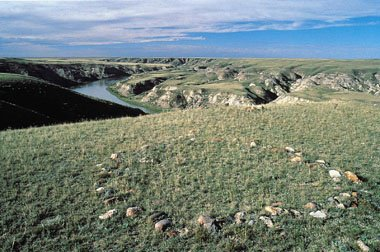
Coming to an overgrown tipi ring which hasn't been used for a long time, a traveling band would send its boys to stomp down the grass and to reveal the stones. That's what the Grass Song and jumping-and-stomping dance are about.
After Teague's amazing, haunting flute music, time comes for two more traditional tango pieces for the performance of Lindsey and Ricardo: Pugliese's "Farol", and a great 2018 cover of milonga "El puntazo" by Tango Bardo.
And then, as always, it's up to D'Arienzo to return the dancers to the floor!
041. Juan D'Arienzo - Héctor Mauré "Infamia" 1941 3:07
042. Juan D'Arienzo - Héctor Mauré "El olivo (El olvido)" 1941 2:51
043. Juan D'Arienzo - Héctor Mauré "Enamorado (Metido)" 1943 2:33
044. ZZ Top  "Sharp Dressed Man cortina"
"El Rey del Fox" is how Enrique Rodriguez was feted in Buenos Aires:
045. Enrique Rodriquez - Armando Moreno  "Se ve el tren" 1942 3:11
046. Enrique Rodriguez - Armando Moreno  "No Te Apures Por Dios Postillón" 1945 2:59
047. Enrique Rodriguez - Armando Moreno  "Maruska" 1943 2:07
048. Viktor Tsoy  "Good morning, last Hero cortina" 1989
049. Ángel D'Agostino - Ángel Vargas "Ahora No Me Conocés" 1940 2:35
050. Ángel D'Agostino - Ángel Vargas "Solo compasión" 1941 2:58
051. Ángel D'Agostino - Ángel Vargas "Ninguna" 1942 2:59
052. Los Naufragos  "Zapatos Rotos rock"
a seldom played set of Biagi, tragic, powerful, with Rodolfo's beautiful piano taking second roles 
053. Rodolfo Biagi - Hugo Duval  "Alguien" 1956 3:14
054. Rodolfo Biagi - Hugo Duval  "Esperame en el cielo" 1958 2:52
055. Rodolfo Biagi - Hugo Duval "Solamente dios y yo" 1958 2:33
056. Carlitos Rolan  "Cuarteto1" 
057. Orquesta Tipica Victor - Lita Morales "Noches de invierno" 1937 2:47
058. Orquesta Típica Víctor - Angel Vargas "Sin Rumbo Fijo" 1938 2:18
059. Orquesta Típica Victor - Mario Pomar  "Temo" 1940 2:55
060. Victor Tsoy  "Gruppa Krovi (cortina)" 
Although Racciatti made a living playing D'Arienzo hits live, it is his own compositions and his two feminine vocals which make my heart skip a beat. Racciatti's piano player remains in a full D'Arienzo mode in these more melodic songs - what a powerful contrast!
061. Donato Racciatti - Olga Delgrossi  "Hasta siempre amor" 1958 2:57
062. Donato Racciatti - Olga Delgrossi  "Queriendote" 1955 2:49
063. Donato Racciatti - Olga Delgrossi "Sus Ojos Se Cerraron" 1956 2:47
064. Los Iracundos  "Puerto Montt rock" 1971
A more rhythmic tanda ought to lead the way to the milongas. Many orchestras had to adopt fiercely rhythmic styles in the years immediately after "D'Arienzo revolution", and Láurenz's response for this challenge was unique and beautiful, contrasting the sadness of his bandoneon with the crazy a-la D'Arienzo vibe.
065. Pedro Láurenz - Juan Carlos Casas "Vieja Amiga" 1938 3:11
066. Pedro Láurenz - Martin Podesta  "Al verla pasar" 1942 3:23
067. Pedro Láurenz - Juan Carlos Casas  "No me extraña" 1940 2:44
068. Boney M  "Daddy Cool cortina"
Alex Krebs explains that in the XXI century, it became utterly impossible to make money selling tango records, and he doesn't record anymore. The more grateful I am to him for the albums they released!
069. The Alex Krebs Tango Sextet  "Ella Es Asi (feat. Enrique "El Peru" Chavez)" 2011 2:32
070. The Alex Krebs Tango Sextet  "Largas las Penas" 2011 3:02
071. The Alex Krebs Tango Sextet  "Negrito" 2011 1:53
072. Carlitos Rolan  "Cuarteto1" 
The Malerba tanda culminates with a composition from Ukraine, whose author, a violin teacher from Uman called Savely (Shevel) Zhadan, was killed in the Holocaust months before his son, a bright Argentine journalist Demetrio Zadan, introduced its score to the tango community there. I continue to research the history of this amazing song and people who made it possible, and feel privileged to play this tango, rescued from the jaws of death.
073. Ricardo Malerba - Orlando Medina "Embrujamiento" 1943 2:52
074. Ricardo Malerba - Antonio Maida "Encuentro" 1944 2:20
075. Ricardo Malerba - Orlando Medina "Gitana Rusa" 1942 2:47
076. Alla Pugacheva  "Million Scarlet Roses (cortina)"  
D'Arienzo outdoes himself for the crazy final minutes of the night
077. Juan D'Arienzo - Instrumental  "La torcacita" 1971 2:31
078. Juan D'Arienzo - Instrumental  "Zorro gris" 1973 2:03
079. Juan D'Arienzo - Instrumental  "Este Es El Rey" 1971 3:10
080. Zhanna Aguzarova  "Old Hotel cortina " 
The Donato vals tands is built to lead to its final, deranged piece (inspired by the accordion rhythms of the Volga Germans who found safety in Argentina)
081. Edgardo Donato - Horacio Lagos "Quien Sera" 1941 2:14
082. Edgardo Donato - Horacio Lagos, Lita Morales, Romeo Gavioli "La shunca" 1941 2:35
083. Edgardo Donato - Horacio Lagos, Lita Morales, Romeo Gavioli "Noches Correntinas" 1939 2:23
084. AR Rahman  "Ringa Ringa cortina" 
This tanda owes its power to the first song, a cover of an antebellum tango from Riga, Latvia, composed by their "King of Tango" Oscar (Osher) Strok after a lurid escape to the 1920s Paris.
085. Florindo Sassone - Instrumental  "Ojos Negros (Oscar Strok)" 1968 2:28
086. Florindo Sassone - Instrumental  "Adios corazon" 1968 2:16
087. Florindo Sassone - Instrumental "Bar Exposicion" 1959 3:26
088. Viktor Tsoy  "Kukushka cortina 2"
It starts extremely grounded ... and then the extremes rise to new highs:
089. Orquesta Típica Fervor de Buenos Aires - Instrumental "Quien Sos" 2007 3:08
090. Orquesta Típica Fervor de Buenos Aires - Instrumental "E.G.B." 2007 2:26
091. Analíá Goldberg y Sexteto Ojos De Tango - Instrumental "El Adios" 2011  3:13
092. Gilda  "No Me Arrepiento de Éste Amor cortina"  0:40I
love valses of de Angelis, but remain skeptical about much of his tango output. But de Angelis's powerful late instrumentals are to die for!
093. Alfredo de Angelis - Instrumental "Pavadita" 1958  2:53
094. Alfredo de Angelis - Instrumental "Felicia" 1969  2:48
095. Alfredo de Angelis - Instrumental "El Tango Club" 1957 2:40
096. Queen  "The show must go on cortina" 
Fulvio Salamanca was "the" piano sound of Juan D'Arienzo for decades, but for his own orchestra, he found an amazing, and decidedly non-D'Arienzo vibe, perhaps in a string of beautiful coincidences. Salamanca overheard Guerrico singing his own composition in Uruguay and hired him on the spot. Salamanca's arrangement of the song caught the attention of tango's greatest violinist, Elvino Vardaro. And just then, the quality of records improved and allowed recording haunting high-pitch violin solos. Stunning!
097. Fulvio Salamanca - Armando Guerrico "Adiós Corazón" 1957 2:40
098. Fulvio Salamanca - Armando Guerrico "Todo Es Amor" 1958 2:47
099. Fulvio Salamanca - Armando Guerrico "Bomboncito" 1958 3:22
the one Cumparsita which comes with amazing pizzicato:
100. Enrique Rodríguez - Instrumental "La cumparsita" 1953 2:43
101.  "silence30s"  0:31
And after silence, come a few more minutes of post-Cumparsita alternative tango / final hugs music, which I would describe as "anti-grounded" for sending our energy up to the sky rather than down into the floor:
102. Jason Mraz  "I'm Yours" 2008 4:20
103. Damour Vocal Band  "Sway - danceable cortina cut"  1:39


Sunday, April 30, 2023

Mixed vals tandas

I played several experimental mixed-orchestra sets in recent weeks, and people asked about them. It may be a good reason to bring this blog back from its slumber...

A fiery tanda with Castillo's voice but without the nearly-obligatory Violetas:

1. Orquesta Tipica los Provincianos (Ciriaco Ortiz) - Alberto Gomez "Samaritana" 1932 2:58

2. Alberto Castillo  "Idilio Trunco" 1946 2:08

3. Edgardo Donato - Horacio Lagos, Lita Morales, Romeo Gavioli  "La shunca" 1941 2:35

An instrumental and surprisingly modern-sounding tanda:

1. Juan De Dios Filiberto - Instrumental "Tus Ojos Me Embelesan" 1935 2:34

2. Cuarteto Roberto Firpo - Instrumental "Para Las Chicas" 1942 2:11

3. Cuarteto Tipico Los Ases (Juan Carlos Cambon) - Instrumental "Invernal" 1941 2:42

Excellent songs joined together:

1. Francisco Lomuto - Fernando Diaz  "Cuando estaba enamorado" 1940 2:19

2. Enrique Rodriguez - Roberto Flores  "Salud Dinero Y Amor" 1939 2:39

3. Orquesta Típica Víctor - Ángel Vargas "Sin Rumbo Fijo" 1938 2:18

Rich, complex, breathtaking:

1. Alfredo de Angelis - Juan Carlos Godoy  "Angélica" 1961 2:41

2. Héctor Varela - Argentino Ledesma y Rodolfo Lesica "Igual Que Dos Palomas" 1953 2:36

3. Enrique Rodriguez - El "Chato" Flores "Las Espigadoras" 1938 2:47

Saturday, September 28, 2019

Unusual and experimental tandas

Back in January, I wrote that I have already introduced all the important musicians in tango's history in the comments to my playlists on this blog, and it's a good enough reason to stop publishing playlists altogether (not to mention the obvious fact that most of the new tandas look very familiar after so many years of DJing :) ) Still, occasionally I find a thread of history worth writing about, or try a new orchestra or an unusual era of a better-known orchestra, or start "reinventing the bicycle" of the tandas which feel far too familiar. Here I'm going through the 10 playlists I added since the decision to stop set-blogging, to pick the few tandas worth writing about.
Julio Sosa with his DKW-Sissore, a German-designed
sports car with an Italian body manufactured at a
short-lived small car factory in the Argentinian province
of Santa Fe in the 1960s. The singer didn't survive a
crash of this beauty. He was 38. 

For Julio Sosas's February birthday, I went through tons of his recording and ended up building just one mixed tanda with a lone Sosa track for the Junando practica. We don't hear much Julio Sosa at our milongas, obviously, but it could have been very different, had El Varon del Tango not died so early, at 38! Julio Sosa was born on February 2, 1926, in the poverty-stricken outskirts of Montevideo in Uruguay. One of his many early jobs was with a provincial orchestras there, but it paid too little to make ends meet, and at 23, Julio quit it to sing in the cafes of BsAs. Soon, he was noticed, and got a succession of jobs with the 2nd tier tango bands, and finally, in 1960, convened his own orchestra. By all accounts, it was a wrong time to start a tango band. The government support for the national music of tango disappeared with the violent overthrow of Peron's populist regime, and the new happy-and-patronizing music of La Nueva Ola was all the rage. Even the master records of the Golden Age tango orchestras ended up destroyed to make room for more Nueva Ola studios! I wrote about the Dark Ages of Tango on this blog before, but I failed to mention that for a while, Julio Sosa held the lines against the onslaught of the new commercial music. Tall, masculine, young and charismatic, Sosa continued to attract the youth to tango - and not just to listen, but also to dance like himself. His disc sales rivaled those of La Nueva Ola! It all ended on November 26, 1964, when Julio crashed his Argentine-built sports car into a traffic light, the third speed car he totaled in quick succession, only this time it was fatal. With the death of its last iconic singer, tango never stood a chance...
The verdict: it is a passable vals tanda, good for a charged crowd later at night. But only Angelica really stands out...
Francini-Pontier - Alberto Podestá y Julio Sosa "El Hijo Triste" 1949 3:49
Alfredo de Angelis - Juan Carlos Godoy  "Angélica" 1961 2:41
Héctor Varela - Argentino Ledesma y Rodolfo Lesica "Igual Que Dos Palomas" 1953 2:36

The most legendary tango dancer of the pre-Golden Age fame, Ovidio José "Benito" Bianquet, better known as El Cachafaz ("The Troublesome" / "The Outrageous" as the lunfardo word may be translated) was born Feb 14, 1885). El Cachafaz is celebrated in the lyrics of "Adiós, Arrabal", and that's why I decided to play the following relatively standard D'Agostino tanda during the same practica. Follow El Cachafaz label to read more about this awesome dancer who conquered the affections of the Parisians and triumphantly returned hone, only to lose it all in the post-Great Depression chaos. Who then rebuilt a show dancer's career from scratch when tango started to return to life, but died at 56 without witnessing the full bloom of tango's Golden Age.

Ángel D'Agostino - Ángel Vargas "Ahora No Me Conocés" 1940 2:35
Ángel D'Agostino - Ángel Vargas "Adios Arrabal" 1941 3:08
Ángel D'Agostino - Ángel Vargas "Ninguna" 1942 2:59

In March, I tried a really experimental - and not really recommended - tanda of super-late Calo instrumentals which are all the rage in Europe (it went OK really late at night though):
Miguel Caló - Instrumental  "Luna del viejo castillo" 1964 2:37
Miguel Caló - Instrumental  "Elegante papirusa" 1966
Miguel Caló - Instrumental  "Para Osmar Maderna" 1963


You may know that I am not a big Troilo fan, and I usually stick to the few most reliable tracks of his, but in April I wasin the mood to experiment:
Anibal Troilo - Francisco Fiorentino  "Pa Que Bailen Los Muchachos" 1942 2:49
Anibal Troilo - Francisco Fiorentino  "No Le Digas Que La Quiero" 1941 2:51
Anibal Troilo - Francisco Fiorentino  "Una Carta" 1941 2:48

The month of May is always a good reason to play more, and more varied, Fresedo than usual, since Osvaldo Fresedo was born on May 5, 1887. A son of a wealthy family, Fresedo created elegant music for the upper crust throughout his 60+ years-long tango career. In 1920, Fresedo has become the first tango bandoneonist ever to record in the United States when RCA Victor sent him to New York (they didn't yet have an up-to-date recording studio in South America then; the US-made record's, in Victor's typical anonymous house band fashion, went for sale in Latin America as "Orquesta Tipica Select"). Before the Great Depression, Fresedo's success was so great that he simultaneously maintained 5 "Fresedo orchestras" in Buenos Aires! One of these bands was directed by 24 years old Carlos Di Sarli, an admitted disciple of Osvaldo Fresedo who, in time, far surpassed his teacher. The economic collapse in Argentina put a stop to this exuberance, but Fresedo kept on playing, largely for the upper-class functions. He wouldn't play live for the dancers again, missing the tango dancing boom of the Golden Era, and he remains kind of shunned by the BsAs tangueros for this reason, although he recorded tangos through the 1980s. But nothing could be more mellifluous than Fresedo's 1930s and the early 1940s! This May, one of my Fresedo tandas was with the voice of Ruiz rather than with the "usual" Roberto Ray
Osvaldo Fresedo - Ricardo Ruiz  "Y no puede ser" 1939 2:26
Osvaldo Fresedo - Ricardo Ruiz  "Plegaria" 1940 2:24
Osvaldo Fresedo - Ricardo Ruiz  "Buscándote" 1941 2:49

In June at Junando practica, it was time to return to De Angelis's Angelica which I already mentioned on this page:
Rodolfo Biagi - Hugo Duval y Carlos Heredia "Adoracion" 1951 2:52
Francisco Rotundo - Enrique Campos y Floreal Ruiz "El viejo vals" 1951 2:56
Alfredo De Angelis - Juan Carlos Godoy "Angélica (Vals)" 1961 2:43


There, I also put to test a fiery vals tanda with the voice of Alberto Castillo:
1. Ricardo Tanturi - Alberto Castillo "La Serenata (Mi Amor)" 1941 2:29
2. Alberto Castillo  "Idilio Trunco" 1946 2:08
3. Alberto Castillo  "Violetas" 1948 2:38
(3 total)

To start the playlists of September, I tried a more or less regular tanda but in an unusual place - as an opening tanda of Milonga sin nombre:
1. Orquesta Tipica Victor (dir. A. Carabelli) - Alberto Gomez "Ventarron" 1933 3:03
2. Orquesta Tipica Victor (dir. A. Carabelli) - Instrumental  "Nino bien" 1928 2:43
3. Orquesta Tipica Victor (dir. A. Carabelli) - Instrumental "El chamuyo" 1930 2:46

September is a good time to remember the great singer Alberto Podesta (b. Sep. 22, 1924), who contributed so much to the success of the orchestras of Di Sarli, Calo, and Laurenz. And what would be a better fit to the themes of Podesta and September than his "Roses of Autumn"? Alas, I always had a hard time building a good tanda of Di Sarli's valses with this great hit. Trying to fix it now with a mixed-ochestra set:
1. Angel D'Agostino - Angel Vargas "Que Me Pasara" 1941 2:30
2. Manuel Buzon - Osvaldo Moreno "Pichon enamorado" 1942 2:18
3. Carlos Di Sarli - Alberto Podesta "Rosas De Otono" 1942 2:17


I also returned to the valses with the vocals of Castillo, then an ObGyn by day but a veritable mob lord voice by night.
1. Ricardo Tanturi - Alberto Castillo "Marisabel" 1942 2:23
2. Ricardo Tanturi - Alberto Castillo "Recuerdo" 1942 2:22
3. Ricardo Tanturi - Alberto Castillo "Mi Romance" 1941 2:16

Racciatti's tracks with the voice of Nina Miranda are a kind of a flashback to me. I first danced to Racciatti's when a Japanese DJ played a tanda with Nina Miranda's vocals, fell in love with her "Gloria" and "Tu corazon", and played them myself - good 5 years ago. But the quality of these 1952-1953 records in my hands then was substandard, and I started playing later-years Racciatti's tango with the voice of Olga Delgrossi instead. With a better recordings now, I return to Nina Miranda's hits. And what a pianist they had, by the way!
1. Donato Racciatti - Nina Miranda "Tu corazón" 1953 2:32
2. Donato Racciatti - Nina Miranda "Vencida" 1953 2:47
3. Donato Racciatti - Nina Miranda "No quiero ni acordarme" 1953 2:25


Then at Mestizos I returned to the valses of D'Agostino - one of which I tried a few days earlier in a mixed tanda above - and also to mid-paced Canaro's.
1. Francisco Canaro - Ernesto Fama "El Vals Del Estudiante"1939  3:01
2. Francisco Canaro - Ernesto Fama y Mirna Mores "Tormenta En El Alma" 1940 2:33
3. Francisco Canaro - Ernesto Fama "Noche De Estrellas" 1939 2:29

1. Ángel D'Agostino - Ángel Vargas "Que Me Pasara" 1941 2:30
2. Ángel D'Agostino - Ángel Vargas  "Tristeza criolla" 1945 2:27
3. Ángel D'Agostino - Ángel Vargas  "El Espejo De Tus Ojos" 1944 2:49

And lastly, at Two Flames practica, I asked tangueros for suggestions, and one of them was for the OTV valses. The challenge is that only want to play the same three beloved valses of Victor (Noches de invierno, Sin rumbo fijo, and Temo) and I already played it a bit too often :) So I set out to build mixed-orchestra tandas with OTV - and ended up playing not just one tanda but two:
1. Francisco Lomuto - Fernando Diaz  "Cuando estaba enamorado" 1940 2:19
2. Enrique Rodriguez - Roberto Flores  "Salud, Dinero Y Amor" 1939 2:39
3. Orquesta Típica Víctor - Ángel Vargas "Sin Rumbo Fijo" 1938 2:18

1. Cuarteto Roberto Firpo - Instrumental "El Aeroplano" 1936 2:14
2. Enrique Rodriguez - Armando Moreno "En el Volga yo te espero" 1943 2:40
3. Orquesta Tipica Victor - Mario Pomar  "Temo" 1940 2:55

Wednesday, February 20, 2019

Tango Snow and Fire weekend playlist, Jan 2019

I have a feeling that I'm doing the playlist publication for the final time. The old-fashioned blog format is barely clinging to life in 2019, and my DJ aspirations have shrunk too, as the new generation of the local DJs has grown. And lastly, after so many years of comments about orchestras and songs, I rolled through some of the most important stories about the tango musicians, and the stories still left untold are kind of peripheral. In fact I couldn't make myself to format and comment this list for a whole month... but I finally got to it.
001. Enrique Rodriguez - Armando Moreno "No te quiero mas" 1940 2:18
002. Enrique Rodriguez - Armando Moreno "En La Buena Y En La Mala" 1940 2:28
003.  Enrique Rodriguez - Armando Moreno "Llorar por una mujer" 1941 2:47
004. Carlitos Rolan  "Cuarteto2"  0:19
Get prepared to listen to Troilo's beautiful vals, "Flor de lino", "The flower of flax", often :) The beautiful celestial blue flower has become the mascot of our spring festival of tango. Let's all get excited about SLTF 2019 and welcome old friends of our community, Rod Relucio and Jenny Teters from Chicago, and first-time comers to Salt Lake Valley, Erin Malley and Doruk Golcu!!!
005. Anibal Troilo - Floreal Ruiz "Flor De Lino" 1947 2:49
006. Aníbal Troilo - Floreal Ruiz, Edmundo Rivero  "Lagrimitas de mi corazón" 1948 2:59
007. Anibal Troilo - Edmundo Rivero  "A unos ojos" 1949 3:10
008. Los Iracundos  "Puerto Montt rock" 1971 0:27
009. Osvaldo Fresedo - Roberto Ray "Nieblas del riachuelo" 1937 2:25
010. Osvaldo Fresedo - Roberto Ray "Sollozos" 1937 3:27
011. Osvaldo Fresedo - Roberto Ray "Recuerdos De Bohemia" 1935 2:36
012. Maya Kristalinskaya  "A za oknom"  0:16
Di Sarli and his band, from tangosalbardo blog
January is a wonderful opportunity to celebrate Carlos Di Sarli, the unsurpassed genius of elegance. He was born in Bahia Blanca on January 7, 1903. From the very first records of his orchestra in 1940 to the very last ones in the late 1950s, Di Sarli had an amazing knack for taking really old, really rough tango of his childhood, and making them shine like gemstones. This trio of Old Guard tangos reinterpreted by Di Sarli some two decades after they were composed is no exception. The first and the last ones are compositions of Ediardo Arolas (who even called his Model T a "Cachila", after a sparrow-like bird), the middle track has been composed by José Martínez. 
013. Carlos Di Sarli - Instrumental "La Trilla" 1940 2:21
014. Carlos Di Sarli - Instrumental "La Torcacita" 1941 2:37
015. Carlos Di Sarli - Instrumental "La Cachila" 1941 2:46
016. Soda Stereo  "Corazon elator"  0:28
Ricardo Tanturi was born on January 27, 1905, in one of the poorest barrios of Buenos Aires. Like his start singer, Alberto Castillo, he was a medical school graduate, but like Castillo, he gave up practicing medicine to play tango. Tanturi didn't call his band an "orquesta tipica". Instead, it was called "Los Indios", "The Indians" - not after the native tribes but after the favorite sports club. They always opened each live performance with the eponymous tango! 
017. Ricardo Tanturi - Alberto Castillo "La Vida Es Corta" 1941 2:26
018. Ricardo Tanturi - Alberto Castillo "Pocas palabras" 1941 2:27
019. Ricardo Tanturi - Alberto Castillo "La copa del olvido" 1942 2:31
020. Alla Pugacheva  "Etot mir"  0:33
Humorous and energetic valses of the following tanda let me showcase another January birthday boy, the singer Francisco Amor who shares the birthday and the birth place with Carlos Di Sarli (January 7, 1906, Bahia Blanca). Of Amor's long and distinguished career, we remember the most his 3 years with Francisco Canaro.
021. Enrique Rodriguez - El "Chato" Flores "Salud, Dinero Y Amor (Vals)" 1939 2:39
022. Francisco Canaro - Francisco Amor  "La zandunga" 1939 3:16
023. Francisco Canaro - Francisco Amor  "Cuando estaba enamorado" 1940 2:48
024. "Entry of Winter"  0:37
Roberto Rufino, "the kid from Abasto", one of the signature voices of Di Sarli's orchestra, is also a January birthday boy (born January 6, 1922). These hits from the romantic revival period pioneered by Di Sarli late in 1941, and soon adopted by the rest of tango orchestras.
025. Carlos Di Sarli - Roberto Rufino "Decíme Que Pasó" 1942 2:39
026. Carlos Di Sarli - Roberto Rufino "Adios te vas" 1943 2:27
027. Carlos Di Sarli - Roberto Rufino "Canta pajarito" 1943 3:16
028. Gilda  "Noches Vacias cortina"  0:22
Andrés Falgás, one of the quintessential voices of Biagi's orchestra, was born on January 15, 1916. A first-generation immigrant kid, he won his first tango prize at 17 and cut his first recording at 20. He spent most of his adult life touring Latin America. They made only 11 recordings in his mere 9 months of work together with Biagi, but these songs are spectacular.
Biagi and Falgas at Luna Park - from Tangoarchive
029. Rodolfo Biagi - Andrés Falgás "Queja Indiana" 1939 2:24
030. Rodolfo Biagi - Andrés Falgás  "A mí no me interesa" 1940 2:43
031. Rodolfo Biagi - Andrés Falgás  "Son cosas del bandoneon" 1939 2:44
032. Vitas  "7, the element cortina" 2012 0:23
Di Sarli and Rufino again. Favorite milongas.
033. Carlos Di Sarli - Roberto Rufino "La Mulateada" 1941 2:22
034. Carlos Di Sarli - Roberto Rufino "Pena Mulata" 1941 2:27
035. Carlos Di Sarli - Roberto Rufino "Yo Soy De San Telmo" 1943 2:20
036. Alla Pugacheva  "Winter Night (Svecha gorela) cortina"  0:19
and we return to Francisco Amor's vocals - now in the genre of tango
037. Francisco Canaro - Francisco Amor "Cuartito Azul" 1941 2:43
038. Francisco Canaro - Francisco Amor "Copa de ajenjo" 1941 2:28
039. Francisco Canaro - Francisco Amor "En esta tarde gris" 1941 2:58
040. The Red Elvises "Cosmonaut Petrov 2 (-2 dB)" 1999 0:20
041. Edgardo Donato - Horacio Lagos "Se Va La Vida" 1936 2:44
042. Edgardo Donato - Horacio Lagos y Romeo Gavioli "Amando en silencio" 1941 2:51
043. Edgardo Donato - Lita Morales y Romeo Gavioli "Yo Te Amo" 1940 2:50
044. Alla Pugacheva  "Etot mir"  0:33
... and to the voice of Andrés Falgás, with valses
045. Rodolfo Biagi - Andrés Falgás  "El último adiós" 1940 2:09
046. Rodolfo Biagi - Andrés Falgás  "Dichas que viví" 1939 2:17
047. Rodolfo Biagi - Andres Falgas  "Dejame amarte aunque sea un dia" 1939 2:55
048. Gilda  "Noches Vacias cortina"  0:22
Paying homage to Di Sarli's earliest records, from before the Great Depression made him quit the bandleader job for much of the 1930s...
049. Sexteto Carlos di Sarli - Instrumental Carlos Di Sarli "Belen" 1929 2:44
050. Sexteto Carlos di Sarli - Ernesto Fama Carlos Di Sarli "Flora" 1930 2:38
051. Orquesta Tipica Victor (dir. A. Carabelli) - Instrumental "Coqueta" 1929 2:47
052. Gogol Bordello  "Pala Tute cortina 1" 2012 0:18
Tanturi's orchestra is best known by their vocal records, and when I play his instrumentals, it often ends up being a mixed vocal / instrumental set. But tonight, we are going for a whole tanda
053. Ricardo Tanturi - Instrumental "Argañaraz" 1940 2:22
054. Ricardo Tanturi - Instrumental "El buey solo" 1941 2:45
055. Ricardo Tanturi - Instrumental "Una Noche De Garufa" 1941 2:29
056. Lidiya Ruslanova  "Valenki 3 (cortina)"  0:24
With the Uruguayan  milonga tanda, I get a chance to celebrate Emilio Pellejero. As it usually happens with Uruguay, records are sparse (just 7 over 6 years!) and of uneven quality. And bios are a mystery. A birthday of January 1, 1911 is given, and it's about as much as I could figure out. But what a milonga!
057. Emilio Pellejero - Enalmar De Maria "Mi Vieja Linda" 1941 2:26
058. Ángel Sica - Roméo Gavioli "Rebeldia" 1942 2:20
059. Miguel Villasboas - Instrumental "La Milonga Que Hacia Falta" 1961 2:18
060. Alla Pugacheva  "Winter Night (Svecha gorela) cortina"  0:19
061. Osvaldo Fresedo - Roberto Ray  "Ojos tristes | Ojos muertos" 1938 2:37
062. Osvaldo Fresedo - Roberto Ray  "Dulce amargura" 1938 2:29
063. Osvaldo Fresedo - Roberto Ray "Angustia" 1938 2:39
064. Victor Tsoy  "Gruppa Krovi (cortina long)"  0:36
065. Fervor de  Buenos Aires  "Quien Sos" 2007 3:08
066. Fervor de Buenos Aires  "E.G.B." 2007 2:26
067. Ojos De Tango  "El Adios" 2011 3:13
068. Gilda  "No Me Arrepiento de Éste Amor cortina long"  0:40
069. Color Tango  "Illusion de mi vida" 2005 3:00
070. The Alex Krebs Tango Sextet  "Romance de Barrio" 2011 2:41
071. Osváldo Pugliese  "Desde El Alma" 1943 2:56
072. Alla Pugacheva "Million Scarlet Roses" 1982 0:19
We return to Tanturi's best hits - now the melodic ones, with the vocal of Enrique Campos
073. Ricardo Tanturi - Enrique Campos "La Abandone Y No Sabia" 1944 2:50
074. Ricardo Tanturi - Enrique Campos "Oigo Tu Voz" 1943 3:07
075. Ricardo Tanturi - Enrique Campos "Que Nunca Me Falte" 1943 2:42
076. Alla Pugacheva  "Etot mir"  0:33
Hector Varela, born on Jan 29, 1914, with his dramatic hits of the 1950s, is a perfect match for the crazy last hours of a good tango event. One may forget that Varela was a disciple, and arranger for, Juan D'Arienzo, and directed his own rhythmic, youthful tangos in the 1930s.  
077. Hector Varela - Argentino Ledesma "Fueron tres años" 1956 3:26
078. Hector Varela - Argentino Ledesma "Muchacha" 1956 3:19
079. Hector Varela - Argentino Ledesma "Si me hablaras corazon" 1956 3:18
080. Zhanna Aguzarova "Old Hotel" 1987 0:22
Atahualpa Yupanqui in Paris, from Clarin
It's time to pay homage to the great Argentine folklore singer Atahualpa Yupanqui (born Héctor Roberto Chavero on Jan 31, 1908). A son of a mestizo father, he adopted the names of Inca royals for his scenic names. Communist beliefs caused Atahualpa Yupanqui many years of exile and many arrests, but he worked tirelessly to promote the folk motifs of the Pampas, including Southern, or Pampas, milonga style which permeates this slow milonga tanda. "Los Ejes De Mi Carreta", composed and frequently performed by Yupanqui, has been recorded by such classic tango orchestras as Canaro and Troilo, but I am more partial to this contemporary Peruvian cover:
081. Paco Mendoza & DJ Vadim  "Los Ejes De Mi Carreta" 2013 3:23
082. Hugo Diaz Trio  "Milonga Para Una Armonica" 1974 4:24
083. QTango Erskine Maytorena Qtango "Milonga Triste" 2011 4:17
084. Zhanna Aguzarova  "Miracle Land cortina"  0:31
085. Edgardo Donato - Romeo Gavioli y Lita Morales "Mi Serenata" 1940 3:01
086. Edgardo Donato - Horacio Lagos, Lita Morales y Romeo Gavioli "Sinfonía De Arrabal" 1940 3:09
087. Edgardo Donato - Horacio Lagos y Lita Morales "Carnaval De Mi Barrio" 1939 2:23
088. Edgardo Donato - Horacio Lagos y Lita Morales "Sinsabor" 1939 2:53
089. Zhanna Aguzarova  "Zvezda (The Star)" 1984 0:28
Violinist and bandleader Florindo Sassone was born an Jan 12, 1912 in Buenos Aires. A disciple of Fresedo and a fan of Di Sarli, Sassone was a master of melodic elegance in his own right. He made a stellar tango career in the 1930s, but, just as the tango music scene was beginning to get crowded by 1940, the 28 years old musician called it quits. So Sassone missed being a part of Tango's Golden Age. Yet he came back and organized his own orchestra again in the late 40s, and gradually returned to fame. And carried the flame of tango through its darkest era of the 1960 and 1970s, innovating, bringing tango to the international audiences, even remixing several antebellum European hits in the authentic Argentine style. Such tangos as The Song Of The Rose from the movie Casablanca, or Tango Notturno from the eponymous German talkie. But the one most dear to my heart is, of course, his cover of the 1928 Russian hit, "Ojos Negros".  

090. Florindo Sassone - Instrumental "Ojos Negros (Oscar Strok)" 1968 2:28
091. Florindo Sassone - Instrumental "Adios corazon" 1968 2:16
092. Florindo Sassone - Instrumental  "Bar Exposicion" 1968 3:26
093. Soda Stereo  "Profugos"  0:33
094. Enrique Rodriguez - El "Chato" Flores  "Las Espigadoras" 1938 2:47
095. Enrique Rodriguez - El "Chato" Flores "Los Piconeros (Vals)" 1939 2:47
096. Enrique Rodriguez - Armando Moreno  "En el volga yo te espero" 1943 2:40
097. Alla Pugacheva  "Winter Night (Svecha gorela) cortina"  0:19
we close the tributes with a beautiful dramatic vocal tanda of Di Sarli's late years
098. Carlos di Sarli - Mario Pomar  "Patotero sentimental" 1953 3:02
099. Carlos di Sarli - Mario Pomar  "No me pregunten por qué" 1952 3:33
100. Carlos di Sarli - Mario Pomar  "Duelo Criollo" 1953 2:25
101. Soda Stereo  "En la ciudad de furia"  0:24
102. Donato Racciatti - Olga Delgrossi "Hasta siempre amor" 1958 2:57
103. Donato Racciatti - Olga Delgrossi "Queriendote" 1955 2:49
104. Donato Racciatti - Olga Delgrossi "Sus Ojos Se Cerraron" 1956 2:47
105. Viktor Tsoy  "Good morning, last Hero cortina long" 1989 0:35
106. Alfredo de Angelis - Instrumental  "Mi Dolor" 1959 2:51
107. Alfredo de Angelis - Instrumental  "Pavadita" 1958 2:53
108. Alfredo de Angelis - Instrumental  "Felicia" 1969 2:48
109. Alfredo de Angelis - Instrumental  "La cumparsita (Matos Rodríguez)" 1961 3:35

Friday, December 21, 2018

Junando Practica playlist, December 2018

It feels so good to see the friends and fool around with the music :)
01. Paco Mendoza & DJ Vadim  "Los Ejes De Mi Carreta" 2013 3:23
D'Arienzo's birthday is December 14, and with his decades at the helm of orchestras, evolving styles, and never-wavering dedication to the rhythm, he's a great guy to celebrate in a playlist! And we start with the formative years of his orchestra, when his fresh, exuberant, youthful music exploded the atmosphere at El Chatecler and before his crazy pianist Rodolfo Biago left to convene his own band. 
02. Juan D'Arienzo - Instrumental  "La viruta" 1936 2:20
03. Juan D'Arienzo - Instrumental  "Champagne tango" 1938 2:26
04.  Juan D'Arienzo - Instrumental  "Ataniche" 1936 2:32
05. Zhanna Aguzarova  "Zvezda (The Star)" 1984 0:28
06. Carlos Di Sarli - Instrumental "La Trilla" 1940 2:21
07. Carlos Di Sarli - Instrumental "Shusheta" 1940 2:22
08. Carlos Di Sarli - Instrumental "Nobleza De Arrabal" 1940 2:07
09. Carlitos Rolan  "Cuarteto2"  0:19
Same eye-opener era of D'Arienzo Revolution. Unbelievable valses.
10. Juan D'Arienzo - Instrumental  "Pasion" 1937 2:37
11. Juan D'Arienzo - Instrumental  "Corazon De Artista" 1936 2:19
12. Juan D'Arienzo - Instrumental "Mentias" 1937 2:19
13. Soda Stereo  "En la ciudad de furia"  0:24
December 11th also marks Carlos Gardel's birthday - and the Day of Tango celebration. Of course Gardel's isn't quite the tango we dance to ... but I am ready to celebrate his with a super-hit which started his tango career in 1917. The song which marked the birth of the genre of tango cancion, of the fusion of poetry and music like never existed in tango before - "Mi noche triste". Let's dance to Canaro's excellent cover!
14. Francisco Canaro - Roberto Maida "Mi Noche Triste" 1936 2:44
and the second song of this Canaro-Maida tanda shall be Russian-inspired "Ojos negros", a traveling musical motif to which I devoted too many hours of research :)
15. Francisco Canaro - Roberto Maida "Ojos negros que fascinan" 1935 2:51
16. Francisco Canaro - Roberto Maida "Condena (S.O.S.)" 1937 2:39
17. Rodrigo  "Cuarteto"  0:29
Rhythmic yet complex, the songs of D'Arienzo's mature period are among my top favorites:
18. Juan D'Arienzo - Hector Maure "Enamorado (Metido)" 1943 2:33
19. Juan D'Arienzo - Hector Maure "Infamia" 1941 3:05
20. Juan D'Arienzo - Hector Maure "El olivo (El olvido)" 1941 2:51
21. Alla Pugacheva  "Etot mir"  0:33
We are only 3 weeks past the 115th anniversary of birth of Sebastian Piana, the composer who stubbornly created the whole genre of milongas for dancing, and who just wouldn't let the society reject the newborn milongas. Let's celebrate with Piana's earliest, slowest milonga compositions!
22. Francisco Canaro - Ernesto Famá "Milonga Sentimental" 1933, 1933 3:10
23. Francisco Canaro - Ernesto Famá "Milonga Del 900" 1933 2:54
24. Francisco Canaro - Roberto Maida "Milonga criolla" 1936 3:00
25. Tatyana Kabanova  "Mama, ya zhulika lyublyu cortina"  0:21
26. Edgardo Donato - Horacio Lagos "El Adios" 1938 3:09
27. Edgardo Donato - Romeo Gavioli y Lita Morales "Mi Serenata" 1940 3:02
28. Edgardo Donato - Horacio Lagos, Lita Morales y Romeo Gavio "Sinfonia de Arrabal" 1940 3:09
29. Soda Stereo  "En la ciudad de furia"  0:24
I started a tanda of instrumental music of early D'Arienzo and quickly realized that it's a bit out of place for the middle of the evening ... just a tad too straightforward at a time in the energy wave when something more complexly rhythmic would make a better fit. OK, fixing it mid-tanda then.
30. Juan D'Arienzo - Instrumental "Joaquina" 1935 3:01
31. Edgardo Donato - Horacio Lagos  "A oscuras" 1941 2:48
32. Edgardo Donato - Horacio Lagos  "Lagrimas" 1939 2:50
33. Carlitos Rolan  "Cuarteto2"  0:19
Get prepared to listen to Troilo's beautiful vals, "Flor de lino", "The flower of flax", often :) The beautiful celestial blue flower has become the mascot of our spring festival of tango. Let's all get excited about SLTF 2019 and welcome old friends of our community, Rod Relucio and Jenny Teters from Chicago, and first-time comers to Salt Lake Valley, Erin Malley and Doruk Golcu!!!
34. Anibal Troilo - Floreal Ruiz "Flor De Lino" 1947 2:49
35. Anibal Troilo - Floreal Ruiz "Romance De Barrio" 1947 2:35
36. Anibal Troilo - Alberto Marino y Floreal Ruiz "Palomita Blanca" 1944 3:20
37. Zhanna Aguzarova  "Zvezda (The Star)" 1984 0:28
Roberto Ray, 1935.
From tangos al bardo blog
On December 21, we celebrate the birthday of Roberto Ray, one of the truly indispensable voices of the formative years of vocal tango. In the 1920s, the dancing public believed that vocal tangos were only good for listening, and that a voice of a singer only distracted the dancers; at most, a few lines of a refrain were permitted to be sung. Then, together with such amazing talents as Francisco Fiorentino and Angel Vargas, Roberto Ray helped transformed the early, mostly instrumental danceable tango songs into a seamless union of the vocalist and the orchestra. Having started with Fresedo's orchestra in 1931, Roberto Ray was the first to blaze this path. The Argentines tend to believe that Ray didn't go far enough, that his singing retained too much of the operatic, Italian kind of a sweet flavor, and that only Fiorentino and Vargas mastered the rougher, more national vibe of singing. Still it was Roberto Ray's work which prepared the fertile ground for their success. Let's not forget that very few Argentine orchestras survived the disruptions of the Great Depression and continued to record through the mid-1930s. And in those trying times, Fresedo's remained the most elegant of the surviving bands!
Ray was born Roberto Raimondo on December 21, 1912, and he already had strong experience as an estribillista (refrain-singer) when he joined Fresedo's orchestra at the age of 19 in 1931. The times were very tough for the tango musicians, but the sweet, European voice of Ray (which never betrayed his barrio roots) helped Fresedo win the gigs with the rich and famous of the day. They stayed together for 8 years straight, and then Roberto Ray returned to Osvaldo Fresedo two more times. For tonight, I'm going to play the hits of the late 1930s, when Fresedo fully mastered inclusion of harp into the orchestra. It's just so breathtakingly beautiful!
38. Osvaldo Fresedo - Roberto Ray "Angustia" 1938 2:
39. Osvaldo Fresedo - Roberto Ray "No Quiero Verte Llorar" 1937 2:42
40. Osvaldo Fresedo - Roberto Ray "Nieblas del riachuelo" 1937 2:25
41. Aya RL  "Skora"  0:33
Hugo Duval was born on December 13, 1928. This December "birthday kid" was still a little child, indeed, when tango went through the height of its Golden Years. Duval started singing professionally at 17, and at 21, he joined Biagi's orchestra - and stayed with Don Rodolfo until the great pianist's death. Biagi's quarter century at the help of the orchestra had many amazing high points of evolving styles, and Duval's late-1950s hits, tragic and rhythmic at the same time, are definitively among the must-play Biagi recordings.
42. Rodolfo Biagi - Hugo Duval "Solamente dios y yo" 1958 2:33
43. Rodolfo Biagi - Hugo Duval  "Alguien" 1956 3:14
44. Rodolfo Biagi - Hugo Duval  "Esperame en el cielo" 1958 2:52
45. Harry Roy  "South American Joe cortina 1"  0:26
I haven't played candombe milongas for too long! (And thank you Laura for a great tanda!)
46. Miguel Caló - Raúl Berón  "Azabache" 1942 3:03
47. Alberto Castillo  "El Gatito en el Tejado" 1957 2:37
48. Romeo Gavioli "Tamboriles" 1956 2:56
49. Adam Aston  "Nikodem"  0:20
50. Francisco Lomuto - Jorge Omar "Madreselva" 1938 2:39
51. Francisco Lomuto - Jorge Omar "Por La Vuelta" 1939 2:34
52. Francisco Lomuto - Jorge Omar "Mano a mano" 1936 3:16
53. Soda Stereo  "En la ciudad de furia"  0:24
54. Enrique Rodriguez - Armando Moreno "Tango argentino" 1942 2:37
55. Enrique Rodriguez - Armando Moreno "El encopao" 1942 2:34
56. Enrique Rodriguez - Armando Moreno "Danza maligna" 1940 2:25
57. Alla Pugacheva  "Etot mir"  0:33
December is also the birthday month of Manuel Buzón (December 18, 1904 – July 14, 1954). A singer, pianist, and orchestra director, he's been involved with tango professionally since the age of 11, in Argentina and abroad, but his band has left only a handful of quality records, and so it's largely forgotten today. Tonight, I selected just one vals to commemorate this great musician. Let it be a mixed tanda of ever-more-energizing valses! Bailemos?
58. Manuel  Buzón - Osvaldo Moreno  "Pichon enamorado" 1942 2:18
59. Alberto Castillo  "Idilio Trunco" 1946 2:06
60. Edgardo Donato - Horacio Lagos, Lita Morales, Romeo Gavioli  "La shunca" 1941 2:35
61. Zhanna Aguzarova  "Zvezda (The Star)" 1984 0:28
And of course Osvaldo Pugliese is also to be celebrated in December! Born December 2, 1905, he grew to symbolize the greatness of tango and the freedom against oppression. One really can't give tribute to Pugliese's genius in one short paragraph! Perhaps you can follow the blog label to read what I have written about Saint Pugliese before ... and of course just one tanda can't do him justice. 
62. Osvaldo Pugliese - Roberto Chanel "Rondando Tu Esquina" 1945 2:49
63. Osvaldo Pugliese - Roberto Chanel "Corrientes Y Esmeralda" 1944 2:49
64. Osvaldo Pugliese - Roberto Chanel "La Abandone Y No Sabia" 1944 3:12
65. Lyube  "Bat'ka Makhno cortina 1"  0:18
Carlos Lazzari leading D'Arienzo memorial orchestra
We are finishing the night with the rhythmic madness and Pugliese-inspired suspense of very late D'Arienzo (and I must admit that I've been fooled by a mistaken annotation of one of the tracks in my collection, and played one recording of a band of D'Arienzo aficionados instead of the original ... although this band was anointed by King of the Beat himself in 1972 ... and its director, bandoneonist Carlos Lazzari, has been born in December too, on Dec. 9 1925, so it's only fair to celebrate him tonight) 
66. Los Solistas de D'Arienzo "El huracan" 1984 2:17
67. Juan D'Arienzo - Instrumental  "Zorro gris" 1973 2:03
68. Juan D'Arienzo - Instrumental "Este Es El Rey" 1971 3:12
69. Juan D'Arienzo - Instrumental "La Cumparsita" 1955 3:44

Tuesday, November 27, 2018

Tracing Russian roots of Argentine Tango


Does tango really have any Russian origins? In addition to the layers of Spanish, Italian, African etc. roots? I gave a talk about it in Russian, but I suspect that the English-speaking tango lovers might be interested too. The following is a brief summary of my presentation in Tyumen, Siberia, on October 19, 2018, followed by a "mini-longa" playlist.

Argentina, the nation of immigrants ... even its signature cultural heritage, the tango, is officially defined as a product of interaction and cross-fertilization of many cultures. Among the Europeans, Spain, Italy and France contributed the most. But "los rusos", the immigrants from the former Russian Empire (primarily Jewish), added quite a bit to the development of tango, too. Primarily through the poetry, through the sound of violin, and through the direct influences of Russian romance music.

The most influential of El Ruso poets was Luis Rubistein, a son of immigrant family from Ekaterinoslav.
Луис Рубистейн
Let's listen to his top songs - a beautifully nostalgic and at the same optimistic "Carnaval de mi barrio", subtitled "A street landscape in the style of tango"; a dark and hopeless tragedy of "Charlemos" where the final line is rumored to have meant "Forgive me for being Jewish" for the poet's circle; and "Samaritana", a vals of heartbreaking pain which finds a secret consolation.
(While we are talking about poetry, may I call your attention to the database of tango translations? )
01. Edgardo Donato - Horacio Lagos y Lita Morales "Carnaval De Mi Barrio" 1939 2:25

02. Carlos Di Sarli - Roberto Rufino "Charlemos" 1941 2:29

03. Los Provincianos (Ciriaco Ortiz) - Alberto Gomez  "Samaritana (vals)" 1932 2:58

Raul Kaplun orchestra
The 1940s are the high point of tango's Golden Age. It brought together the crazy rhythmic beat of the "D'Arienzo revolution" and the romantic lyricism of the violins. Especially the Jewish violins. Perhaps the most significant violin virtuoso of this period was Raul Kaplun, a son of immigrants from Kishinev. Together with the leader of their orchestra, Lucio Demare, Raul Kaplun led a veritable anti-D'Arienzo counterrevolution, fighting for the purity and tenderness of feelings of tango music and poetry. And their true manifesto is a beautiful tango composed by Kaplun, entitled exactly like this: "Una emocion", "A feeling".
04. Lucio Demare - Raúl Berón "Una Emocion" 1943 2:41
The historic video is almost 25 years old; the dancer is no one else but Saint Gavito, a tireless tango proselytizer of the 1990s who considered this song to be a symbolic representation of tango at large.

Simon Bajour is another must-mention tango violinist. Growing up in a town near Warsaw, Bajour fell in love with folksy, Balkan and Gypsy sounds of the violin he first heard on radio. After escaping to Argentina, he combined the paths of a classic violinist and a tango musician - and never forgot his folklore roots. Perhaps you were lucky to witness how, in some Hungarian or Serbian tavern, violinists try to outdo one another, and suddenly one of the violins breaks into cow's moo, another one responds by dog's barking, and the third counters with the dawn thrills of a nightingale? There are no nightingales in the Americas, and the Argentines may not even recognize the sound, but in Di Sarli's "El amanecer" ("The sunrise") Bajour's violins sings like a creekside nightingale back home.
05. Carlos Di Sarli - Instrumental "El Amanecer" 1951 2:29

Since we already mentioned the Roma tunes, I have to tell a few more words about the Gypsy  romances which influenced Russian music, and, by extension, tango in Argentina. I only mentioned one example in my lecture, and asked the tangueros to recognize more Roma motifs, so familiar to a Russian ear, later during the mini-milonga. The seminal role of the Gypsy choirs, especially the famed Count Orloff choir, in the development of Russian national romance is fairly well known in the old country. But it is a much wider regional phenomenon all across Eastern Europe. The folk music of all the ethnic groups living alongside with the Roma developed under the influence of Gypsy bands. One of my favorite examples is an American immigrant musician, Misha Tsiganoff, who is famous for his original Jewish klezmer compositions. So much so that many people believed that he was Jewish (but you can probably guess from the image his tombstone that it can't be further from the truth). Well, it turned out that Mishka had nearly two dozen artistic names, which all meant about the same "Mike the Gypsy" in various languages he sang in. If he recorded a song in Lithuanian, he used a Lithuanian name; for a Hungarian song, he was a Hungarian; same in Polish, Serbian, Romanian and so on! Another amazing story was a tale of a Maramuresh Roma musician who explained how they'd arrange the same piece differently for different ethnic and social groups, always making the song at home with their listeners. With a wink, he introduced the final arrangement as "a socialist realism creation for the Communist party bosses" :)
The Russian Gypsy romance below is instantly recognized by any Russian. You probably recognize it too...
06. Imperio Argentina  "Ojos Negros romanza rusa" 1934 3:39

This recording wasn't issued on a single. It was a kind of Youtube of the 1930s - a short "talkie" movie clip, likely the first one in Spanish, starring this black-curled dark-eyed Argentine beauty. The classic Russian Gypsy romance have been arranged into tango by a Spanish German composer. I described the story of the international migrations of "Ojos Negros" in great detail on this blog. Of course, for us dancers, the most familiar recording is different:
07. Francisco Canaro - Roberto Maida "Ojos negros que fascinan" 1935 2:51

"Wilno Carnival" -
a rare edition of Florian Hermann's sheet music,
glorifying his hometown
The "Dark eyes" had a really long history in Russia before the song became tango; it started from Valse Hommage, a popular score by Florian Hermann, a mysterious XIX c. composer. Just a few weeks ago, in the famous Pashkov House in Moscow, in an ornate library hall overlooking the Kremlin, I touched the first music score editions of the 1880s which turned Hermann's waltz into a Gypsy romance. And then in the National Library of Lithuania in Vilnius, I was privileged to see more rare sheet music of Hermann, the now-forgotten native son of Vilnius, and to confirm, for the first time, the span of Hermann's life (1822-1892). Looking for "the real historical Florian Hermann" was quite a quest of mine; you can read more in my blog.
Back to the "Dark Eyes" now ... in the 1930s, the song morphed not only into Argentine tango but also to a top-rated Russian tango song ... with its own distant echo in Argentine, but much later in the 1960s.
08. Frank Fox - Piotr Leschenko "Chernye Glaza (Dark Eyes)" 1933 3:15

09. Florindo Sassone - Instrumental "Ojos Negros (Oscar Strok)" 1968 2:28

Another "migrant tango" even got the title of "Russian Gypsy", "Gitana rusa". It is directly based on a composition with Russian lysrics smuggled into Argentina through the port of Odessa. But why is it subtitled "European tango", rather than "Russian"?
This Russian Gypsy turns out to have a really tragic story. Its creator, Saul Zhadan, a fiddler from Uman, has been murdered along with the rest of town's Jews in mass executions in the fall 1941. Zhadan's son Demetrio emigrated to Argentina (one has to remember that the United States virtually closed its doors to Eastern European immigration after 1923, so refugees from the Soviet Union had to go to South America instead). The father sent his son a wedding present - a tango! Entitled "Your eyes", it was dedicated to the bride, "beautiful Celia". The groom didn't seem to appreciate it at first, especially because the song's travel by steamers was too slow and it arrived late for the wedding. But in 1941, sensing that his father was no longer alive, Demetrio decided to donate his music into the good hands of tango musicians. Only, no one knew what the map of Europe will look like after the war, will there be Russia ever again ... so the song was subtitled generically "European"
10. Ricardo Malerba - Orlando Medina "Gitana rusa" 1942 2:47

... And, at last, the tango of Argentina completes a full circle and returns to Russia to its roots! The year is 1968. We see the only LP of Argentine tango ever recorded in the USSR, titled just that: "Argentine Tango". It is Cuarteto Buenos Aires, directed by Tito Bespros. With the help of late Julio Nudler's excellent book on the Jewish personalities of tango, and interviews of the descendants of Bespros's family, I was able to piece together the story of this amazing fiddler, born to immigrants  from Odessa in 1917, who played with OTV, De Caro, Juan Canaro and great many Golden Age orchestras, before convening his own band at the age of 39. Many international gigs and awards followed, until the Argentines managed to secure an invitation to the Old Country. And the quartet's invited vocalist, Siro San Roman, even left an amazing "Easter egg" in their "A media luz", where, from behind the Argentine classic, "Mommy Odessa" herself peeks out with a wink :) The album is available for download courtesy of Andres Wilks)
11. Tito  "Tito Bespros - Siro San Roman - Media Luz"  2:32
The singer, age 84, was the only surviving member of the conjunto when Andres made his discovery of the 1968 album. When the word spread,  with the help of this blog, Argentine TV journalists found Siro San Roman at a nursing home and brought him to the station for an interview. For a few months then, the old romantic singer shone as the newly discovered celebrity of his retirement community! Alas, Soro San Roman passed away in August 2018, age 85...

... and now on to a mini milonga where many of the songs from this story will sound ... along with a few which were just hinted  about ;)

13.  Carlos di Sarli - Roberto Rufino "Cascabelito" 1941 2:32
14. Carlos di Sarli - Roberto Rufino "Patotero sentimental" 1942 2:34
15. Carlos di Sarli - Roberto Rufino "Charlemos" 1941 2:30
16. Viktor Tsoy  "Red-Yellow Days cortina long 3"  0:33
17. Juan D'Arienzo - Instrumental "Ataniche" 1936 2:32
18. Juan D'Arienzo - Instrumental "Union Civica" 1938 2:28
19. Juan D'Arienzo - Instrumental "Champagne Tango" 1938, 1938 2:25
20. Zhanna Aguzarova  "Old Hotel cortina long"  0:38
Can you spot a "Gypsy Romance" tune in the following tanda, too? ;)
21. Los Provincianos (Ciriaco Ortiz) - Alberto Gomez  "Samaritana (vals)" 1932 2:58
22. Enrique Rodriguez - Armando Moreno "En el volga yo te espero" 1943 2:40
23. Edgardo Donato - Horacio Lagos, Lita Morales, Romeo Gavioli  "La shunca" 1941 2:35
24. Eruption  "One way ticket cortina slow"  0:18
25. Lucio Demare - Raúl Berón "Una emocion" 1943 2 :41
26. Lucio Demare - Raúl Berón "Que solo estoy" 1943 3:04
27. Orquesta Tipica Victor - Ortego del Cerro "Una vez" 1943 3:22
28. Viktor Tsoy  "Red-Yellow Days cortina long 3"  0:33
And in the next tanda, another Roma motif not mentionedin the lecture....
29. Edgardo Donato - Horacio Lagos "El Adios" 1938 3:09
30. Edgardo Donato - Horacio Lagos, Lita Morales y Romeo Gavio "Sinfonia de Arrabal" 1940 3:09
31. Edgardo Donato - Horacio Lagos y Lita Morales "Carnaval De Mi Barrio" 1939 2:23
32. Zhanna Aguzarova "Cats" 1987 0:21
33. Francisco Canaro - Ernesto Famá "Milonga Sentimental" 1933 3:10
34. Francisco Canaro - Ernesto Famá "Milonga Del 900" 1933 2:54
35. Francisco Canaro - Roberto Maida "Milonga criolla" 1936 3:01
36. Viktor Tsoy  "Good morning, last Hero cortina long" 1989, 1989 0:35
37. Florindo Sassone - Instrumental "Ojos Negros (Oscar Strok)" 1968 2:28
38. Florindo Sassone - Instrumental "Adios corazon (reverb)" 1968 2:16
39. Florindo Sassone - Instrumental  "Bar Exposicion" 1968 3:26
40. Zhanna Aguzarova  "Zvezda (The Star)" 1984 0:28
41. Donato Racciatti - Olga Delgrossi "Hasta siempre amor" 1958 2:57
42. Donato Racciatti - Olga Delgrossi "Queriendote" 1955 2:49
43. Donato Racciatti - Olga Delgrossi "Sus Ojos Se Cerraron" 19562:47
44. Vitas  "7, the element cortina" 2012 0:23
45. Rodolfo Biagi - Jorge Ortiz "Por Un Beso De Amor" 1940 2:46
46. Rodolfo Biagi - Alberto Amor  "Paloma (vals)" 1945 2:28
47. Rodolfo Biagi - Andrés Falgás "Dejame Amarte Aunque Sea un Dia (vals)" 1939 2:55
48. Boney M  "Daddy Cool cortina"  0:21
49. Francisco Canaro - Roberto Maida "Ciego" 1935 2:57
50. Francisco Canaro - Roberto Maida "Nada Más" 1938 3:02
51. Francisco Canaro - Roberto Maida  "Ojos negros que fascinan" 1935 2:51
52. Sandro de America  "Yo Te Amo cortina" 1968, 1968 0:23
53. Osvaldo Pugliese - Jorge Maciel "Remembranza" 1956 3:41
54. Osvaldo Pugliese - Jorge Maciel "El pañuelito" 1959 2:42
55. Osvaldo Pugliese - Alberto Moran "Pasional" 1951 3:26
56. Alfredo de Angelis - Instrumental  "La cumparsita (Matos Rodriguez)" 1961 3:33