A quick statistical snapshot, inspired by a conversation with a fellow playlist blogger, Felicity. It occurred to me that I may have been habitually recycling the safest, sure-fire milonga tracks despite my deep affection to unusual and quirky milongas. It's possible that I actually love milonga tandas more than tango tandas ... well it's hard to gauge, but I do know that many dancers specifically ask me to spare a milonga tanda for them, and (shhh!) nobody asks specifically for a tango tanda :) But the flip side is the huge disappointment of getting an indigestible milonga tanda to dance ... and there're so many milonga records unsuitable for dancing in the first place, and then quite a few records which may delight a true aficionado but won't work for most of the rest of the dancers. And so few milonga tandas in a night of dancing!
So what are *my* top choices? I asked Google. The stats are a little padded because Google slightly exaggerates the hit tallies, and because the same playlist may be spotted at different blog pages, and because I occasionally discuss specific titles outside of playlist posts. But it's gotta be close. Here's my top 20 temas to date, with asterisks marking titles for which I played 2 different orchestras:
1Pena mulata47
2La Mulateada41
3Zorzal33
4Yo Soy De San Telmo (*)29 No surprises so far. Top-rated Di Sarli's milongas are my absolute favorites, with a perfect combination of beat, grounded feeling, and stretchy melodic inclusions. With 59 playlists analyzed, it looks like I played some combination of these tracks almost every time!
5Milonga del 90029 "Milonga of the 1900s" is my absolute favorite of Sebastian Piana's earliest, slower-paced and therefore "accessible" milongas. And "Milonga sentimental", Piana's original composition, is a close runner-up, just two lines below.
Traditional milonga songs of the countryside payadores may have been one of the musical sources of the earliest tangos, but by the beginning of the XX c. the old folk milonga has already fallen into obsolescence, with its unsophisticated repetitive music and endless lyrics, improvised for any convenient occasion. An operetta classic even featured two "old ladies" of the bygone days - an ailing old boring milonga and a grandmother cifra. We owe the vibrant milongas of today's tango nights to one visionary, Sebastian Piana (1903-1994). November 26th marks Sebastian Piana's birthday and gives us a great occasion to celebrate the Father of the Milonga, who was one of the less appreciated leaders of the tango music revolution of the 1930s, setting stage for tango's Golden Age. Piana's first award-winning tango compositions were performed beginning in 1922, but it was the birth of "Milonga sentimental", first recorded in 1932, which turned into a truly seminal moment.
Piana was asked to compose a special, unusual milonga, a milonga with high-quality lyrics, and my guess is that he was inspired by the change brought by Gardel's "Mi noche triste" into the world of tango a decade earlier. "Mi noche triste" didn't just introduce set lyrics into tango - it also introduced sadness and contemplation and sentimental feeling. Can a milonga be made sentimental, too? Alas, Sebastian Piana's first customer totally rejected his work! Luckily, Piana's brother-in-law, Pedro Maffia, another of the unsung leaders of the musical revolution of Julio De Caro, loved Sebastian's new score, and played it often. Eventually it made its way to the radio waves ... and soon, the revived milonga genre has become all the rage, and tangueros started to dance to it!
Still, for a while the "new" milonga kept an unmistakable retro feeling, and many of Piana's best milongas paint historical snapshots of Argentina's past: Milonga del 900 - about the aftermath of the failed 1890 Park Revolution; Pena Mulata (the #1 on my list) - about the nation's bygone Afro-Argentine past; or Milonga de los Fortines, #14 on this list - about the Indian wars of the mid-XIX century.
6Azabache 27 Azabache wouldn't be a top milonga choice, but it wins by being the best bet in its subcategory of candombe milongas. And another top-rated candombe, Tamboriles, is just a few lines below. Which means that although I don't play milonga candombe too often, I must be selecting these tracks very often when I do it. The success of Piana's milonga porteña in the 1930s paved way to more fast-beat experimentation in the 1940s, both Uruguayan-influenced candombes, returning tango beats to their Afro roots, and Nothern Highlands beats such as Demare's Carnavalito. Miguel Caló recorded his signature Azabache, "Black Amber", in September 1942.
7Milonga Sentimental (*)27
8Ella Es Asi24 "Ella es asi" is a very special song in my tango path, the hymn for the true love which started my work on tango translations.
9Los Vino24 "Los Vino", a 2010 recording, also wins by being absolutely the best in its subcategory of contemporary milongas.
10Milonga Triste (*)22 And Milonga Triste, another of Sebastian Piana's trend-setting compositions, gets on the list by being the best in the difficult subcategory of slow, dreamy milonga sureña It marks the return of the countryside milongas into the urban tango salon. Different people use different terms for the regional milonga style of the Argentine hinterland - milonga campera, milona pampera, milonga surera... It was great Atahualpa Yupanqui, who once performed Los ejes de mi carreta with Canaro's orchestra, who insisted on the term "Southern" for the slowest and saddest milongas from the pampas...
11Mi Vieja Linda22
12Tamboriles21 Tamboriles isn't just an Uruguayan-influenced tune - this candombe comes straight from Uruguay, the top hit of the short-lived orchestra of Romeo Gavioli, from the days after he was expelled from Edgardo Donato's imploding orchestra and returned to his native country, and before he took his own life.
13Cacareando21
14Milonga De Los Fortines21
15El Esquinazo (*)20
16Milonga criolla20
17Sácale punta19
18Largas las penas (*)19
19Entre Pitada Y Pitada19
20Rotos en el Raval17
Halloween tango parties aren't quite the usual milongas. Its music better be playful and a touch weird. This time we decided to split Halloween milonga DJing in halves, with Sergey starting out with Di Sarli-Rufino, Demare-Beron, Laurenz, 2 Fresedo tandas (including one with Ruiz, superbly bracketed by Buscandonte and Mi Gitana), and a refreshing selection of alternatives. I jumped in after a vals tanda mid-way through the night, and made a more or less careful effort to avoid these themes and sounds.
01. Francisco Canaro - Roberto Maida "Recuerdos De Paris" 1937 3:12
02. Francisco Canaro - Roberto Maida "Envidia" 1936 3:18
03. Francisco Canaro - Roberto Maida "Nada mas" 1938 3:00
31. Elleen Burhum "Interlude long slow cortina" 2006 0:41
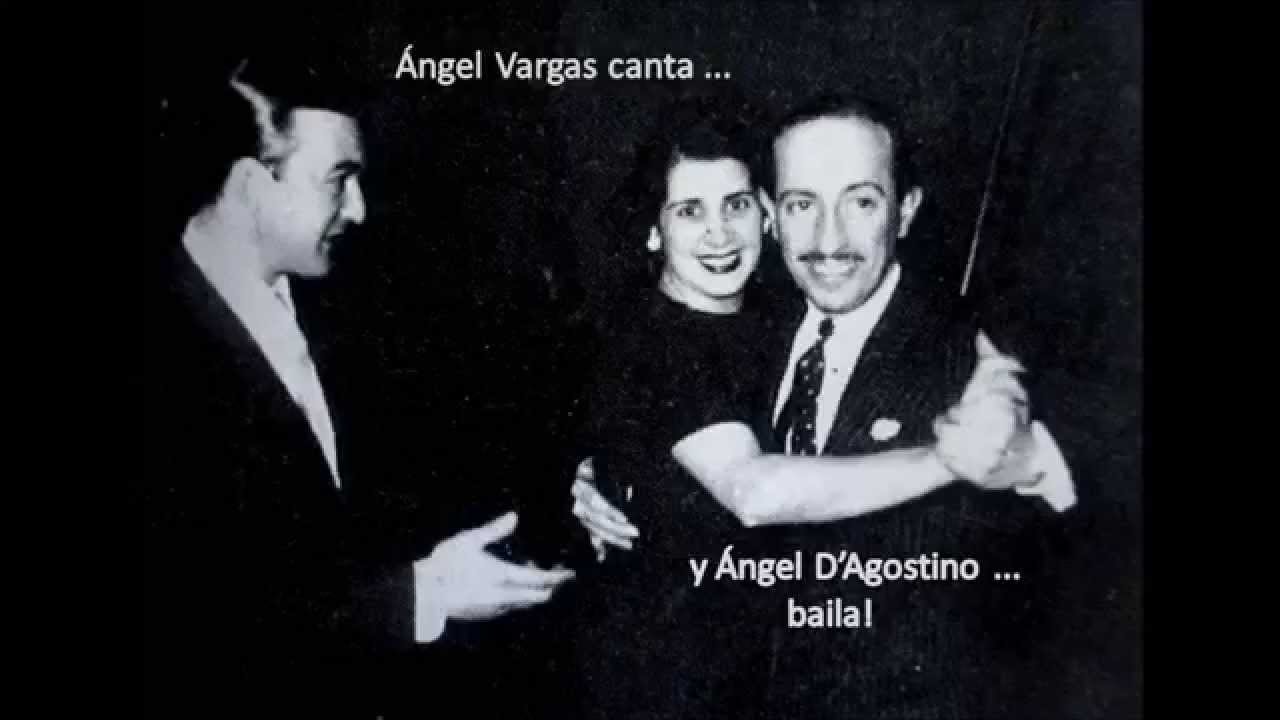
Continuing with the October birthdays of the tango's greats. Ángel Vargas, born October 22 1904, is one of the Argentina's most beloved tango singers. Together with Fiorentino, Vargas set the highest standard for the orchestra singer of the Golden Age of tango. Born to a poor working-class family, young "Angelito" worked as a machine operator at a giant meat-packing factory "La Negra" at the docks of Riachuelo, and occasionally entertained his fellow workers with singing. Already in his 20s, he tried a new career track, singing at a cabaret, but the Great Depression struck, and going was hard. To stay afloat, Ángel Vargas sang with different outfits. This included his first stint with the orchestra of D'Agostino, his future long-time employer, in 1932, but they left no recordings. Vargas finally recorded his first great hits with Orchestra Tipica Victor in 1938 - and then, in November 1940, came the first of his almost 100 records with the orchestra of Ángel D'Agostino. Their work together had a truly seminal influence on the tango universe of the 1940s, showing the way of perfectly seamless integration of voice into the tango music for dancing which continues to inspire us to this day.
33. Angel D'Agostino - Angel Vargas "No Vendrá" 1945 2:30
34. Angel D'Agostino - Angel Vargas "Ahora no me conoces" 1940 2:34
35. Jennifer Gasoi "Happy happy me (cortina 1)" 2012 0:21
Donato Racciatti's birthday is also in October. He was born in a hillside village in the Italian region of Abruzzo on October 18, 1918. After immigrating to Uruguay, Racciatti became a professional bandoneon player by the age of 20, and convened his own orchestra when he was 30. His compositions were eagerly picked by the leading Buenos Aires bands, from Di Sarli to De Angelis, But Donato Racciatti's own great records, all made in Uruguay, remain underappreciated in the world of Argentine tango. For more bio details, please look at our October 2014 commemorative flyer!
36. Donato Racciatti - Olga Delgrossi "Hasta siempre amor" 1958 2:57
37. Donato Racciatti - Olga Delgrossi "Sus Ojos Se Cerraron" 1956 2:47
38. Donato Racciatti - Olga Delgrossi "Queriendote" 1955 2:49
Salt Lake's art nouveau Ladies Literary Club (now The Clubhouse at 850 E. South Temple) used to be the cradle of the "dance tea parties" (the dansante) of the heyday of pre-WWI American tango boom, and it's amazing to witness its rebirth as a tango venue a century later. And it's especially poignant that the first tango workshop in this grand hall focused on the history of tango!
But they don't just play music - they teach how to interpret tango. Their class started with a history lecture, dividing the story of the tango music into 4 chapters:
Tango BC duo
1880 - 1925: Guardia Vieja (exemplified by Villoldo, Arolas, Canaro, Matos Rodriguez....)
1925 - 1955: Guardia Nueva (such as De Caro, D'Arienzo, Di Sarli, Pugliese)
1955-1975: Avant Garde (Piazzolla, Salgán)
1975 + : Contemporary Tango (Fernandez Fierro, El Arranque, Ramiro Gallo - and of course Tango BC themselves)
Guardia Vieja (Old Guard) musicians were almost all amateurs. Europe and Africa influenced the emerging synthesis of different musical forms: Congolese and Angolan candombe, Afro-Cuban and European fusion of habanera, and Argentine hinterland's milonga campera. The fusion of milonga and candombe existed in its own right - listen to Azabache! Mariano and Santiago play examples of the three ancestors of tango, asking the listeners to identify what flowed into the future tango from each of these genres.
Here I must tell you that Bizet's Habanera holds a very special place in my musical education and, perhaps, in my path to tango. We must go back in time to the 1970s Moscow for this story, but before we get there, let me mention that the Habanera from Carmen wasn't actually created by Georges Bizet. He may have thought that it was a folk song but he soon realized that the tune has been composed 12 years earlier by Sebastián Yradier, a native of Spain's Rioja region, who also composed the other most famous habanera of all times - "La Paloma" (Yes, the songs which brought worldwide fame to Cuban music were composed by a Basque who haven't even visited Cuba until the age of 50!)
Yet for me, Carmen's Habanera evokes neither Spain nor steamy Cuba, but snowbound old town Moscow. More specifically, my grandfather's traditional walking path to the Moscow Conservatory. Gramps Karl (or Charles, as grandma preferred to call him in French) was a semi-amateur orchestra clarinet player. Everyone in his family was a part-time musician or singer or actor, but his older brother, violinist Isaac, has been executed in Stalin's purges along with their father; and soon after, they lost the sisters' piano as well. Grandfather Karl was the lone musician survivor now. His children didn't share his passion about music, and now he was hopeful to get me, his first grandchild, into it. Karl bought an educational concert series at the famed Conservatory for the two of us - up at the balcony overhanging right above the orchestra. Soon, I was able to name every instrument - alas, visually, rather than by ear :) Honestly, I didn't like these concerts at all! But I keep the fondest memories of our walks together. Grandfather lived an exotic life, having grown up in Switzerland, picking his first Russian only after high school, moonlighting as a translator for foreign dignitaries for a while - and then, after his family was decimated by the bloody purges, he was kicked out of grad school, worked on river boats and nearly perished in a floating crane disaster, and then it was his turn to be sent to the labor camps and his luck to come back alive ... not all of the stories were safe to share, but out of the ear of the fearful grandmother, he had some amazing stuff to tell.
We'd start at Kropotkinskaya Metro Station, one of the most beautiful in Moscow, built in the early 1930s to serve the giant House of Soviets which has never been completed. So the huge, airy subway ended up being far too big for its modest neighborhood, and eerily more beautiful because of it. The steel frame of the unfinished palace has been cut into anti-tank obstacles when the Nazi troops advanced to the outskirts of the city in 1941, and the remaining giant hole in the ground eventually made way for an outsize open-air swimming pool, open year round. Karl would occasionally take me there in the middle of Moscow's long winter, too.
Chess playing at Gogolevsky Boulevard remains a Moscow tradition
We'd walk up Gogol Boulevard, where the chess players would converge at street tables outside of the Central Chess Club to play, no matter the freezing cold. We'd cross Arbat and dive into the maze of lanes of the former Royal Fermenters' Borough where the artisans once prepared sauerkraut, pickles, and kvas (fermented malted rye bread drink) for the Czar's palace. There, hidden away from the main streets, stood in obscurity the first Soviet skyscraper, the Mosselprom Tower, all 10 stories tall, still sporting the faded ads from pre-Stalin's years, complete with the mural of the Horn of Plenty dispensing such indispensable products as cheap smokes and caramel candy. (Its namesake, Mosselprom, was the 1920s agricultural product processing and trading conglomerate). And finally, we'd round a corner and there would be the gilded edifice of the Conservatory! Our weekend walks continued until I finally heard a musical piece I loved. Alas, it was the Habanera from Carmen.
"You can't get yeast and papirosi (the cheapo smokes
once popular with the Russians and evenpreserved in a
tango name, Elegante papirusa) anywhere
but in MOSSELPROM!"
I'm afraid my admission broke my grandfather's heart. He was, like, all is lost, you'll never get to love the classical music, you're obviously destined to like rock and stuff :( But in hindsight, perhaps it wasn't an omen about rock music, after all. Perhaps it was all about my future infatuation with tango?
Back to Tango BC's workshop now. More musical influences came from the European dance beats - note that almost all early tango composers came from Europe themselves or were born to recent European immigrants. The earliest bands had just 3 instruments - guitar, flute, and violin. Bandoneon comes from Germany later, following a more humble concertina. Bandoneon has a unique ability to modulate the intensity of its sound on the same note, adding a great expressive potential to the bands. But tango has already been well established, and bandoneon "invaded" it against the wave of initial rejection - and changed tango!
Piano "invades" around the same time, and professionally trained musicians and larger bands come in.
The Old Guard music started out rigidly structured. Julio De Caro worked to break the stereotypes. Rhythms acquired syncopation instead of uniformity of the regular "marcato" beat of the Old Guard. Where all the instruments used to play together, now emerged a great room for individual expression of different musicians. The New Guard times have become known as the Golden Age of tango, when its music sounded everywhere!
Santiago and Mariano then introduce us to the Argentine terms for the 3 principal beat patterns of tango, and illustrate walking to the 3 beats by playing :Por una cabeza" with varied and variable accents: the main beat / "marcato", the "blancas" / "whites" of every other beat (so called in Spanish because the half-notes are notated by hollow ovals, "white inside", as opposed to filled-oval quarter-note "blacks"), and the unevenly spaced "sincopa"... plus "arrastre" / drag effects merging together the adjacent sounds of the sincopa, as in dragging one's palm over the guitar strings. It's a great workshop plan, to alternate between listening and practicing to the customized live music on the dance floor!
There was so much more in the workshop material which I couldn't cover in my notes ... from the fundamentals for those who just begin to discover tango to the discoveries which surprise and enlighten the most seasoned tangueros. Thumbs up, Tango BC!
It's great to see the restart of the tango school milonga at the DF studio after the late-summer hiatus. So many new students trying out their freshly acquired skills! The intro class by Atakan has a specific focus on milonga how-to's - a great idea, too. I tried as a can to combine accessibility of the music with dramatic beauty. I hindsight, I now think that more alternative music, and even a bit of salsa sprinkled in, could have made the newcomers' experience even better.
01. Francisco Canaro - Instrumental "El chamuyo" 1933 3:11
02. Francisco Canaro - Instrumental "Lorenzo" 1938 2:34
03. Francisco Canaro - Instrumental "El cabure" 1936 2:37
04. Mammas and the Papas "California Dreaming cortina long" 0:40
05. Juan D'Arienzo - Instrumental "Ataniche" 1936 2:31
06. Juan D'Arienzo - Instrumental "El flete" 1936 2:58
07. Juan D'Arienzo - Instrumental "El Cencerro" 1937 2:40
08. Alexey Kudryavtsev "Joy in My Sky cortina long" 0:25
10. Edgardo Donato - Luis Diaz "Amargura (vals)" 1930 2:30
11. Los Provincianos - Alberto Gomez "Samaritana (vals)" 1932 2:58
12. Viktor Tsoy "Red-Yellow Days cortina long 3" 0:33
13. Carlos di Sarli - Alberto Podestá "Nido gaucho" 1942 3:22
14. Carlos di Sarli - Alberto Podestá "Nada" 1944 2:45
15. Carlos di Sarli - Alberto Podestá "Junto a tu corazón" 1942 3:00
16. Stas Borsov "Anyuta cortina" 2000 0:21
There are so many historic tango days to commemorate in October! Great bandoneonist and orchestra leader Pedro Laurenz was born on October 10 in 1902. I wrote about Laurenz's life path last year. Tonight, we only have time for two tandas of his music - the dynamic tangos with the voice of Casas ("Vieja amiga" marked the great singer's debut with the orchestra of Pedro Laurenz). Later in the milonga, we'll continue with a collection of classic valses.
17. Pedro Laurenz - Juan Carlos Casas "Vieja amiga" 1938 3:13
18. Pedro Laurenz - Juan Carlos Casas "Desconsuelo" 1940 2:29
19. Pedro Laurenz - Juan Carlos Casas "No me extraña" 1940 2:44
20. Gogol Bordello "Pala Tute cortina 1" 2012 0:18
21. Francisco Canaro - Ernesto Famá "Milonga del 900" 1933 2:54
22. Francisco Canaro - Roberto Maida "Milonga criolla" 1936 3:05
23. Francisco Canaro - Roberto Maida "Largá Las Penas" 1935 3:08
24. "Lady Be Good - Sol Hoopii Trio" 0:23
25. Carlos di Sarli - Mario Pomar "Patotero sentimental" 1953 3:02
26. Carlos di Sarli - Mario Pomar "Tormenta" 1954 3:38
27. Carlos di Sarli - Mario Pomar "Duelo criollo" 1952 2:30
28. "Nature doesn't have bad weather" 0:24
Miguel Caló was born in October too - on October 28, 1907. Here is our flyer commemorating his life. 3 tandas to honor Caló tonight, including a milonga set which I haven't plyed before.
29. Miguel Caló - Raúl Berón "Al Compas Del Corazon" 1942 2:48
30. Miguel Caló - Raúl Berón "Corazon, No Le Hagas Caso" 1942 3:00
31. Miguel Caló - Raúl Berón "Tristezas De La Calle Corrientes" 1942 2:46
32. Carrapicho "Tic Tic Tac cortina 1" 2007 0:17
33. Haris Alexiou "To Tango Tis Nefelis" 1998 4:07
34. Mecano "Hijo De La Luna" 4:29
35. Goran Bregovic "This Is A Film (feat. Iggy Pop)" 2003 4:18
49. Miguel Caló - Raúl Berón "Milonga que peina canas" 1942 2:20
50. Miguel Caló - Raúl Berón "Milonga Antigua" 1942 2:25
51. Miguel Caló - Raúl Berón "Azabache" 1942 3:03
52. The Beatles "All you Need is Love cortina" 0:19
53. Francisco Canaro - Roberto Maida "Solo una novia" 1935 3:23
54. Francisco Canaro - Roberto Maida "Condena (S.O.S.)" 1937 2:39
55. Francisco Canaro - Roberto Maida "Invierno" 1937 3:25
56. Folk "Shumel Kamysh " 0:23
57. Osvaldo Fresedo - Roberto Ray "En la huella del dolor" 1934 2:48
58. Osvaldo Fresedo - Roberto Ray "Sollosos" 1937 3:27
59. Osvaldo Fresedo - Roberto Ray "Recuerdo de bohemia" 1935 2:36
60. "Katyusha" 0:33
61. Pedro Laurenz - Alberto Podesta "Paisaje" 1943 2:53
62. Pedro Laurenz - Carlos Bermudez y Jorge Linares "Mendocina" 1944 2:33
63. Pedro Laurenz - Juan Carlos Casas "Mascarita" 1940 2:53
64. Sandro de America "Yo Te Amo cortina" 1968 0:23
65. Lucio Demare - Juan Carlos Miranda "No te apures, Carablanca" 1942 3:29
66. Lucio Demare - Juan Carlos Miranda "Sorbos amargos" 1942 3:22
67. Lucio Demare - Juan Carlos Miranda "Manana zarpa un barco" 1942 3:22
68. Vitas "7, the element cortina" 2012 0:23
69. Ricardo Tanturi - Alberto Castillo "La vida es corta" 1942 2:26
70. Ricardo Tanturi - Alberto Castillo "Noches De Colon" , 1941 2:41
71. Ricardo Tanturi - Alberto Castillo "Pocas Palabras" 1941 2:26
72. Kisty Hawkshaw "It's gonna be a fine night cortina long" 0:34
I break with my old tradition of playing Pugliese in the closing minutes of the milonga, and use elegant and dramatic songs from Di Sarli's late period instead, sampling 3 of his best vocalists (there is no way to make such a selection without the voice of Argentino Ledesma who, alas, recorded just 3 songs with the maestro, making a mixed-singer tanda a must!)
73. Carlos di Sarli - Jorge Duran "No me pregunten por que" 1956 3:29
74. Carlos di Sarli - Argentino Ledesma "Fumando espero" 1956 4:02
75. Carlos di Sarli - Oscar Serpa "Verdemar" 1955 3:01
76. Juan D'Arienzo - Instrumental "La cumparsita" 1951 3:49
a set of alternative "otros ritmos" "after the official closing curtain"
77. 17 Hippies "Gelb Zwo Drei" 2002 2:33
78. Trio Garufa "La Valse D'amelie (Vals)" 2008 2:38
A Cuban remake of "Percal", with a great chachacha band from Matanzas and the immortal voice of "The Singing Mustache" Bienvenido Granda, turns out to be an all-times hit for the Cubans. Would you dance to it? How?
79. La Sonora Matancera - Bienvenido Granda "Percal" 1954 2:48
After a class, just like after any non-tanda activity, a tanda of refreshing rhythmic music may be the best to "cleanse the palate" and to draw people on the floor. This time I'm trying something new - Tanturi's instrumentals.
04. Carlos di Sarli - Alberto Podestá "Nada" 1944 2:45
05. Carlos di Sarli - Alberto Podestá "Nido gaucho" 1942 3:22
06. Carlos di Sarli - Alberto Podestá "Lloran Las Campanas" 1944 2:58
07. Francisco Canaro - Roberto Maida "Envidia" 1936 3:18
08. Francisco Canaro - Roberto Maida "Invierno" 1937 3:25
09. Francisco Canaro - Roberto Maida "Alma del bandoneon" 1935 2:46
The instrumental tanda is built around "El Internado", a theme recorded by D'Arienzo both early and late in his career. This tango was composed specifically for a ball of medical interns of Buenos Aires, an annual event which sent the tango life into a frenzy every time it happened - and which sent some of the brightest tango musicians into the European exile when the tradition had to end after a tragic accident. We are marking the 102nd anniversary of the first Baile del Internado this week - read more about it here and here. The other two songs in this tanda - Joaquina and Ataniche - are named after two remarkable tango women... please follow the links to read their tales!..
10. Juan D'Arienzo - Instrumental "Joaquina" 1935 3:01
11. Juan D'Arienzo - Instrumental "El Internado" 1938 2:31
12. Juan D'Arienzo - Instrumental "Ataniche" 1936 2:32
13. Orquesta Típica Victor - Mariano Balcarce "Milonga de los fortines" 1937 2:55
14. Orquesta Típica Victor - Carlos Lafuente "Cacareando" 1933 2:45
15. Miguel Villasboas - Instrumental "La Milonga Que Hacia Falta" 1961 2:18
Palais de Glace soon after its 1910 opening (Wikipedia).
At first the building did function as a 3,300 sq ft ice rink,
but by 1912 it has already been re-purposed as a tango dance
pista ("El Tano" Genaro played at its grand opening),
and remained a tango hall until the disruptions of
the Great Depression years.
... and since we just mentioned the Primero Baile del Internados, 102 years ago, we may as well celebrate its famous venue, the Art Nouveau "Parisian import" Palais de Glace, immortalized in a song. I found this tango to be too rich on the airy piano sounds, almost reminiscent of Biagi, to fit easily into a D'Agostino tanda with his more flowing classics ... but one of our tangueros stopped at my desk to let me know how he liked it. A different tanda to mix is in order, perhaps?
25. Miguel Caló - Raúl Iriarte "La vi llegar" 1944 3:24
26. Miguel Caló - Raúl Iriarte "Despues" 1944 2:54
27. Miguel Caló - Raúl Iriarte "La noche que te fuiste" 1945 2:47
28. Anibal Troilo - Francisco Fiorentino "Malena" 1942 3:01
29. Anibal Troilo - Francisco Fiorentino "Pa' que seguir" 1942 2:35
30. Anibal Troilo - Francisco Fiorentino "Cada vez que me recuerdes" 1943 2:40
31. Otros Aires "Los Vino" 2010 2:41
32. Otros Aires "Rotos En El Raval" 2005 3:53
33. Otros Aires "Milonga Sentimental" 2005 3:57
Hugo Duval (1928-2003)
TodoTango image
Listening to brooding late Biagi's two nights ago at Milonga Sin Nombre, with "Esperame en el cielo" and "Soñemos" set as tanda centerpieces, I realized that I've never played Biagi-Duval tandas before, yet always looked forward to it. Hugo Duval is one those few great tango voices who were born too late to shine during the Golden Years, yet never wavered in their dedication to Tango (Nina Miranda belonged to this generation, too). After a brief stint with Raul Kaplun's tango orchestra, Duval joined Biagi in 1950, and stayed to the end. And then convened his own tango band dedicated to the memory of Rodolfo Biagi!
34. Rodolfo Biagi - Hugo Duval "Solamente Dios y yo" 1958 2:30
35. Rodolfo Biagi - Hugo Duval "Alguien" 1956 3:14
36. Rodolfo Biagi - Hugo Duval "Esperame en el cielo" 1958 2:52
37. Edgardo Donato - Horacio Lagos "El Adios" 1938 3:09
38. Edgardo Donato - Lita Morales, Horacio Lagos y Romeo Gavio "Sinfonia de Arrabal" 1940 3:07
39. Edgardo Donato - Horacio Lagos y Lita Morales "Carnaval De Mi Barrio" 1939 2:25
The 2013 Argentine public TV documentary series, "Tango, pasion argentina" is narrated by singer Walter "El Chino" Laborde, written by Liliana Escliar, and features great many modern musicians and orchestras. Only one of the 13 parts is about dancing, but there is an infinite variety of music and history and general culture information in the series, which is freely available on the internet. I can't even begin to cover all its topics... All I want to do is to touch on several moments which surprised me, and several observations which struck me.
The first part, "Tu cuna fue un conventillo" ("Your cradle was in a conventillo") mentions that in 1870-1910 Buenos Aires had 239 schools, 16 temples, and ... about 6000 houses of ill repute? Where do these numbers come from (so few churches??) And what kind of estabishments - brothels (prostibulos)? Boliche may generally be a night club, right? I already mentioned that tango historians Lamas and Binda insist that dancing was frequent in the drinking establishments but not in the prostibulos. The reason for this was the city ordnance which forbade both dancing and drinking in BsAs city brothels ... but then we can counter it again - like when was this law enforced, and what about suburbios - were there many brothels outside the city lines in the core tango barrios?
"With the arrival of the bandoneon with its sadness, Tango matured a little, and, like a teenager, has become prone to sentimental moods"
Inside Palais de Glace before a ball. From Maria's tango art site
El Chino gives the exact date of the 1st Balle del Internado a.k.a. Tango Clinic at Palais de Glace. Argentine Medical Interns' celebration was timed to the Students' Day, September 21, 1914. Although I also read that this date is incorrect and that the September 21, 1914 charity gala was held at a different location, "Splendid Theater", as a benefit for the medical library, and it was followed by a Fantasy Ball at Palais de Glace on September 24th. I wrote about these crazy celebrations of medicine and tango earlier ... and tonight it may be the time to celebrate it with "El Internado", "The Intern"?
"In 1917, Angel Villoldo said in an interview that he doesn't intend to keep composing tangos, because it's no longer in vogue. He died in 1919 - didn't live to see himself wrong".
Laborde described Nikanor Lima's 1916 Tango Salon dancing textbook as the earliest attempt to make not just tango music but also the actual dance decent and palatable to the high society in Argentina. The hundred years old book is lovingly preserved and commented at the social dance website of Stanford University.(Needless to say, I would be very surprised if any Argentines actually learned tango by this book!)
On the shift from improvised payadore-style verses to pre-set lyrics, and the revolution brough about by "Mi Noche Triste" in 1917: Informal / improvised lyrics, full of risque hints and double entendre - as is customary in the sex trade - dominated the early tangos. The same must be true with risque couplets in any language! With Contursi / Gardel's "Mi Noche Triste", the rough lunfardo slang remained in the lyrics, but now the verse has become a narrative, a story, with a straightforward meaning, and no indecent wordplay, no more bowdlerizations like "La c...ara de la l...una". (http://humilitan.blogspot.com/2014/12/milonga-del-centro-playlist-dec-7-2014.html)
"How do you know estribillista (refrain singer) from a true-blue tango singer?" For starters, refrain singer's name wasn't even printed anywhere on the billboard, tells us Laborde! But on July 1, 1937, for an opening night in Marabu, Anibal Troilo put Francisco Fiorentino's name on the billboards, That's how the singers' ascent to fame started, says Laborde. And soon after, we already see the star singer with one's special image, with unique onstage manners. They need to be watched, not just listened to. And soon after, chicas stop dancing, they freeze and watch their idol when the vocal segments begin...
One of the early examples of tango records
featuring estribillo singer names.
Osvaldo Frsedo - Roberto Ray, Feb. 1935
Courtesy of El Espejero
(Of all the disputable statements and simplifying soundbites of the TV series, this part about cantor de orquesta and July 1937 caused the biggest uproar so far. Yes, Francisco Fiorentino is the archetypal tango orchestra singer, but his impact on the evolving styles of vocal tangos have started years earlier, yet didn't achieve full strength until Troilo's first wave of prolific recordings in 1941 ... and there were far too many others boldly experimenting with the best ways to include vocals into the danceable tango. The format of "Tango cancion", with its multiple vocal couplets and refrains "beginning to end", was made famous hundred years ago by "Mi Noche Triste", and remained extremely popular through the years, but it wasn't considered "tango for dancing". Francisco Canaro credits himself with experimenting with part-vocal tango formats starting in the 1920s, first with only the refrain (estribillo) sung, then gradually going bolder with added stanzas, yet always keeping the requisite long instrumental intros and transitions. In his in-depth analysis, Jens-Ingo Brodesser shows how Carabelli, Fresedo, and Donato all developed stanzas-and-refrains tango formats in the early-to-mid 1930s. Of note also, we don't know how Fiorentino sang in Marabu in 1937, but we do know that the "legend of nameless singer" isn't quite right and in fact RCA Victor started putting estribillista names on record labels as early as in 1933.)
"Muerte y resurrección", "Death and resurrection of tango" (I was fascinated by this Dark Age period of tango history too, and wrote about it at length already). The "death" section spans the 1960s. Ricardo Mejia's disastrous management of RCA and "Nueva Ola". Deluge of Western music. Parallel rise of the countryside tunes, of the folklore and Palito Ortega. Mortal conflict of the New Wave "movement" with Pugliese. But some tango life still goes on... Amazingly, La Falda festival of tango begins in a little town in Cordoba province, 500 miles from BsAs, in 1965. Sexteto Mayor forms in 1973. Ben Molar commissions "14 con el Tango".Still, tango survives mostly by lingering in the retrospective TV programs, and on the for-export LPs.
The nail in the coffin of the old tango may have been the untimely death of Julio Sosa in a car accident on November 26 1964 - "El Varón del Tango", only 38 years old, was still loved by the young fans even in the times of Nueva Ola.
Cucuza at El Viejo Almacen
In the big city counterculture scene, new music cafes sustain the remnants of tango. Caño Catorce Cafe - "Drainage Pipe 14" - opened in March 1962. The name of the establishment is said to have been suggested by drunk Troilo, muttering, "of course we'll go down the drain soon after opening" (and the number 14 signifies drunkards). Over the years, it's become almost synonymous with tango music. It operated until 1986, and later reopened with almost the same fame. In 1969, Ruben Juarez debuted on bando at this cafe.
El Viejo Almacen - "The Old Warehouse" bar opens in on May 9, 1969 as Edmundo Rivero's project, named after the opening line from the old tango, Sentimento Gaucho, sung by Gardel in 1925 ... it is the place of gathering of all dejected and hopeless. By the way, this location hosted a cafe and bowling alley way back in the 1900s, operating under the name "Volga" by a Russian emigre, Paula Kravnik, In this still from the video, Hernán 'Cucuza' Castiello sings Sentimento Gaucho at the location.
The serial doesn't have much to say about the 1970s. Too dark, too hopeless. For the resurrection scene, they segway straight to November 11, 1983, when Tango Argentino opens to rave reviews at Festival d'Automne in Paris.
After it's over :) 5:15 AM on Labor Day Monday morning
Denver Turnverein! It's such an honor to DJ at this beautiful, venerable dance hall, at the historic Labor Day Tango Festival, now rechristened Tango on the Rocks (hey, one day we shall answer the naming challenge with "Tango Chilled Neat", the Russian way)!
The flip side is that I have to leave my most beloved Cheesman Park colonnade milonga early to catch a small nap before my work shift. By 10:30 pm - when DJ Martin was just about to play La Cumparsita at Cheesman's - we are already at the venue, beautifully decorated by the original artwork by Amber Schneider & Tiffiny Wine and by Jesica Cutler's paper creations for the event. And I start playing-and-sound-testing right away. The guests begin to trickle in right after the official 11 pm opening time; the first track with dancers on the floor is Hugo Diaz's slow-longa. Thence, the real milonga play-set begins.
001. Francisco Canaro - Roberto Maida "Mi noche triste" 1936 2:45
002. Francisco Canaro - Roberto Maida "Recuerdos De Paris" 1937 3:12
003. Francisco Canaro - Roberto Maida "Ciego" 1935 2:57
004. Francisco Canaro - Roberto Maida "Condena (S.O.S.)" 1937 2:39
005. Vitas "7, the element cortina" 2012 0:23
006. Adolfo Carabelli - Carlos Lafuente "Pa' que lagrimear" 1933 2:37
007. Adolfo Carabelli - Alberto Gomez "El trece" 1932 2:30 we just chatted with friends about countryside-themed tango songs, and especially about the lazy cows slowly making their way home across a ravine in "El carrerito", so I was tempted to play these old favorites "before the milonga really gets blazing" :)
008. Sexteto Carlos di Sarli - Ernesto Fama "La estancia" 1930 3:25
009. Osvaldo Fresedo - Ernesto Fama "El carrerito" 1928 3:09
010. QTango Sexteto Canyengue "Milonga Triste (milonga cut)" 2000 4:06
011. Hugo Diaz "Milonga Para Una Armonica" 1973 4:25
012. Quinteto Don Pancho - Instrumental "La Viruta" 1938 2:30
013. Quinteto Don Pancho - Instrumental "El pollo Ricardo" 1938 2:30
014. Quinteto Don Pancho - Instrumental "Alma en pena" 1938 2:46
015. Quinteto Don Pancho - Instrumental "Zorro gris" 1938 2:46
016. Sandro de America "Yo Te Amo cortina" 1968 0:23
017. Enrique Rodriguez - Armando Moreno "Tango argentino" 1942 2:37
018. Enrique Rodriguez - Armando Moreno "Tabernero" 1941 2:33
019. Enrique Rodriguez - Armando Moreno "Un tropezon" 1942 2:30
020. Enrique Rodriguez - Armando Moreno "Como Has Cambiado Pebeta" 1942 2:37
021. Enrique Rodriguez - Armando Moreno "En La Buena Y En La Mala" 1940 2:28
022. Lidiya Ruslanova "Valenki 2 (cortina long)" 0:33 With the vals set, the floor comes truly alive at last. Whew!
023. Juan D'Arienzo - Instrumental "Orillas Del Plata" 1935 2:44
024. Juan D'Arienzo - Alberto Echagüe "En Tu Corazon" 1938 2:47
025. Juan D'Arienzo - Héctor Mauré "Cuatro Palabras" 1941 2:12 I wanted to deploy a set of energetic (and largely wordless) cortinas, and turned to rock classics, trying some from Argentina (like Sandro's hit two tandas back) and some from the Anglo world (like the one which closes the next tanda) ... but ended up relying the most on just one groundbreaking Russian 1980s band, with its insane variety of dark and driving beats which seemed so perfect for an all-nighter. We just marked 26th anniversary of Viktor Tsoi's untimely death, and I start from a snippet of his song marked by this foreboding, opening with a question, "How many more songs am I destined to write?".
026. Viktor Tsoy "Kukushka cortina long 2" 0:37
027. Francisco Canaro - Ernesto Fama "Tormenta" 1939 2:38
028. Francisco Canaro - Ernesto Fama "Te quiero todavia" 1939 2:54
029. Francisco Canaro - Ernesto Fama "Algun dia te dire" 1939 2:16
030. Francisco Canaro - Ernesto Fama "No me pregunten porque" 1939 2:54
031. Pink Floyd "Goodbye Blue Sky cortina long 1" 0:34
032. Carlos di Sarli - Instrumental "La trilla" 1940 2:21
033. Carlos di Sarli - Instrumental "Catamarca" 1940 2:23
034. Carlos di Sarli - Instrumental "Shusheta" 1940 2:24
035. Carlos di Sarli - Instrumental "Nobleza De Arrabal" 1940 2:08 A wishful thinking cortina title? I don't think so!
036. Kirsty Hawkshaw "It's gonna be a fine night tonight - cortina long" 0:34
037. Juan D Arienzo - Instrumental "Milonga, Vieja Milonga" 1937 2:33
038. Juan D Arienzo - Instrumental "De Pura Cepa" 1935 2:42
039. Juan D Arienzo - Instrumental "El Esquinazo" 1938 2:29
040. Mammas and the Papas "California Dreaming cortina long" 0:40 I don't play 4 song tandas all that often, and tonight I sensed how much more freedom they givs me with gradually changing the emotional vibes within the tandas. It felt pretty cool to keep selecting sets of songs not just unified by their similarity, but also developing a directional theme...
041. Osvaldo Fresedo - Roberto Ray "Adiós para siempre" 1936 3:03
042. Osvaldo Fresedo - Roberto Ray "Angustia" 1938 2:39
043. Osvaldo Fresedo - Instrumental "Arrabalero" 1939 2:32
044. Osvaldo Fresedo - Roberto Ray "En la huella del dolor" 1934 2:48 As I played a longer cut of Sandro's 1968 super-hit - for a more crowded dance floor - Gustavo Naveira stopped by and asked if I can play the *whole* song. And I didn't have quick enough thinking to tell him that I will do it, if he will dance it... Drats!
045. Sandro de America "Yo te amo cortina long" 1968 0:44
046. Ricardo Tanturi - Alberto Castillo "Asi Se Baila El Tango" 1942 2:36
047. Ricardo Tanturi - Alberto Castillo "Noches Del Colon" 1941 2:36
048. Ricardo Tanturi - Instrumental "Comparsa Criolla" 1941 2:53
049. Ricardo Tanturi - Alberto Castillo "Pocas palabras" 1941 2:27
050. A.R. Rahman "Ringa Ringa cortina long" 2008 0:32
051. Enrique Rodriguez - Roberto Flores "Salud, Dinero Y Amor" 1939 2:39
052. Enrique Rodriguez - Roberto Flores "Tengo mil novias" 1939 3:06
053. Enrique Rodriguez - Roberto Flores "Fru Fru" 1939 2:57
054. Zhanna Aguzarova "Old Hotel cortina long" 0:38
055. Edgardo Donato - Horacio Lagos "A media luz" 1941 2:31
056. Edgardo Donato - Horacio Lagos "A oscuras" 1941 2:48
057. Edgardo Donato - Horacio Lagos "Se va la vida" 1936 2:39
058. Edgardo Donato - Horacio Lagos "Te busco" 1941 2:26
059. Viktor Tsoy "Kukushka cortina long" 0:55
060. Juan D'Arienzo - Alberto Echagüe "Qué importa" 1939 2:17
061. Juan D'Arienzo - Alberto Echagüe "La bruja" 1938 2:18
062. Juan D'Arienzo - Alberto Echagüe "Ansiedad" 1938 2:42
063. Juan D'Arienzo - Alberto Echagüe "No Mientas" 1938 2:36
064. Johnny Cash "I walk the line - cortina long" 0:40
065. Carlos di Sarli - Roberto Rufino "Pena mulata" 1941 2:27
066. Carlos di Sarli - Roberto Rufino "Zorzal" 1941 2:40
067. Carlos di Sarli - Roberto Rufino "Yo Soy De San Telmo" 1943 2:20
068. Alla Pugacheva "Million Scarlet Roses (cortina long)" 0:39
069. Francisco Canaro - Eduardo Adrian "Infamia" 1941 3:00
070. Francisco Canaro - Eduardo Adrian "Decile que vuelva" 1941 2:35
071. Francisco Canaro - Eduardo Adrian "Amando en silencio" 1942 2:54
072. Francisco Canaro - Eduardo Adrian "Corazon encadenado" 1942 3:28
073. Viktor Tsoy "Nam s toboj (For you and me) cortina long" 0:52 The final set of a nearly-continuous torrent of rhythmic and high-drive tandas. It's 2 am already, and we don't expect more new arrivals to the milonga who'd need to be energized into action. So it's now time to mellow it out, and to pave way for a transition to a mid-allnighter's dramatic peak, the one which I would normally reserve for the crescendo of the final hour of a shorter milonga.
074. Pedro Laurenz - Martin Podesta "Al verla pasar" 1942 3:23
075. Pedro Laurenz - Juan Carlos Casas "Vieja Amiga" 1938 3:12
076. Pedro Laurenz - Instrumental "Amurado" 1947 2:38
077. Pedro Laurenz - Juan Carlos Casas "No me extrana" 2:44
078. Elleen Burhum "Interlude long slow cortina" 2006 0:41 the only tanda of slower valses. I wrote about these unusuals and their director here.
079. Juan De Dios Filiberto - Instrumental "Tus Ojos Me Embelesan" 1935 2:34
080. Juan De Dios Filiberto - Instrumental "Palomita Blanca" 1959 2:35
081. Juan De Dios Filiberto - Instrumental "Pensando En Ti" 1935 2:50 (break for the performance, followed by a group dance of the instructors to Di Sarli's beautiful classic)
082. Carlos di Sarli - Instrumental "Ensueños" 1943 2:44
083. "silence30s" 0:31
084. Robotaki "Visual Dreams (Instrumental long)" 0:36
085. Miguel Caló - Raúl Berón "Jamas Retornaras" 1942 2:31
086. Miguel Caló - Raúl Berón "Que te importa que te llore" 1942 2:44
087. Miguel Caló - Raúl Berón "Trasnochando" 1942 3:04
088. Miguel Caló - Raúl Berón "Lejos de Buenos Aires" 1942 2:54
089. Viktor Tsoy "Sledi za soboj (Be careful) long vocal cortina" 0:53 We are often told to bracket the tandas with the strongest songs, leaving the weakest tracks for the 3rd place in a four-song set. First song to drive people onto the floor, the final one like a dessert after a meal course, right? But exceptions happen, and in the following dramatic contemporary classic tanda I felt that I needed to make the 3rd song the strongest! Why? Because it was dictated by the logic of the developing theme - from dramatic melody towards raw grounded energy. I already wrote about Ojos de Tango, and their singularly beautiful bandleader, here - and about the exceptional nature of their "El adios", making it so difficult to match it with their other, less powerful tracks. The following night at the Avalon, Marc Hussner tried to prove me wrong, starting an Ojos tanda with "El adios" and continuing with diminishing energy. It actually felt better than I expected, but still the drive was kind of dissipating towards the end. Do you have better ideas how to use this great record in a tanda? Want to share?
090. Orquesta Tipica Fervor de Buenos Aires "Quien Sos" 2007 3:08
091. Orquesta Tipica Fervor de Buenos Aires "E.G.B." 2007 2:26
092. Analíá Goldberg y Sexteto Ojos De Tango "El Adios" 2011 3:13
093. The Alex Krebs Tango Sextet "La Yumba" 2011 2:57
094. The Blues Brothers "Theme From Rawhide (long vocal cortina)" 1980 0:33 we carry the crazy energy into a candombe tanda, and on to the complex and dramatic De Angelis and Pugliese sets
095. Enrique Rodriguez - Armando Moreno "El tucu-tun" 1943 2:34
096. Alberto Castillo "El Gatito en el Tejado" 1957 2:37
097. Romeo Gavioli "Tamboriles" 1956 2:56 first of the extra-long cortinas for the night. Great modern rendition of the classic slow milonga made famous by Atahualpa. I started playing this fav track from near the second stanza, and Gustavo Naveira stopped by and asked me not to cut it short. Thanks Randy for dancing along!
098. Paco Mendoza & DJ Vadim "Los Ejes De Mi Carreta - danceable cortina cut" 2013 2:12
099. Alfredo de Angelis - Instrumental "El Tango Club" 1957 2:40
100. Alfredo de Angelis - Instrumental "Felicia" 1969 2:47
101. Alfredo de Angelis - Instrumental "Pavadita" 1958 2:52
102. Alfredo de Angelis - Instrumental "Mi Dolor" 1957 2:51
103. Viktor Tsoy "Red-Yellow Days cortina long 1" 0:50
104. Osvaldo Pugliese - Instrumental "Recuerdo" 1944 2:45
105. Osvaldo Pugliese - Roberto Chanel "Corrientes y Esmeralda" 1944 2:46
106. Osvaldo Pugliese - Roberto Chanel "Farol" 1943 3:22
107. Osvaldo Pugliese - Roberto Chanel "Rondando Tu Esquina" 1945 2:49 This is the high point of the first 4-hour stretch of the milonga; I know that many dancers won't survive till 5 in the morning, and for them, this could be the crescendo. But we shall try raising another high wave of energy for the survivors in the two hours ahead!
108. Johnny Cash "I walk the line cortina long" 0:40
109. Orquesta Tipica Victor - Lita Morales "Noches de invierno" 1937 2:47
110. Orquesta Tipica Victor - Angel Vargas "Sin Rumbo Fijo" 1938 2:18
111. Orquesta Tipica Victor - Mario Pomar "Temo" 1940 2:55
112. Zhanna Aguzarova "Old Hotel cortina long" 0:38
113. Angel D'Agostino - Angel Vargas, glosas: Julian Centeya "Cafe Dominguez" 1955 2:58
114. Angel D'Agostino - Angel Vargas "Ahora no me conoces" 1940 2:34
115. Angel D'Agostino - Angel Vargas "Solo compasion" 1941 2:58
116. Angel D'Agostino - Angel Vargas "A quien le puede importar" 1945 3:11
117. Sandro de America "Yo te amo cortina long" 0:44
118. Aníbal Troilo - Instrumental "Guapeando" 1941 2:50
119. Aníbal Troilo - Instrumental "El tamango" 1941 2:35
120. Aníbal Troilo - Instrumental "Comme il faut" 1938 2:42
121. Aníbal Troilo - Instrumental "Milongueando en el cuarenta" 1941 2:33 for the late-night energy flow, transitioning to shorter tandas with occasional longer dance-able cortinas. The catch with these type of cortinas is that for the tangueros who sit them out, the energy may sag with every additional minute of a musical break. Five-plus minutes long salsa interludes invariably do this to myself! So tonight, I mostly stick with approximately 2 minute long pre-cut "danceable cortinas" instead of the full-length tracks. Couldn't make a logical cut of this one, though:
122. Fool's Garden "Lemon Tree" (full-length danceable cortina) 1999 3:11 Meanwhile our crazy chefs Mike Eblen & Trista do everything to support the energy flow with a late-nighter's traditional "early breakfast" :) ...
123. Quinteto Pirincho - Instrumental "Milongon" 1952 2:30
124. Quinteto Pirincho - Instrumental "Arrabalera" 1950 2:41
125. Quinteto Pirincho - Instrumental "Orillera" 1960 2:24
126. Victor Tsoy "Gruppa Krovi (Blood Type) cortina long" 0:36
127. Edgardo Donato - Lita Morales y Romeo Gavio "Mi Serenata" 1940 3:02
128. Edgardo Donato - Horacio Lagos, Lita Morales y Romeo Gavio "Sinfonia de Arrabal" 1940 3:07
129. Edgardo Donato - Horacio Lagos y Lita Morales "Carnaval De Mi Barrio" 1939 2:25
130. Leonid Utesov "S Odesskogo Kichmana (cortina long)" 1935 0:44
131. Sexteto Carlos di Sarli - Instrumental "Anorandote" 1930 2:33
132. Sexteto Carlos di Sarli - Ernesto Fama "Flora" 1930 2:38
133. Sexteto Carlos di Sarli - Instrumental "Belen" 1929 2:44
134. Cream Margot "Krem Margo - Poka Igraet Dzhaz danceable cortina cut" 1:41
135. Enrique Rodriguez - Armando Moreno "En el volga yo te espero" 1943 2:40
136. Enrique Rodriguez - El "Chato" Flores "Las Espigadoras" 1938 2:49
137. Enrique Rodriguez - El "Chato" Flores "Los Piconeros (Vals)" 1939 2:47
138. Damour Vocal Band "SWAY - danceable cortina cut" 1:39
139. Lucio Demare - Raul Beron "Canta pajarito" 1943 3:24
140. Lucio Demare - Juan Carlos Miranda "Sorbos amargos" 1942 3:22
141. Lucio Demare - Juan Carlos Miranda "No te apures, Carablanca" 1942 3:29
142. Prince "Baby Knows (With Sheryl Crow) cortina" 1999 0:35
143. Pedro Láurenz - Alberto Podestá "Alma de bohemio" 1943 2:45
144. Pedro Láurenz - Alberto Podestá "Todo" 1943 2:37
145. Pedro Láurenz - Alberto Podestá "Recien" 1943 2:43
146. V. Butusov "Goodbye America - danceable cortina cut" 1996 2:00
147. Rodolfo Biagi - Jorge Ortiz "Todo te nombra" 1940 3:33
148. Rodolfo Biagi - Jorge Ortiz "Carillón de La Merced" 1941 2:30
149. Rodolfo Biagi - Instrumental "El Recodo" 1952 2:25
150. Viktor Tsoy "Red-Yellow Days cortina long 2" 1:03
151. Donato Racciatti - Nina Miranda "Gloria " 1952 2:44
152. Donato Racciatti - Olga Delgrossi "Sus Ojos Se Cerraron" 1056 2:47
153. Donato Racciatti - Olga Delgrossi "Hasta siempre amor" 1958 2:57 154. 17 Hippies "Marlène - danceable cortina cut" 2005 2:46
155. Osvaldo Pugliese - Instrumental "Gallo ciego" 1959 3:33
156. Osvaldo Pugliese - Instrumental "Nochero soy" 1956 3:33
157. Osvaldo Pugliese - Jorge Maciel "Remembranza" 1956 3:41
158. Juan D'Arienzo - Instrumental "La cumparsita" 1951 3:49 and after the hall quites down, and after the traditional 5:15 AM survivors photo, I can't resist adding one more track - Harry Roy and Stanley Black's 1938 rumba remix of the Cumparsita. And guess what? The tired tangueras break into an exuberant dance :)