Saturday, June 15, 2013

"How to NOT get invited", and more on surviving tango festivals (a translation)

Sage advice from a Russian LJ. (And I'm, like, why write my own Tango Survival Guide when I can cite the classic authors instead ;) )
In front of a movie screen?
Moscow, Milonga Me Gusta (2012) (etango image)

Don't sit in the dark corners. Or in front of a movie screen, or wherever you're lit from behind.

Why? In the darkness, they won't see you. In the faraway corners, they won't find you. If the light illuminates you from behind, then the direction of your gaze won't be visible, and your cabeceo will fall flat. And if everyone is looking at a movie screen behind you, then you'd have hard time telling if anybody is looking at you rather than at the screen! 

(DP's comment: Back rows of tables NEVER work. Also it's also amazing how at outdoor milongas, people don't get it that sunglasses make their gaze invisible, too. Lastly, if you're nearsighted, then don't you think that glasses may help A LOT? )

Wanna dance? Then go & stand where all the like-minded, eager dancers gather!

(DP's comment: entry points to the dance floor, especially the ones closest to the dance hall entrance; spots near the water cooler,  bar or, yes, restroom. In the grand old Norse Hall of Portland, the storied "best fishing spot" is near the trash can ... probably not because the trash can attracts the most eager dancers, but because it guards the passageway to the bar & lounge)

The topic of your conversation may be absolutely breathtaking, but it's still recommended that you pause your conversation during cortina (and at the beginning of the next tanda)

Why? Because you don't want to make an impression that you have much more pressing interests than dancing. Ditto heading to the bar / drinking coffee / eating / reading books / meditating with you fav gadgets.

(DP's comment: it's time to look around; perk up, don't look down)

Don't sit in street clothes, and, especially, without your dance shoes. (Do take the dancing shoes off you want to make a break!) "Display your determination and readiness"

DP's comment: in America's air-conditioned halls, a warm shawl over your shoulders doesn't mean that you aren't ready. A slumped posture usually does. BTW sometimes it's hard to tell if a tanguera is "ready" because the body language may be ambiguous, and so you try checking what kind of shoes she wears, but alas, her feet are tucked under a table :)

Also some festival-specific sage advice from the previous installment of the series (more questionable IMHO, but still interesting. I will leave it mostly without specific comments since I think that the advice below won't work equally well for everyone)
"At the best fishing spot"
FRWL Marathon, Moscow, 2015. Etango image

Be communicative; if you know more people, you'll dance more. You like somebody's way of dancing? Compliment them. You like DJs? Thumbs-up them. You like how it is organized? Tell it the organizers.

You don't know something about the place? How are things done? How to get there? Ask around; once people know that you're new to this festival, they won't just help you - they'll get you dances too.

You're too shy? Tango should help you overcome it.

Don't be too idiosyncratic with your clothing, keep an eye on the others' style. If your clothes are soaking wet, or rumpled, then it may be taken as a sign of disrespect. Use different shoes; once your feet get tired in one pair of shoes, they may be rescued by switching to another pair. There is a lot of "black magic" for the tired feet (creams and sprays, ice buckets, reiki, whatnot ... read and listen and find what works for you). 

(DP: For very long milongas, if I'm tired and things go downhill, I practice a "reboot" - a shower and a complete change of clothes ... you see, now it's a different me!)

(... skipping several recommendations which mostly parallel the ones already translated above)

Take care of your food and drink; don't eat heavy meals before milongas

(DP: too often, tangueros feel dog tired simply because they didn't drink enough water and didn't take enough electrolytes. Yes, we loose salt when dancing, and we loose energy with it! I swear by Cliff Cubes, an electrolyte-rich chews favored by distance runners)

Pace yourself! A day with too many classes followed by a night with too many milonga hours may deflate the  rest of your festival!

(DP: being able to take approximately one hour naps helps a lot; coming to a milonga a few hours late, but refreshed, may project an impression that you're tough and determined, and help you get the dances. But don't come to the last few hours of an all-nighter; it's like coming too late to a party when everybody's is already too drunk and you just can't fit in anymore)

Don't stay too far from the venues! It may seem like staying half an hour away isn't a big deal, but it can be a huge deal.

Tuesday, June 11, 2013

Practica Del Centro playlist, 6/10/13

Phew, next time I should remember to pull and tuck back all the cables to make sure there are no loose connections! Thanks Dave for troubleshooting!
01. Carlos Di Sarli  "Bahia Blanca"  2:54
02. Di Sarli, Carlos  "Indio Manso" 1958 2:57
03. Carlos di Sarli - Instrumental Carlos Di Sarli "El amanecer" 1951 2:30
04. Juan D'Arienzo - Alberto Echague  "La bruja" 1938 2:13
05. D'Arienzo, Juan Juan d'Arienzo "Que Importa" 1939 2:08
06. Juan D'Arienzo Juan d'Arienzo "No mientas"  2:34

I love Los Piconeros, originally an Andalusia folk ballad with its scene of the highland dawn, with Luna Lunera  hiding behind the hills and the first rays of Sun caressing the olive groves - and I find it so touching when Flores overlays the old Andaluz dialectisms with the sound of Argentinian Castellano :)  But the ending tune of this tanda is no less special; it's an Enrique Rodriguez remix of a classic Russian gypsy folk romance of love and loss (which in turn borrowed the musical theme from an old slow French waltz). It certainly sped up quite a bit in Buenos Aires!
07. Enrique Rodriguez - Roberto Flores  "Los Piconeros"  2:47
08. Enrique Rodriguez - Roberto Flores  "Fru Fru"  2:57
09. Enrique Rodriguez  "En El Volga Yo Te Espero - Armando Moreno" 1943, 1943 2:40
10. Francisco Canaro - Roberto Mai  "Ciego" 1935 2:57
11. Francisco Canaro  "Recuerdos De Paris - Roberto Maida - 1937" 1937, 1937 3:12
12. Francisco Canaro - Roberto Mai Francisco "Ojos negros que fascinan" 1935 2:51
13. Pedro Laurenz Alberto Podestá "Todo"  2:35
14. Pedro Laurenz Alberto Podestá "Recien"  2:41
15. Pedro Laurenz Alberto Podestá "Alma de Bohemio"  2:45
16. Canaro, Francisco  "Reliquias Portenas (Milonga)"  2:45
17. Francisco Canaro - Ernesto Fama  "Parque Patricios" 1940-10-03 2:29
18. Francisco Canaro - Instrumental  "La milonga de mis tiempos" 1938-05-23 3:17
19. Osvaldo Fresedo Roberto Ray "Cordobesita" 1933 2:32
20. Osvaldo Fresedo Roberto Ray "Vida mia" 1933 3:23
21. Osvaldo Fresedo Roberto Ray "Nieblas del riachuelo" 1937 2:25
22. Biagi, Rodolfo  "Humiliacion" 1941 2:42
23. Rodolfo Biag Jorge Ortíz "Ahora  No Me Conoces"  2:30
24. Rodolfo Biag Jorge Ortíz "Indiferencia"  2:33
I may be running low on Firpo valses - the 2nd one may need a replacement?
25. Roberto Firpo  "El Aeroplano"  2:13
26. Roberto Firpo Instrumental "Para Las Chicas" 1942 2:14
27. Roberto Firpo  "Olga"  2:10
Running out of time with a later start, and frantically cutting stuff so the following two sets got just two tangos each, and a milonga tanda disappeared altogether:
28. Troilo, Anibal Aníbal Troilo "Pajaro Cíego" 1941 3:02
29. Anibal Troilo  "Guapeando"  2:49
30. Juan D'Arienzo - Hector Maure  "Cicatrices" 1942 2:23
31. Juan D'Arienzo - Héctor Mauré  "Dime, mi amor" 1941-05-21 2:40
32. Donato, Edgardo Various Artists "La Melodía Del Corazón" 1940 3:18
33. Donato, Edgardo  "Sinfonía De Arrabal" 1940 3:07
34. Edgardo Donato - Horacio Lagos - Lita Morales  "Sinsabor" 1939 2:53
35. Donato, Edgardo  "El Adios" 1938 3:09
36. Pugliese, Osvaldo Various Artists "Rondando Tu Esquina" 1945 2:49
37. Osvaldo Pugliese  "Gallo Ciego"  3:34
38. Osváldo Pugliese Osvaldo Pugliese "Remembranzas" 1943 3:41
39. Juan D'Arienzo - Instrumental  "La cumparsita" 1951 3:49
40. Quartango Artisti vari "Androgyne" 1999, 1999 4:30


Sunday, May 12, 2013

Practica del Centro playlist, 5/6/2013

We've had several cancellations of the practica in April, so my next turn to play with the music came in May. So many good tangos, so few minutes of play!
01. Carlos di Sarli - Instrumental "Cara sucia" 1957 2:48
02. Carlos Di Sarli Roberto Rufino "Tristeza Marina"  3:09
03. Carlos di Sarli - Roberto Rufino  "Charlemos" 1941 2:30
04. Carlos Di Sarli Roberto Rufino "Corazon"  2:46
05. Osvaldo Fresedo Roberto Ray "Vida mia" 1933 3:23
06. Osvaldo Fresedo Roberto Ray "Isla de Capri" 1935 3:16
07. Osvaldo Fresedo Roberto Ray "Sollosos" 1937 3:27
This is a "new, improved" version of my OTV vals tanda. As chance may have it, OTV's valses are also featured in the latest installment of Tanda of the Week blog, and I stand behind my insistence that the 3rd of mine is the one to go for :)
08. Orquesta Típica Víctor Orquesta Tipica Victor "Amor y Cielo" 2:25
09. Orquesta Típica Víctor Orquesta Tipica Victor "Sin Rumbo Fijo" 2:18
10. Orquesta Tipica Victor - Lita  "Noches de invierno" 1937 2:47
Enough of this fear of "Poema" :) :) ! Talking with the dancers in the community about the tracks convinced me that many dancers on the local scene long for the old favs which the festival-goers like myself sometimes dismiss as overplayed. So I'm going to try to re-use the would-be cliche records - like how about right this time: see "Malena" a few tandas below ;)
11. Francisco Canaro  - Roberto Maida "Ciego"  2:57
12. Francisco Canaro - Roberto Maida  "Mano a mano" 1938 3:06
13. Francisco Canaro - Roberto Maida  "Poema" 1935 3:24
"Zaraza" turned into a signature Eastern European tango - so much so that in Romania, they reinvented the meaning of the title, insisting that it was a beautiful maiden's name! And of course in Polnad, they had to change the title, which translates as "Pest" :). Read this tale, beautifully illustrated, in Studiolum's blog.
14. Biagi, Rodolfo  "Humiliacion" 1941 2:42
15. Rodolfo Biagi Jorge Ortíz "Zaraza"  2:42
16. Rodolfo Biagi  "Pura Clase" 1939 2:37
Why is it so that whenever I play from El Rey del Fox for a milonga-ish tanda, people keep asking me if that was Russian music? Was Enrique Rodriguez a Russian by heart ;) ?
17.  Enrique Rodriguez, Armando Moreno "3 Japonesita - Armando Moreno"  2:21
18. Enrique Rodriguez, Armando Moreno "El Boulevard de la desilusion-1943(Fox trot)" 2:16
19. Enrique Rodriguez Armando Moreno "Noches de Hungria"  2:57
20. Demare, Lucio Raul Beron "Cómo se hace un tango " 1943 3:14
21. Lucio Demare - Horacio Quintan  "Igual que un bandoneon" 1945 3:02
22. Lucio Demare - Juan Carlos Mir  "Manana zarpa un barco" 1942 3:22
23. Anibal Troilo Francisco Fiorentino "Toda La Vida" 1941 2:56
24. Aníbal Troilo - Francisco Fiorentino  "Corazón... no le hagas caso" 1943 2:47
25. Aníbal Troilo - Francisco Fiorentino  "Malena" 1942 3:00
26. Alfredo de Angelis - Carlos Dante, Julio Martel  "Soñar y nada más" 1944 3:08
27. Alfredo de Angelis - Carlos Dante, Julio Martel  "A Magaldi" 1947 2:50
28. Alfredo de Angelis  "Pobre flor" 2:42
The alt tanda abbreviated to just two tracks; I figured that after the energetic valses, if people want to catch their breath and seat this one out, then it won't de-energize the atmosphere with its just 8 minutes of duration. A friendly shout-out to DJ El Hermano German Nemoljakin) who sort of dared me to play Mil Pasos again LOL.
29. Goran Bregovic  "This Is A Film (feat. Iggy Pop)" 2003 4:18
30. Soha  "Mil Pasos" 2008 4:07
31. Pedro Laurenz Alberto Podestá "Recien"  2:41
32. Pedro Laurenz Alberto Podestá "Todo"  2:35
33. Pedro Laurenz Alberto Podestá "Garua"  3:12
34. Alfredo de Angelis - Carlos Dante "Fumando Espero"  3:27
35. De Angelis - Carlos Dante  " Carrillon de la Merced"  2:50
36. Alfredo De Angelis  "Pavadita"  2:55
Running out of time & had to let go of the 2nd milonga tanda. Time to crown the night with Pugliese. Julianne - I tried hard to squeeze another Pugliese tanda in my playlist, but it was just impossible with only two hours of music!
37. Pugliese, Osvaldo "Rondando Tu Esquina" 1945 2:49
38. Pugliese  "Corrientes Y Esmeralda"  2:49
39. Pugliese  "Recuerdo"  2:39
40. Alfredo de Angelis - Instrumental  "La cumparsita" 1961 3:33
41. Ane Brun  "To Let Myself Go" 2005 3:19
(41 total)

Monday, March 11, 2013

Practica del Centro playlist, 3/11/13


Coming at the heels of Daniela and Hernan's 3 day workshop, the Monday night practica wasn't all that weel attended, and there was a lot of chat and beer in addition to dancing. The music felt good but could we get a few more people on the floor?
01. Carlos Di Sarli Alberto Podesta "No esta"  2:45
02. Carlos Di Sarli Alberto Podesta "Al compas del Corazon"  3:19
03. Carlos Di Sarli Alberto Podesta "Junto a tu corazon"  3:00
"How could you start from so good music when there is no one to dance it?"
04. Anibal Troilo Fiorentino "El Cuarteador"  2:49
05. Anibal Troilo Fiorentino "El Bulin De La Calle Ayacucho"  2:30
06. Anibal Troilo Fiorentino "Tinta Roja"  3:02
07. Lomuto, Francisco  "A la gran muñeca"  3:01
08. Lomuto, Francisco  "Nostalgias"  3:05
09. Lomuto, Francisco  "Quiero verte una vez mas"  2:29
The next tanda is experimental in nature, and I had to move these fun Rodrigues tangofox tracks down the playlist because the girls didn't yet finish rehashing yesterday's women's technique class:
10. Enrique Rodrigues, Armando Moreno  "2 No Te Apures Por Dios Postillon - Armando Moreno"  2:59

"Gypsy theme #452", the 1915 single cover.
From Wikipedia
Can't resist adding a few visual and audio vignettes. This "Coachman, for goodness sake, don't hurry; there isn't anybody left to go to, there isn't anybody left to love" is the theme of a classic Russian Gypsy Art Nouveau romance, strictly forbidden and at the same time wildly popular and widely alluded to in the USSR... and it makes a very tango kind of allusion itself, in a counterpoint to the poetic and macho image of ever-flying speedy Troika horses (which are mentioned in the opening line of the Castellano letras too).

11. Enrique Rodrigues, Armando Moreno "Noches de hungria"  2:57
12. Enrique Rodrigues, Armando Moreno "La hija de la japonesita-Armando Moreno-1941(Fox trot)" 2002 2:30
What's a night without Fresedo?
13. Osvaldo Fresedo Roberto Ray "Cordobesita" 1933 2:32
14. Osvaldo Fresedo Roberto Ray "Isla de Capri" 1935 3:16
15. Osvaldo Fresedo Roberto Ray "Vida mia" 1933 3:23
I spent the previous week learning about BsAs ca. 1960, including Ben Molar aka Moses Smolarchik Brenner, 98 years old now, who was about to give us El Dia del Tango, December 11, to honor both Gardel and Calo... so I ended up listening to Calo and again to Calo:
16. Miguel Calo - Alberto Podesta  "Pedacito de cielo (vals)" 1942 2:21
17. Miguel Calo - Alberto Podesta  "Bajo un cielo de estrellas (vals)" 1941 2:37
18. Miguel Caló - Raúl Berón  "El vals soñador" 1942-04-29 3:32
19. Carlos Di Sarli  "Cara Sucia" 2001 2:48
20. Di Sarli, Carlos Carlos Di Sarli "La Trilla" 1940 2:23
21. Di Sarli, Carlos   "Decime que pasó"  2:41
22. Edgardo Donato - Horacio Lagos - Lita Morales  "Sinsabor" 1939 2:53
23. Donato, Edgardo  "El Adios" 1938 3:09
24. Edgardo Donato - Lita Morales - Romeo Gavio  "Mi Serenata" 1940 3:02
You know that I have a week spot for Di Sarli's milongas:
25. Carlos Di Sarli Roberto Rufino "Yo Soy De San Telmo"  2:20
26. Carlos Di Sarli Roberto Rufino "Zorzal"  2:40
27. Carlos Di Sarli Roberto Rufino "La Mulateada"  2:22
28. Juan D'Arienzo - Alberto Echagüe  "No mientas" 1938-12-28 2:39
29.  Juan D'Arienzo  "021 Dime mi amor"  2:40
30. D'Arienzo, Juan Juan d'Arienzo "Pensalo Bien" 1938 2:17
31. Lucio Demare - Raúl Berón  "Canta pajarito" 1943-06-10 3:24
32. Lucio Demare - Raúl Berón  "Moneda de Cobre" 1943-04-01 2:54
33. Demare, Lucio Rodolfo Biagi "Cómo se hace un tango - Raul Beron" 1943 3:14
Love the 3rd vals especially, but laugh to the first two as well:
34. Enrique Rodriguez - Roberto Flores  "Las Espigadoras"  2:47
35. Enrique Rodrigues y su orquestra , Armando Moreno "Por Aqui, por alla-Armando Moreno-1940(Vals)" 2002 3:27
36.  Enrique Rodrigues y su orquestra , Armando Moreno "Los piconeros-Roberto Flores-1939(Bulerias)" 2002 2:43
Not sure about the 1st of the three:
La Merced de Santiago.
Discepolo got acquainted with
a dashing attache called
Juan Peron on that fateful trip to Chili
37. Alfredo de Angelis - Carlos Dante  "Remolino" 1946 3:06
38. Alfredo de Angelis - Carlos Dante "Alfredo De Angelis - Fumando Espero"  3:27
39. Alfredo de Angelis - Carlos Dante  "Carillon de La Merced" 1957 2:50
40. Biagi, Rodolfo Rodolfo Biagi "Todo te nombra" 1940 3:33
41. Rodolfo Biagi - Jorge Ortiz  "Quiero verte una vez más" 1940 3:00
42. Rodolfo Biag Jorge Ortíz "Ahora  No Me Conoces"  2:30
Alas Brian already left so I couldn't get his opinion on evenness of the milonga tempos... as you can imagine, the third tune is what it's all for:
43.  Francisco Canaro "Milonga De Mis Amores"  3:04
44. Francisco Canaro - Roberto Maida "Milonga criolla" 1936 3:00
45. Francisco Canaro - Ernesto Fama  "Milonga del 900" 1933-05-08 2:55
Not sure about the 1st of the three:
46. Enrique Rodríguez  "Como has cambiado pebeta" 2000 2:37
47. Rodriguez, Enrique  "En la buena y en la mala" 1940 2:26
48. Rodriguez, Enrique  "Danza Maligna" 1940 2:27
Calo again. the first two are to die for IMHO:
49. Miguel Caló - Raúl Berón  "Jamás retornarás" 1942-10-09 2:31
50. Miguel Caló - Raúl Berón  "Al compás del corazón" 1942-04-29 2:48
51. Miguel Caló - Raúl Berón  "Corazón no le hagas caso" 1942-09-29 3:00
Love "Lejos de Ti" (I have a separate blog entry on that) ... Biagi y Ibanez got one more super fast vals but three just could be too much? So I added an instrumental and a little bit slower.
52. Rodolfo Biagi Teófilo Ibáñez "Lejos de Ti " 2002 2:08
53. Rodolfo Biagi Teófilo Ibáñez "Loca de Amor " 2002 2:13
54. Rodolfo Biagi - Instrumental  "Lágrimas y sonrisas" 1941-03-26 2:41
I spent a lot of time assembling a Canaro - Fama tanda around Tormenta, but then chickened out a reused a more "largo" tanda from last month:
55. Francisco Canaro - Roberto Maida "Ojos negros que fascinan" 1935 2:51
"Dark Eyes" is another eternal Russian Gypsy classic, based on a French slow waltz of the early XIX c. The letras quite fathfully follow the Russian lyrics, too. And it has been molded into a classic Russian tango too, by Leschenko who shared fames of a Gypsy romance singer and of Tango vocalist. From 1:53 :
56. Francisco Canaro - Roberto Maida "Condena (S.O.S.)" 1937-11-08 2:39
57. Francisco Canaro - Roberto Maida "Invierno" 1937-08-19 3:26
58. Pugliese, Osvaldo  "La Tupungatina" 1952 4:05
59. Pugliese, Osvaldo   "Recuerdo"  2:39
60. Pugliese, Osvaldo   "Amurado"  2:43
End of practica, the remaining tracks are the "furniture moving music" :) :
61. Bebe Various Artists "Siempre Me Quedará" 2005 3:50
62. Soha  "Mil Pasos" 2008 4:07
63. Kayah & Goran Bregovic  "Ta-Bakiera (This Tabakeria) (La Tabacchiera)" 2000 4:16

Saturday, March 2, 2013

Keith Elshaw and Totango Restoration Project

I was a typically clueless tango beginner then, experincing a sweet and at the same time painful period of learning and mistakes. Montreal was my third (a charm!) out-of-town tango trip, barely a month after a memorable outdoor milonga at Denver Cheeseman Park turned me, at last, into an insatiable tanguero. I finally grasped this awesome idea of communicating without words, the metaphor of a secret society where one needs no language but the body language to be accepted and understood. This fascination was cemented in Montreal, where some ladies spoke only French so we truly did not share any spoken language (all I could remember in French was "bien" and "encore")
Beautiful Cheeseman Park milonga, from Denver Festival website. My tale of "falling in love with Tango" at this magestic hilltop collonade has made it ( in a super-condensed form) to the pages of Denver Post :)
Keith Elshaw DJing
It was a small milonga in the Eastern, Francophone part of Montreal where I met DJ Keith and talked about his tango restoration project (and many other tango things, some of which I was too ill-prepared to absorb then). I don't recall what he played, but I won't ever forget how he talked. I remember Keith as a sage, a drunk, talkative philosopher with an unforgettable timbre of voice. At the time I was fascinated by the underappreciated and tragic history of Russian and Eastern European tango music ... about imprisoned Leschenko dying in the malarial swamps ... about Strok banned from composing, earning his living as a private piano teacher ... about Rosner loosing his teeth to scurvy in the camps of Kolyma, and re-learning to play trumpet with dentures ... about Petersburski making it, against odds, to Buenos Aires, then returning home to die. Actually I'm still fascinated by it. And on that rainy night in Montreal, the connection has been especially close, because just a night before, and just a few blocks West, a nuevo DJ, having asked where I'm from, threw an Oscar Strok classic into the next tanda.

There is a lot of quality issues with many of those antebellum records, and Keith was like, absolutely, get me the LPs or even high-bitrate files, and I'll restore it. But I couldn't find anything worthy for him. And I didn't visit Montreal again, alas. Fast-forward several years ... and a routine music search refreshed, in my mind, a fascinating story about the pioneers of the tango renaissance which I almost forgot.

Keith told me that he had decades of experience as a sound engineer and a radio DJ. It turns out that he started DJing at a small-town radio station when he was 13. In 1972, at the age of 22, he's become a rock DJ at a leading music station in Toronto. Judging my the memoirs of the contemporaries, half of Ontario would recognize his voice. Keith fell in love with tango in 1989, when the show of Juan Carlos Copes had almost-daily performances in Toronto for many months. He went to see it again ... and again ... after dozens of nights, he wasn't a mere Copes fan anymore, more like a family friend eager to absorb everything tango.

It has to be mentioned that Juan Copes's troupe has always been a family affair. His partners over 60 years of his tango carreer have been a succession of the three ever-younger sisters Nata, Maria, and Cristina, and finally, his daughter and apparent namesake Johana. Nata was the girl who famously told Juan, then a competitive non-tango dancer, that he must learn to dance tango first if he wants to dance with her. And learn he did! But soon he ended up dancing with (and not much later, marrying) her younger sister Maria, who at fisrt had to be smuggled into shows because she was still underage and thus not allowed into clubs. Juan Copes was training to become an electronic engineer but everything changed when, in 1951, they won a national championship, the classic Dark Horse way. The post-Golden Era tango establishment of Argentina was growing ever more stale, with state committees, the generals and the mobsters alike exerting their protection, rigged contests and patronage appointments. At a 1951 championship, the jury gave prizes to other couples, but then the audience erupted in uproar and ... the unthinkable happened, the judges reconsidered! Suddenly, Juan and Maria were free to pursue a very different carreer.

The other high point of their Argentine years has been a performance at Canaro's farewell concert. But soon, the government of Peron fell, and the old allegiances and protections have become liabilities, and there was no good work left for the Copes couple in Argentina. In their quest for good living, Juan has done an icredible lot to open the world to Argentine tangueros, and to open Argentine Tango to the world (although he never ever counted on AT's becoming a social dance!)

Juan Copes's first idea was to remix the Parisian tango success of the Belle Epoque, and to teach the eager Europeans how to dance again. But the 1958 Europe just wasn't its old grand self, still reeling from the wartime destruction, already crazy for the rock and ready for the Beatles. And teaching choreography to the French professional dancers was a failure. I say "choreography" for a reason, since for Copes, learning tango was all about painstakingly memorizing steps and combinations; he's famously told to have insisted that the Argentines must never teach the foreigners to lead and follow, lest the world outcompetes the compatriots. Still the European foray of Copes yielded something incredibly valuable to the future rebirth of tango: the music of Astor Piazzolla. By mid-50s, Piazzolla thought he turned the page on old tango, but Juan Copes gave him a job and rekindled his love of tango ... and the new tango emerged, to mesmerize a generation of musicians who would later turn into the first dancers of the reborn tango diaspora.
Johana and Juan Carlos Copes in 2007.
From Johana's blog

But Copes was done with Europe. He found success in America with "Tango Argentino" on Broadway. He invented the now-cliche Borges-cum-bordello, knives and sexiness forms of scenic tango, and he introduced milonga to the scene, as a fiery dance atop a stool. Then followed Vegas, Borscht Belt, dozens of American cities. The flodgates were open! Now the talented Argentine tangueros could make living abroad, unconstrained by the written rules and the shackles of patronage and the downward economic spiral back home. The only true constraint of the nonverbal language of tango, as with any spoken language, remained the requirement of mutual intelligibility between partners - in effect, the ossifying art form has been suddenly set free. To this date, worldwide tango owes its organic lack of organization and its diversity of style to the anarchic urges of this era, which culminated with the nuevo revolution of not just stylistics, but also the analysis and teaching technique.

And as I said, in 1989, it was Toronto. And soon, Keith Elshaw started taking classes from Cristina Rey, Maria's younger half-sister (who was two or three years younger than him, but danced in the revue of Copes for 35 years already,having started at 13!). When Copes had falling out and divorce with Maria, he continued dancing with Cristina, who was 14 years younger than Maria. After a couple of  tumultous years, Maria rejoined the ensemble, until Juan's daugher from his never-quite-discussed Anglo marriage took her place as the maitre's principal partner. Johana started dancing with her father's group in 1993, at the age of 14. In a recent El Tangauta interview, Johana said that they still go together with her octagenarian father toTango Porteño almost nightly, but that it is "a complicated love-hate relation" - and that with a company of friends, she'd much rather dance nuevo.


  Several years of classes which Keith took from Cristina Rey, memorizing steps and choreographies, didn't make him a confident dancer; Keith credits Gavito for opening his eyes and starting him on a tanguero path. But Keith ended up marrying Cristina, and in 1994 they started the first regular milonga in Toronto! And for years, Juan Copes let Keith DJ at Juan's annual birthday bashes in Miami. But then came a divorce, and an escape from Toronto to Montreal, a European and Romance city with a vibrant tango scene which reminded him so much of Buenos Aires querido. And this time, it wasn't just dancing and DJing! Keith turned his decades of experience with sound records into an amazing, ambitious project which restored thousands of old AT tracks, not just fighting the noise, the defects, and shifted tempos, but  also reverberation and faux stereo effects and what not! A detailed description of his approach, with sample tracks, can be found on Keith's site, Totango.net. This monumental collection is a true life legacy of an old DJ who fell in love with tango. But most of it accessible only on a wholesale basis, and not that many people have experienced it firsthand. In fact, I would absolutely love to hear from those who can review Keith's project and its results!

Monday, February 25, 2013

Saturday, February 23, 2013

Mysteries of frequency analysis

( by the way of Bastwood blog and still reeling from my Fourier Transform tango track analysis fiasco)

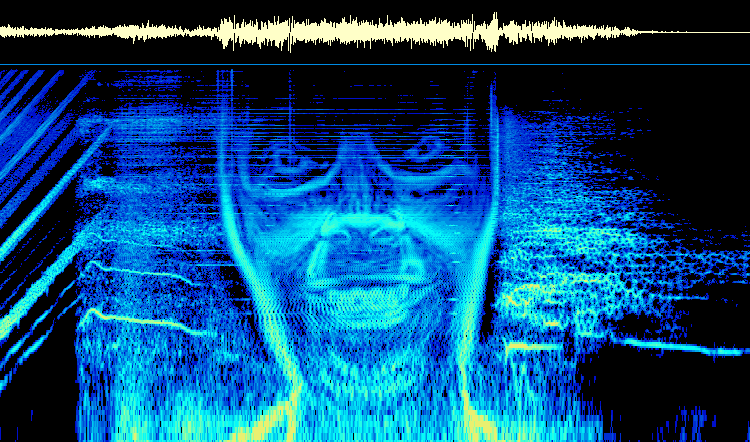
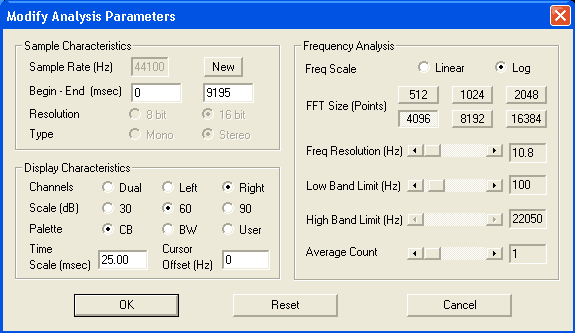
Some tracks turn out to hide audio images :O and I doubt if any humans are capable of seeing or otherwise perceiving them. They are clearly visible with spectrum analysis though:


... and even this tune, a closing track from an album entitled Songs about My Cats: